What are the care and management methods for grafted mango seedlings
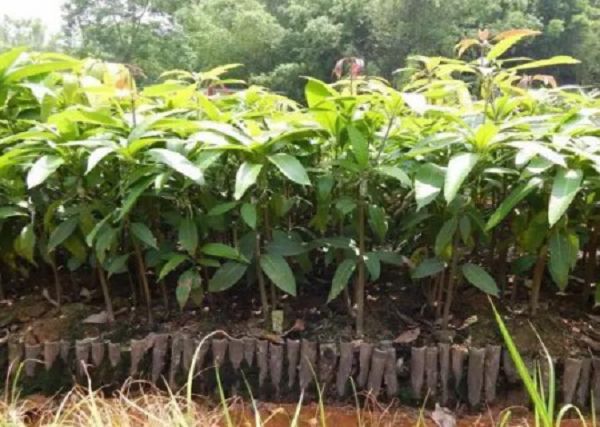
In recent years, many gardening friends have carried out grafting improvements because certain mango varieties have low yields, poor quality, and are difficult to manage, such as improving Ivory into Jinhuang. So how should grafting be done to maintain a relatively high survival rate? Mango grafting means joining the scion of a superior variety onto a highly adaptable rootstock (such as the Ivory being grafted), using the cambium parenchyma cells of both to heal the wound and form a new individual.
Rootstocks are grown in plastic bags and directly grafted into seedlings. Field-grown seedlings are grafted, and after surviving they are potted in plastic bags for cultivation. The latter usually involves cutting the rootstock after the graft survives, and lifting the seedlings for bagging when the scion bud swells and extends 0.5 cm. The plastic bags measure 30 cm long and 20 cm wide, filled with fertile topsoil or nutrient soil made by mixing dry cow dung or compost with topsoil at a 3:7 ratio. After planting the budded stumps, place them under tree shade or in a shade shed for cultivation.
Grafted mango seedlings should be watered promptly to promote scion sprouting, and rootstock sprouts should be removed once every 3 to 5 days to ensure the growth of scion buds. Whenever the scion sends out new shoots, pesticide should be sprayed to prevent disease and pests. To protect the scion from being blown over or knocked over by wind, stakes should be set up to secure the scion. Other management is the same as for rootstock seedling management.
The management methods for grafted mango seedlings are as follows:
1. Remove rootstock sprouts
After top-cutting and grafting, adventitious buds often sprout from the lower part of the rootstock below the graft union, so checks must be made once a week to promptly remove the rootstock sprouts, so as not to affect the growth of the grafted buds.
2. Re-grafting
Three weeks after grafting, check whether the scion has survived; if it has not, re-graft promptly.
3. Fertilizer and water management
The nursery should be kept moist at all times, neither drought-stressed nor waterlogged, and watered promptly during drought. One month after grafting, diluted fertilizer water can be applied once every other month, applying thin fertilizer frequently and gradually increasing the fertilizer concentration month by month.
4. Shaping
Shaping mango seedlings is also very important and should not be neglected in production. After the graft survives, the main branches that sprout can be topped at about 20 cm once they mature, to encourage side branches; when the side branches grow to 15~20 cm, they should be tipped, and then the secondary side branches encouraged in turn, forming a canopy as early as possible.
5. Pest and disease control
Young seedling tissues are tender, and the planting density is also high, so pests and diseases occur easily, especially the mango tip borer and anthracnose; therefore, after the scion sprouts, attention should be paid to pesticide use to control pests and diseases, spraying 2~3 times for control with each flush of new shoots.