How to prune Buddhist pine (Podocarpus macrophyllus)? A detailed guide to pruning methods
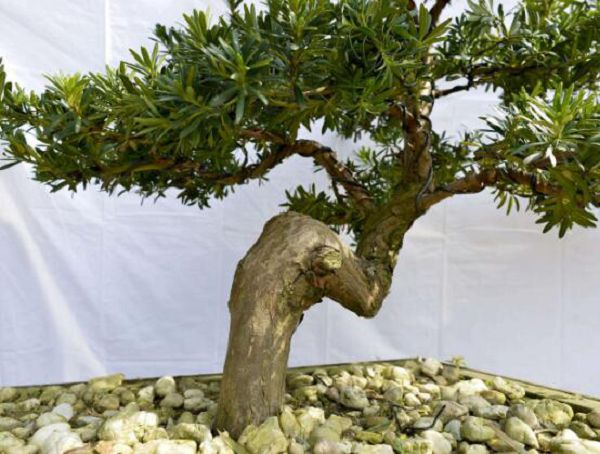
Buddhist pine has won most people's favor with its unique quality of lush, vigorous green. Besides wild Buddhist pines, many people have made Buddhist pines into bonsai, which is both beautiful and imposing. When a Buddhist pine grows to a certain stage, it needs pruning, and pruning can make its shape even more beautiful. So how do you prune a Buddhist pine? The editor will introduce the pruning methods for Buddhist pine below.
Pruning methods for Buddhist pine
1. Shape according to the tree, apply techniques according to the material
The purpose of artistic shaping of Buddhist pine is to shape according to the tree and apply techniques according to the material, using superb artistic expression techniques to unearth the highest artistic realm from an ordinary tree shape and maximize its ornamental value. To maintain its greatest ornamental value, proper pruning is necessary.
2. Thinning pruning of Buddhist pine
For Buddhist pine, thinning pruning can cut branches off from the base, which allows the tree stump to have good ventilation and light penetration and grow vigorously. During thinning pruning, cut off diseased and pest-infested branches and burn them immediately to prevent the spread of diseases and pests, and promptly cut off branches that detract from the appearance.
When two parallel branches are very close to each other, one should be cut off. Water sprouts, upright branches growing from the main branches, drooping branches, and reverse-growing branches should all be cut off. For forked branches and crossing branches, one fork should be cut off; for small branches sprouting on tree species with strong sprouting ability, except for one branch left at a position lacking branches to slowly induce and fill in the gap, all can be cut off.
3. Heading back of Buddhist pine
Heading back of Buddhist pine means cutting long branches short to stimulate the axillary buds below the cut to sprout and form stronger lateral branches, thereby promoting branching. After thinning out the excess branches during shaping, the retained shaping branches should be headed back to encourage the shaping branches to sprout 2 to 3 times a year.
Heading back once for each sprouting will rapidly increase the branching order of the shaping branches and can make each order of branches very short without elongating the branches. This can control growth, is an effective measure to keep the tree dwarf, and serves the purpose of shaping.
4. Renewal pruning of Buddhist pine
Renewal pruning of Buddhist pine means pruning back perennial branches, which is a powerful measure to reduce the size of a large tree and also serves the shaping purpose of promoting new sprouting branches and restoring tree vigor. For bonsai Buddhist pines with large crowns and long main branches, the shaping requirements cannot be met through thinning pruning and heading back alone.
Therefore, renewal pruning can make a large tree smaller, which is beneficial for bonsai shaping. For tree species with strong sprouting ability, the amount of renewal pruning should be greater, which means cutting off the branches and leaves completely, retaining the skeleton, and stimulating new branches to sprout below the cut.
Conclusion: The above are the pruning methods for Buddhist pine. When pruning Buddhist pine, everyone must be careful. Through pruning, Buddhist pine can be kept dwarf, encouraged to branch, and have dense leaves, ensuring normal growth and development, flowering, and fruiting.