How to Grow Rose Seeds? A Detailed Guide to the Planting Method
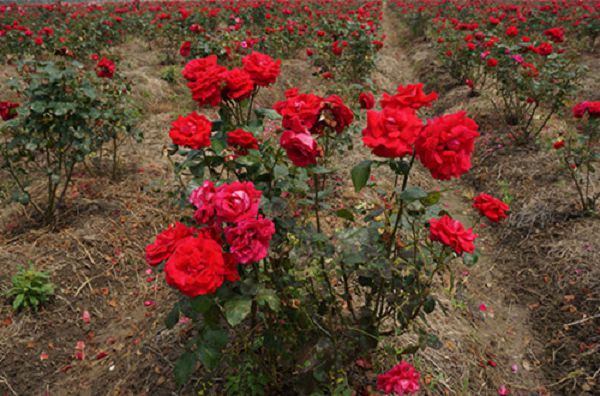
Roses belong to the order Rosales and originated in China; in Korea they are called begonia flowers. How do you grow roses, and how do you grow rose seeds? Below is an introduction to the propagation method for rose seeds.
The sowing method among rose planting methods is generally used only to cultivate new varieties. Seeds collected in autumn are placed in a plastic bag filled with moist sandy soil and kept in an environment that freezes at night and thaws during the day. After about 1 month, the temperature is gradually raised to around 20°C. Once the seeds crack open and sprout, they can be sown, or they can be stored in sand until sowing the following spring. When the seedlings grow 3-5 small leaves, they are transplanted.
Soil selection: Rose seeds have a relatively low germination rate, so the soil used for sowing generally needs to be loose, breathable and highly water-retentive. The soil commonly used is a mix of vermiculite, peat, sphagnum moss, perlite, osmund fiber and the like; if conditions allow, you can also mix it yourself. If not, ordinary slightly acidic soil will do, but the soil must contain no foreign objects (such as stones, broken bricks, glass, etc.).
Step 1: First soak the rose seeds in warm water at around 40 degrees. After the water cools, continue soaking for 4-6 hours, then scoop the seeds out. Soaked seeds sprout more easily.
Step 2: Put the seeds into the soil (note: the soil needs to be loose, breathable and highly water-retentive). Generally, 5-8 seeds can be sown in each container. After germination, keep one strong seedling depending on how the seedlings are growing; thin the seedlings after germination, keeping 1-3 seedlings as appropriate. After sowing, cover the container with cling film (a plastic bag or plastic wrap also works), and prick a few small holes in the cling film for ventilation. Place the container in sunlight and maintain a temperature of around 20 degrees. Most seeds can germinate after one week; once the seedlings have grown sturdy, transplant them into the ground.