Do Japanese Persimmons Have Male and Female Plants? A Detailed Guide to Identifying Male and Female Japanese Persimmons
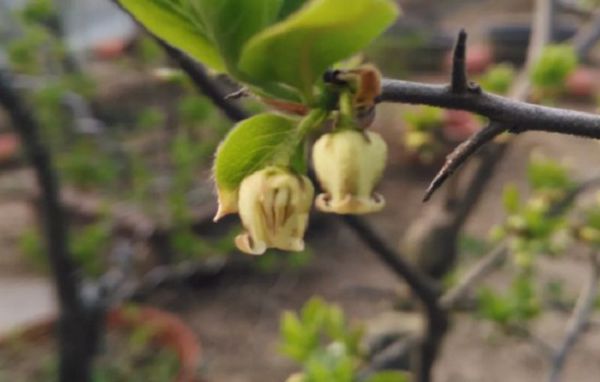
The Japanese persimmon (Diospyros kaki) is one of the finest tree species for making fruit-bearing bonsai, especially when it is trained into an old-trunk fruit-display bonsai, which makes it even more ornamental. But as everyone knows, many flowering and fruiting plants are divided into male and female, and usually a male tree will not bear fruit after planting; only a female tree that flowers and is successfully pollinated can bear fruit.
In fact, the Japanese persimmon, a small deciduous tree, is also divided into male and female, a condition commonly known as being dioecious. But this is not absolute: although the Japanese persimmon is dioecious in most cases, occasionally you may come across a monoecious specimen, though such a case is very hard to encounter.
If it is monoecious, it can generally self-pollinate after flowering and successfully set fruit. If it is dioecious, the male flowers usually need to pollinate the female flowers before fruit can form. The same is true for the Japanese persimmon: although a male tree only flowers and does not bear fruit, we can use grafting to graft a female branch onto a male tree, and it can likewise flower and bear fruit.
Grafting is fairly common in the cultivation of Japanese persimmons; after all, it is usually dioecious, and by grafting branches of a female tree onto a male tree, you get both flowers and fruit, making it easier to produce a beautiful fruit-display bonsai. For a dioecious Japanese persimmon, the male flowers usually need to pollinate the female flowers before fruit can form.
But there is one exception: the Japanese persimmon may also set fruit through self-pollination, though this is very rare. And a Japanese persimmon that has not been pollinated by stamens to pistils, even if it sets fruit, usually produces rather slender fruit that contains no seeds, so it cannot be propagated by sowing.
In addition, male and female Japanese persimmons are fairly easy to tell apart; we only need to observe the flowering state during the flowering period to identify them well. If it is a male Japanese persimmon tree, there are no calyx lobes on the receptacle when it flowers; if it is a female Japanese persimmon tree, there are quite a few calyx lobes on the receptacle surrounding the flower when it blooms.