What are the common emergent aquatic plants? Introduction to several common varieties
Lotus
It emerges from the mud unstained, and bathes in clear ripples without being frivolous.
The lotus is often hailed as the fairy of the water. For home growing, smaller varieties are usually chosen for cultivation. During cultivation, plenty of sunlight is needed to ensure flowering. In addition, when choosing a pot for growing, one should choose a flower pot with poor water permeability. Moreover, the lotus cannot simply be grown indoors; it is best placed outdoors. The pond mud used for planting should preferably contain humus, so the lotus can grow even better.
Water hyacinth
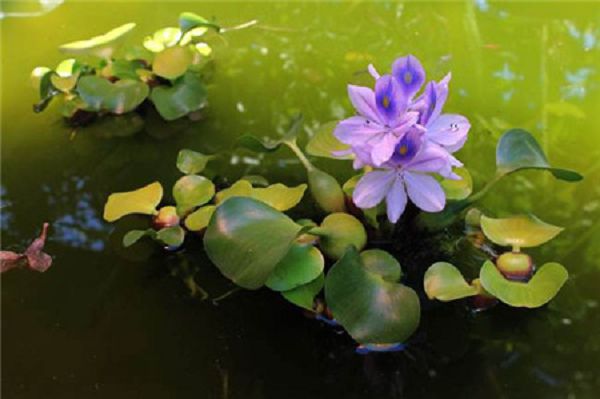
Water hyacinth is also called water hyacinth (Eichhornia crassipes). Water hyacinth is a floating plant. Its flowers are light and delicate, with blue-purple petals, making it look especially beautiful.
It is loved by many people, but because water hyacinth grows and reproduces too quickly, in many river basins in China it has become an invasive alien species, multiplying in large numbers.
But this does not diminish people's affection for it. Growing one or two plants at home still has many uses: it is both ornamental and able to purify the air.
Bowl lotus
Bowl lotus, as the name suggests, is a lotus grown in a bowl. The bowl lotus plant is delicate and small, and it is very easy to grow. There is more than one way to grow it at home.
Moreover, bowl lotus can be planted in all four seasons of the year. Because of its small size, it can be placed anywhere as a decoration, as long as the appropriate water temperature is maintained. Growing bowl lotus gives the room a poetic feeling.
Lobelia
Lobelia likes moisture. When cultivated artificially, it is mostly grown along riverbanks, and its cold tolerance is also excellent. It must be mentioned that lobelia has medicinal effects. The entire lobelia plant can be used as medicine. It is a very good traditional Chinese medicine, commonly used to treat symptoms such as appendicitis and cirrhosis.
The small flowers of lobelia usually appear one per stem at the top. The flowers are commonly light purple and white, or pale pink, and the flower shape is very cute.
Acorus
In ancient China, Acorus was hailed as a spiritual herb, and legend says it had the effect of warding off evil and dispelling plagues.
Acorus is often seen by riversides or near paddy fields. The plant has a fragrance and aromatic oil can be extracted from it. In addition, Acorus has many other uses: it can be used ornamentally, as medicine, and also to repel insects.
However, one point that needs to be made clear is that the entire Acorus plant is toxic, and eating it by mistake will cause hallucinations.
Canna
Canna is native to tropical and subtropical regions and is a very common ornamental flower with excellent ornamental value.
The fiery red flowers and the emerald green, glossy leaves combine to look tender and vivid, making it the best proof of red flowers paired with green leaves. It can bloom throughout all four seasons of the year.
Canna is afraid of cold, so temperature is very important when growing it. But at the same time, it is also a flower that is very easy to care for, with strong adaptability and almost no requirements for the soil used for planting.
Canna is also a flower with many uses. Besides its ornamental value, it also has medicinal value and greening value. Medicinal extracts from canna can effectively treat conditions such as high blood pressure and irregular menstruation. People often use canna to detect the degree of air pollution around them, because canna leaves are sensitive to harmful gases.