Can the Peace Tree be fertilized with sheep manure? Master the correct fertilization method
The potted Peace Tree (Dracaena fragrans) has very high ornamental value. If placed in the home, it also does an excellent job of accenting the living space. But after all, it is quite fond of fertilizer, and when potted it often suffers from insufficient nutrients in the soil within the pot, which affects its growth, so fertilizing it in time is very important for promoting its growth.
However, the Peace Tree is, after all, a tree species suited to foliage viewing. When fertilizing, the main goals are generally to promote leaf growth and enhance the ornamental value of the leaves, and nutrients cannot be supplemented the way they are for ordinary flowering plants. So there is a certain specificity in the choice of fertilizer; otherwise, if fertilization is done improperly, not only will the plant fail to achieve the growth effect we need, it may also cause adverse conditions.
Fertilizing a potted Peace Tree is usually divided into base fertilizer and top dressing, and the forms of fertilizer used also differ. Generally, for base fertilizer it is best to use organic fertilizer or slow-release fertilizer, buried at the bottom of the pot when potting the plant to increase the fertility of the soil. At the same time, using organic fertilizer can also improve the looseness of the potting soil, and it has the characteristics of mild fertility and long-lasting fertilizer effect.
For top dressing, although organic fertilizer is also often used, quick-acting fertilizer is generally applied as top dressing, so that it can be absorbed quickly by the plant, exert its fertilizer effect more rapidly, and promote plant growth more noticeably, usually taking effect within a short period. Top dressing is usually carried out during the plant's growing season. In general, the forms of base fertilizer and top dressing are different, and their purposes are also not the same. Base fertilizer provides the nutrients needed for the plant's initial growth, with the focus on promoting root growth, while top dressing usually aims mainly to promote branching and leafing out or flowering and fruiting.
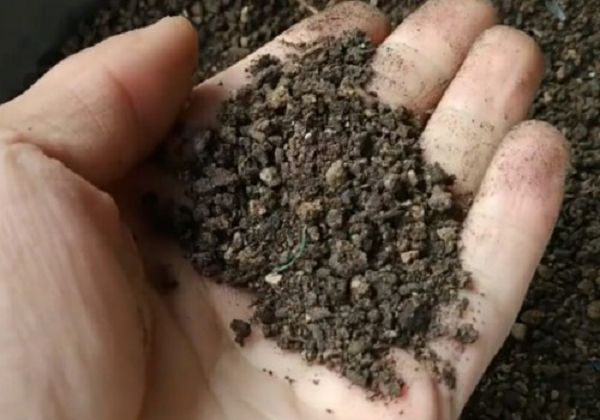
Sheep manure, as a kind of organic fertilizer, is rich in large amounts of nitrogen, phosphorus and potassium, and also contains quite a few nutrients such as sulfur, calcium, magnesium, iron, manganese, zinc, molybdenum and boron, making it a fertilizer with a very complete range of nutrients. Of course, it also contains some organic matter, humic acid and large amounts of various microorganisms. Proper application can increase the content of soil organic matter and active humic acid and boost the number and activity of microorganisms, thereby improving the soil and making the potting soil more fertile and loose.
Therefore, as an evergreen foliage tree species, when potted, the Peace Tree is generally suited to having some sheep manure buried in the pot, and it is generally not used as later top dressing. It is usually applied at the bottom of the pot as base fertilizer or bottom fertilizer when repotting or changing the pot for the plant, so that it can provide nutrients to the plant over a long period. Moreover, as long as a layer of soil is covered over the sheep manure to separate it from the Peace Tree's root system, it will not cause root damage. It can be seen that the Peace Tree is very well suited to using sheep manure as base fertilizer.