What should you pay attention to when growing Haworthia cooperi with the closed-lid method? Don't overlook these points
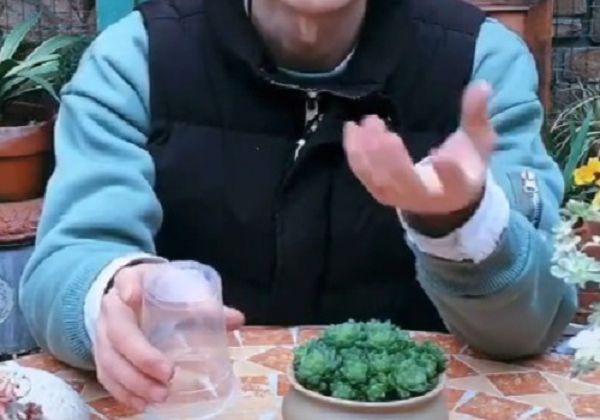
Haworthia cooperi is truly a star in the succulent world. Once its "windows" open, its leaves are crystal clear, delicate and charming, and very cute, which is why it is deeply loved by succulent enthusiasts. But when growing Haworthia cooperi in pots, we usually need to learn how to use the closed-lid method, because Haworthia cooperi grown this way becomes even more crystal clear, exquisite and refined, and grows better.
If you want good results from growing Haworthia cooperi with the closed-lid method, the method and steps are very important. That is because a highly attractive Haworthia cooperi cannot be achieved by simply following routine, by-the-book care; it usually needs to go through the closed-lid stage to show its captivating form. But if some details are not handled well during the closed-lid process, not only will it fail to develop a good appearance, it may even cause various adverse symptoms. Below are the techniques and points to note.
The closed-lid process for Haworthia cooperi is very simple. We usually use a transparent plastic cup or glass cup, or even a transparent plastic bag will work. After cleaning it thoroughly, simply place it over the potted Haworthia cooperi. The main purpose of doing this is to create a relatively stable temperature and humidity environment for the Haworthia cooperi, allowing water to go through a repeated cycle from evaporation to return flow, thereby achieving the closed-lid effect.
But while growing Haworthia cooperi with the closed-lid method, we must never place the pot under blazing sun or direct strong light, and it does not even need direct light. If it is left in direct sunlight, the closed environment tends to heat up quickly, and since air circulation in a closed environment is generally poor, it easily causes root rot or decayed roots, or black rot. For a Haworthia cooperi being grown with the closed-lid method, this is quite fatal.
Not only that, we must also get the timing right when growing Haworthia cooperi with the closed-lid method. Haworthia cooperi is generally not suitable for the closed-lid method in summer, mainly because summer temperatures are too high and it easily enters dormancy. If you want to grow Haworthia cooperi with the closed-lid method, it is usually suitable in spring, autumn and winter, as this can promote its growth very well. So if you want to succeed with the closed-lid method for Haworthia cooperi, you must choose the timing well.
In addition, during the closed-lid period for Haworthia cooperi, if there is sunny weather, it is recommended to remove the closed-lid device. If we do not remove it and use a transparent glass or plastic cup, once water droplets form on the inner wall, the situation becomes quite dangerous. This is because water droplets focus light under the sun's rays, and if they focus onto the Haworthia cooperi, prolonged exposure can easily cause scorching.
Of course, if the Haworthia cooperi has just been watered, it also cannot be immediately covered with the closed-lid setup, because right after watering the humidity in the potting soil is relatively high. It usually needs to sit for a night until some of the excess moisture evaporates and is used up before proceeding. Also, during the closed-lid process we need to control water appropriately to manage humidity, avoiding root rot or leggy growth in the hot, humid environment. And if the humidity in the closed environment is too high, it can easily cause cracking.
Generally, about every week of closed-lid growing, we should open the closed-lid device to let the air exchange between the inside and outside environments. This can also prevent root rot, black rot and similar problems caused by hot, humid, unventilated conditions in the closed environment. Grown this way, Haworthia cooperi naturally becomes very plump and round, with higher transparency, so its ornamental value is naturally higher as well.
But the closed-lid method is a double-edged sword: it has benefits and also drawbacks. The benefit is that it can promote succulent growth and give it a better ornamental appearance; the drawback is that it can reduce the plant's resistance. Moreover, if you start the closed-lid method in winter, then by the following spring when the temperature reaches above 20°C, the closed-lid device usually needs to be removed. Growing with the closed-lid method in summer is generally not recommended, since summer temperatures are too high and it is not easy to manage the closed-lid method well.