What to Do When Corn Poppy Leaves Turn Yellow? Causes and Solutions
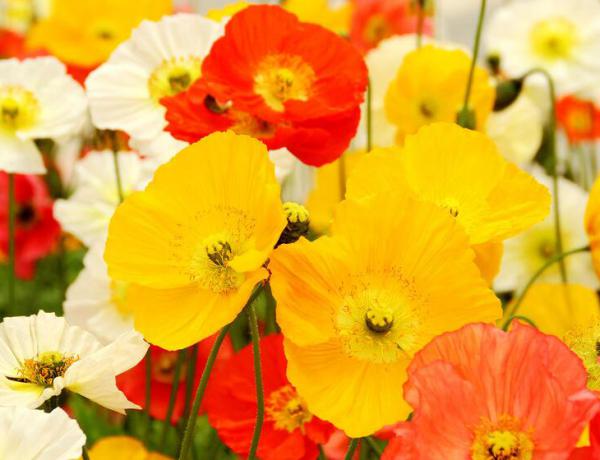
Legend has it that in the late Qin Dynasty, during the Chu-Han Contention, when Xiang Yu, the Hegemon-King of Western Chu, suffered defeat, there was a folk legend about a plant called "Yu Meiren Cao" (Corn Poppy), and its flower was called Yu Meiren (Corn Poppy). The corn poppy comes in several colors; for example, the white corn poppy symbolizes comfort and consolation, while the corn poppy with pink petals represents great extravagance.
Nowadays, in European countries and regions, the corn poppy is widely cultivated and cared for, and its ornamental value is also very high. However, in the process of caring for corn poppies, after they bloom, many people find that the corn poppy leaves turn yellow and wither for no apparent reason. So today, I will teach you three small care tips to help the corn poppy leaves return to their original appearance, so you don't need to worry too much even if the leaves turn yellow.
First: The first reason corn poppy leaves turn yellow may be that too many have been planted and they lack fertilizer. If you take them out of the pot, you may find that the corn poppy roots have reached the edge of the pot. So at this point, we should consider repotting the corn poppy into a larger pot, and during transplanting we need to be careful; it is best to transplant it together with its healthy soil into the larger pot.
Second: No matter what plant you are caring for, water is indispensable. In the process of caring for corn poppies, water is also one of the elements they need throughout their lives, so when watering, if there is too little water, the corn poppy will also naturally show signs of yellowing leaves. So at this point, I will teach you a little trick: while watering, we can use our finger to poke about 1 cm into the surface of the corn poppy's soil. We can check it; if the soil is dry, we can water it, and just water it thoroughly in one go.
Third: In the process of caring for corn poppies, we also need to fertilize them, but too much fertilizer can also make the nutrients too rich, which will cause the corn poppy to be "overfed" to death by the fertilizer. So at this point, when fertilizing, we need to control the amount, letting the water-diluted fertilizer slowly flow out from the drainage holes. At the same time, when changing the soil, we need to transplant and cultivate it together with the soil. Of course, the most important thing is to keep the fertilizing amount under control.