How to water jasmine? Master the correct watering method
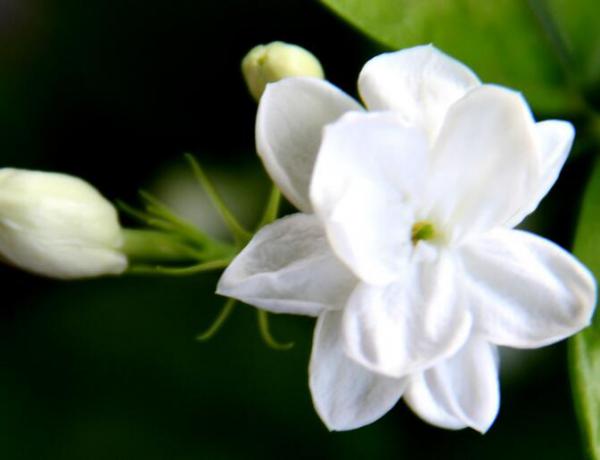
Water is the source of life. Whether for people, plants, or animals, water is vital and a resource they rely on to survive. In the process of growing jasmine, you will often run into watering troubles too: how to water, how often to water, when not to water, and so on, all of which need attention.
Although jasmine is fairly tenacious and can generally be grown successfully, improper watering can still damage the plant. For example: lack of water causes the plant to wilt, leaves to drop, and withering; excess water causes the roots to turn yellow, become waterlogged, rot, and the plant to wither. In short, whether too much or too little water, once it reaches a certain point it will harm the plant. So how should you correctly give the jasmine plant its "drink" of water?
1. How to tell whether jasmine needs watering
The jasmine plant likes moisture, does not tolerate waterlogging, and does not tolerate drought, so you need to pay special attention to watering to avoid harming the plant. To see whether the plant needs watering, you can use the simple five-character guideline "look, listen, probe, touch, move." Look means first looking at the soil: if the soil is brown, it does not need watering yet; if the soil looks whitish, it is time to water.
Second, look at the plant: if the leaves are emerald green and growing well, the moisture is appropriate; if the plant looks dry and wilted, it is short of water; if the plant turns yellow and rots, you have watered too much. Listen means sound: tap the outer pot with your hand. A louder, crisper sound means the soil inside is dry; a lower, duller sound means there is enough water inside.
Probe means inserting a chopstick or wooden stick into the soil, leaving it for 10 minutes, and when you pull it out checking whether the soil clinging to it is dry or wet, using dry versus wet to judge whether watering is needed. Touch means feeling the clumps of soil on the surface of the pot: if they have formed hard lumps, it is short of water; if it feels a bit soft and loose, the moisture is normal.
Move means gently lifting the pot to feel its weight. Normally you should get a feel for the weight of the plant when it is growing well. If the pot feels very light when you lift it, it is short of water; if it feels very heavy when you lift it, there is enough water. For the methods above, you can choose one or two to use according to your needs.
2. Water reasonably according to jasmine's different water needs across the four seasons
Jasmine's water needs vary greatly from season to season, so watering should be based on the weather conditions throughout the year. Spring is when jasmine wakes up, sprouts, and builds up strength; its growth is slowly recovering, so its water needs are low at this time. In addition, spring temperatures are not very high yet and water evaporates slowly, so one watering can meet the needs of several days. Therefore, in spring you should water sparingly.
Suggestion: In spring, water only once every 4-5 days. The watering time can be chosen for midday when the temperature rises. When watering, do not pour directly onto the roots, to prevent the roots from being injured by the cold; just use a small stream of water and slowly water along the edge of the pot, keeping the soil moist.
Summer is jasmine's vigorous growth period and also when it enters the flowering period. Its need for both water and fertilizer is relatively large. In addition, summer temperatures are high, the water in the soil quickly dries out, and the upper part of the plant remains in a stuffy, hot environment for a long time, so it also needs the nourishment of water. Therefore, in summer you should water frequently and water thoroughly.
Suggestion: Summer has the greatest water demand. Water thoroughly with a large amount, until water flows out of the bottom of the pot. You can water 1-2 times a day in the morning and evening. Be careful to avoid the high temperatures at midday to prevent burning. When the temperature is especially high, you can add 1-2 days of misting to increase humidity for the leaves and the surrounding air.
In autumn, jasmine goes from full bloom to fading, and its water needs also go from more to less. In early autumn, while the flowers are still blooming, the water demand is still relatively large. By mid-to-late October, when the flowers begin to fall from the branches, the water demand gradually decreases. At this time, reducing the water in the soil can also encourage the jasmine roots to grow deeper and firmer. Therefore, in autumn watering should go from more to less.
Suggestion: This period in autumn is rather special. The temperature goes from stuffy and hot to gradually cooler, water evaporation goes from fast to slow, and the water requirement goes from more in early autumn to less in late autumn. So watering should also follow this pattern: watering can go from 1-2 days to 1 time, then gradually decrease to once every 1-2 days, then transition to once every 3-4 days, as long as the soil stays moist.
In winter, the jasmine plant begins to enter dormancy, and basically all of the plant's functions stop operating. Its water demand is very small. In addition, winter temperatures are relatively low and the weather is relatively cold, so the water in the soil evaporates very little. Therefore, in winter you should be lazy about watering.
Suggestion: In winter, reduce the amount of water and the number of waterings. You can water once every 5-7 days, or at even longer intervals. It is best to water with a small amount. Choose a sunny midday for watering, and just keep the soil moist.
3. To grow good jasmine, you also need to pay attention to these points
1. Light
Jasmine is a light-loving plant with a large demand for sunlight. Without enough light, the plant will become leggy, thin, and yellow, and the leaf edges will become scorched and withered. So during cultivation, let it get plenty of sun. As long as it is not fierce, intense light, that is, when the air temperature does not exceed 38°C, it can be placed outdoors.
Suggestion: If growing indoors, try to take it outside every day to get some sun. In winter, when the weather is cold, you can move it back indoors and take it out when there is sunlight. For newly transplanted seedlings or jasmine being repotted, do not place them directly in the sun to bake; give them a buffer period. You can first use diffused light, then slowly increase the area exposed to sunlight, and finally follow normal lighting. If growing outdoors and the plant is too large to move, in high temperatures you can build a frame and spread shade netting, and in low temperatures you can build a frame and make a simple windbreak to prevent strong winds from blowing directly on it.
2. Pruning
If you want jasmine to grow well, with thick green leaves and fragrant flowers, pruning is a necessary process. When the jasmine plant enters its vigorous growth period, the continuously sprouting branches make the living space very crowded, and the branches and leaves cross one another, making ventilation and light penetration worse. If you do not prune, the interior of the plant is hard to reach with light, and in the shaded environment, diseases and pests can easily take the opportunity to invade. At the same time, leggy branches waste nutrient consumption, making the plant thin and elongated, growing very tall but not sturdy, reducing the plant's disease resistance, and also affecting the plant's flowering and fruiting. So pruning is very necessary.
Suggestion: When pruning, cut off all the branches that stick out abruptly on the outer edge. When cutting, recess them slightly inward, that is, further in than the normal branches. At the same time, thin out the dense branches in the inner canopy to keep the interior clean and bright. Prune according to the principle of "prune more when long and dense, prune little or not at all when short and sparse." For pruning, use new scissors or scissors that do not rust. Before use, scald them with boiling water or wipe them with alcohol. After pruning all the branches and leaves, you can spray the whole plant once with a broad-spectrum fungicidal disinfectant. This serves to sterilize and disinfect, and can also promote wound healing.
In summary: Watering jasmine is very important. Too much or too little water will affect its growth. So during care, water according to jasmine's characteristics, that is, its different water needs throughout the four seasons. Water sparingly in spring, frequently in summer, reasonably in autumn, and lazily in winter. Remember these four seasonal principles for jasmine's "drinking" and you can make your jasmine grow full and healthy. At the same time, to make the plant stronger and produce more flowers, you need to do these two tasks well: light and pruning.