What to Do When Clivia Leaves Turn Yellow? Causes and Solutions
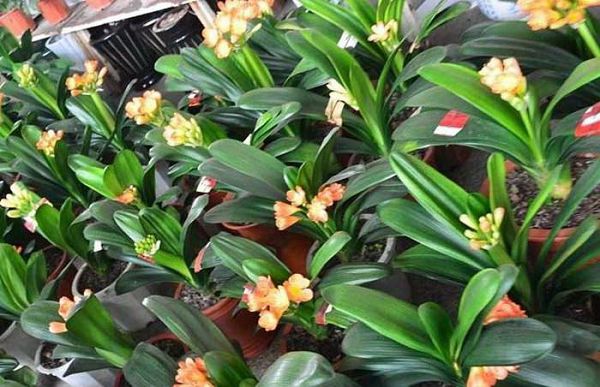
Clivia, also known as sword-leaf lycoris and large-leaf lycoris, is a perennial herbaceous plant of the genus Clivia in the amaryllis family, native to southern South Africa. It has an elegant and graceful plant shape, with verdant and upright leaves, large and brightly colored flowers, and bright red fruit. Its leaves, flowers and fruit are all beautiful, earning it the reputation of flowers to view in one season, fruit in three seasons, and foliage in all four seasons. In China it is often grown as a potted plant in greenhouses for ornamental purposes.
Entire Clivia Leaf Turns Yellow
Symptoms and Causes
Sometimes you will find that a clivia begins to turn yellow without you noticing. At first it is just a little bit, then it gradually spreads until the entire leaf is yellow, which looks very unsightly.
The situation where the entire leaf of a clivia turns yellow may be caused by strong light exposure. Overly intense sunlight can scorch the leaves of the clivia, causing them to turn yellow.
How to Solve It
When the entire leaf of a clivia turns yellow, it not only affects its ornamental value but is also harmful to its growth. At this point you should cut off the yellow leaves and shade the clivia, which can alleviate the yellowing of the leaves.
Localized Yellowing of Clivia Leaves
Symptoms and Causes
The leaves of a clivia can also develop yellow edges, or yellow or scorched leaf tips.
Localized yellowing of clivia leaves is mostly caused by overwatering. This is because improper care in daily maintenance, with excessive watering, causes root hypoxia and leads to poor growth of the clivia. It may also be caused by incorrect fertilizing, with fertilizer that is too concentrated, causing root burn and resulting in localized yellowing of the clivia leaves. Other causes include soil that is not aerated, roots that cannot breathe well and poor drainage, or a growing environment that is not ventilated and airy enough, and so on.
How to Solve It
Localized yellowing of clivia leaves is in fact mostly due to improper daily care, and in summary, the key is to do a good job of daily maintenance. Manage water and fertilizer well, water and fertilize reasonably, and avoid the potting soil being too wet or concentrated fertilizer burning the roots, which makes the clivia leaves yellow. Also be careful to ventilate the clivia regularly so that it grows in a well-ventilated environment, and pay attention to the choice of soil.
Yellow Spots on Clivia Leaves
Symptoms and Causes
Yellow spots on clivia leaves mainly appear as yellow or yellowish-brown spots on the leaves, which gradually expand and damage the leaves.
This situation is mostly due to leaf spot disease or anthracnose affecting the clivia, or to infestation by pests. This causes yellowish-brown disease spots to appear on the clivia leaves, and can even damage the entire leaf.
How to Solve It
When leaf lesions appear on a clivia due to pests or diseases, you should choose a suitable treatment method according to the severity of the outbreak. You can choose an appropriate pesticide for spraying treatment, and in daily maintenance, take good disease prevention measures, focusing on prevention and combining prevention with treatment.
Other Manifestations of Yellow Clivia Leaves
Symptoms and Causes
Besides the situations described above, clivia leaves can sometimes also show scorched yellow, grayish yellow, or pale weak yellow, as well as yellowing caused by normal metabolism, when new roots grow from the leaf axils of the old lower leaves and keep growing.
If the clivia has been grown for a long time, this is a normal metabolic phenomenon. But if the new leaves or young leaves show scorched yellow, grayish yellow, or pale weak yellow, it may be caused by improper watering, overly strong light, or excessive fertilizing.
How to Solve It
Yellowing caused by normal metabolism does not need much worry; simply cut off the old leaves of the clivia to keep it looking neat. But if the clivia shows symptoms of scorched yellow, grayish yellow, or pale weak yellow, you also need to do a good job of daily maintenance. Pay attention to watering and avoid waterlogging; provide appropriate shading; apply light fertilizer frequently. This can improve the yellowing of clivia leaves.
In fact, the reason a clivia develops yellowing leaves may also be root rot. At this point you must not only solve the leaf yellowing problem by pruning the yellow leaves, but also deal with the root rot problem of the clivia.