How to keep a Lantana bonsai's flowers brilliantly colored and its blooming period long
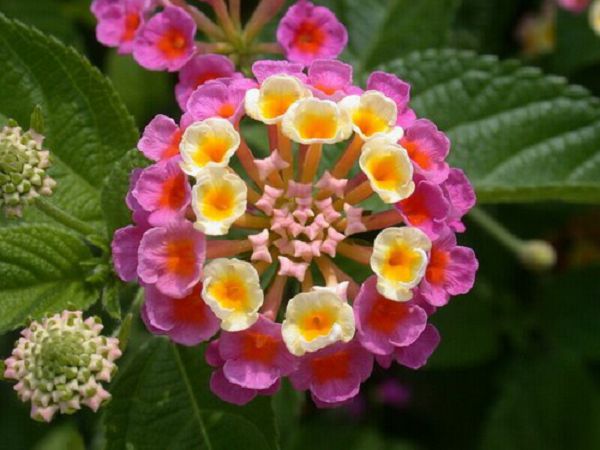
Lantana is nicknamed "five-color plum," and it has very beautiful flowers: light purple, purple-red, pink, orange-yellow, deep yellow, and so on. It really is a riot of colorful flowers blooming on a single plant, beautiful and gaudy, yet it truly reigns supreme in its patch. Where lantana grows, you simply cannot find a single weed, especially beneath its branches and leaves; it wipes out all the other plants and then multiplies without restraint, making it extremely aggressive.
To make lantana's flowers bloom more brilliantly, extend its blooming period, and attract more butterflies, you need to master the following care techniques:
1. Choose deep, fertile, loose sandy loam. For potting soil, you can use a growing mix prepared from leaf mold, garden soil, vinegar residue, and decomposed organic fertilizer in a 2:6:1 ratio.
2. Apply plenty of base fertilizer before planting. During the vigorous growth period (May to October), apply a dilute, decomposed cake fertilizer solution or dilute human manure/urine water once every 10 days. Apply fertilizer promptly after flowering so that it keeps blooming continuously.
3. For established plants, prune frequently to remove weak and diseased branches, and also shorten them appropriately. After flowering, promptly remove the spent flowers.
4. During the growing season, provide ample light and keep the soil moist; especially during the flowering period, do not let the soil become too dry.
5. In winter, move the plant indoors for care, stop fertilizing, and control watering. The temperature must be kept above 10°C. Prune overly long new branches appropriately. Before moving it out in the second spring, repot it and apply base fertilizer.