Why are the leaves of the goldfish plant shriveled?
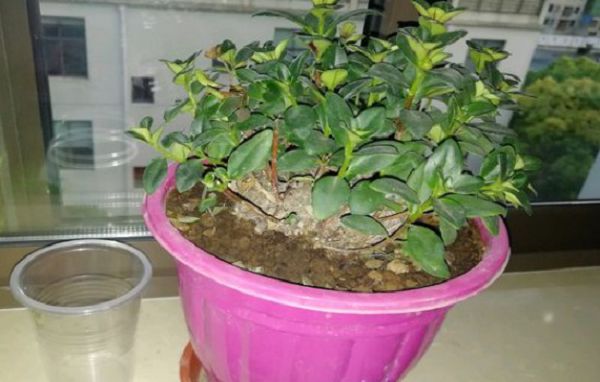
The leaves of the goldfish plant (Nematanthus gregarius) stay evergreen all year round. Although they are not as eye-catching as the flowers, their ornamental value is still quite noteworthy. Its leaves usually grow abundantly and green, and are even thicker and more fleshy than the leaves of many other ordinary flowering plants. So its leaves can also add a lot of ornamental appeal to a potted plant.
However, in the eyes of many gardening friends, the goldfish plant is not an easy flowering plant to grow. First of all, its leaves are very prone to various problems. But no matter what kind of problem appears on the leaves, it will to some extent affect the beauty of the potted plant, and may even affect the normal growth of the plant.
Sure enough, recently a gardening friend encountered the phenomenon of shriveled leaves on the goldfish plant grown in a pot at home. Obviously, this is a sign of poor growth. In fact, the leaves of the goldfish plant are relatively thick and plump, usually because of the water in the leaves. In addition, sufficient nutrients can also greatly promote leaf growth.
When the leaves of the goldfish plant become shriveled, the root cause is ultimately slow leaf growth combined with a lack of water in the leaves. When leaf growth is slow and water is scarce, the leaves naturally appear rather shriveled. In this respect it is just like succulents, which show the same phenomenon.
When the leaves of the goldfish plant become shriveled, on the one hand it may be caused by long-term water shortage and drought, and on the other hand it may be caused by nutrients and water failing to be supplied to the leaves in time. Of course, there may be some other triggers as well, but ultimately it is usually caused by water and nutrients failing to be supplied to the leaves in time.
When water and nutrients cannot be smoothly supplied to the leaves of the goldfish plant, it may be because the potting soil has become unsuitable, or because the roots are damaged, or because watering and fertilizing were not done in time. In short, there are many possible causes, and we need to check carefully and rule them out one by one. Therefore, we should first check whether the growing environment is suitable and whether the care methods are appropriate.
According to the growth habits and characteristics of the goldfish plant, we need to create a suitable environment inside the pot, and at the same time create a suitable surrounding environment, and moreover apply scientific care. The potting soil is required to be fertile, loose, air-permeable and water-permeable, and it must not become compacted, nor salinized or alkalized. So if repotting and soil changing are needed, be sure to do them in time.
If the roots have been damaged due to excessive water and fertilizer, be sure to stop watering and fertilizing in time, and if necessary, take the plant out of the pot in time to trim the roots, disinfect the roots, and then replant it in the pot. If the potting soil lacks water and fertilizer, be sure to water and fertilize in time, but do not overdo it, otherwise it will worsen its poor growth.