Cattleya Division Propagation Methods and Key Points for Daily Care
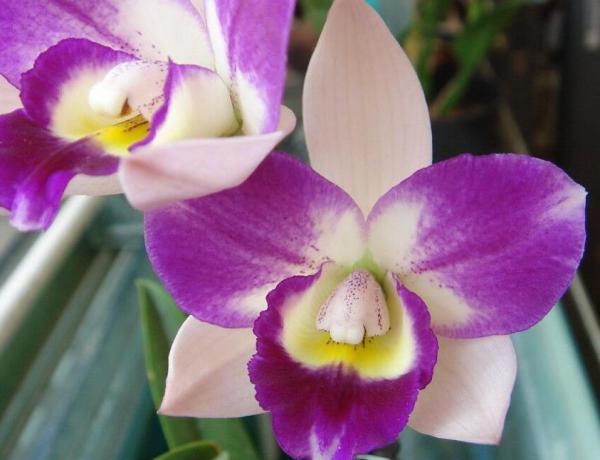
The Cattleya, a popular mass-market orchid, was discovered on the tropical mainland of the Americas, and there are now 45 to 50 species and countless hybrid varieties. Among tropical orchids, the Cattleya has the largest flowers and the most brilliant colors, earning it the international reputation of "King of Orchids." Through hybridization and breeding by horticulturists, nearly a thousand horticultural varieties have been developed. The Cattleya originates from the Honduras and Belize region of Central America and Guatemala, and has extremely strong adaptability.
I. Introduction of Cattleya
The Cattleya is native to tropical and a small portion of subtropical regions from Central America to South America. Generally speaking, most Cattleyas popular on the market today are horticultural varieties bred through multiple generations of crossbreeding and selection, with stable traits and easy cultivation.
For growers new to cultivating Cattleyas, they should consider aspects such as flowering period, flower shape, growth habits, and cultivation costs when selecting varieties with flower colors and shapes that suit domestic aesthetics, flowering periods that coincide with major domestic holidays, good reblooming ability, strong disease resistance, and tolerance to cold and high temperatures (for native species, it is recommended to introduce artificially selected polyploid plants).
At present, most Cattleya seedlings in mainstream Chinese orchid farms are introduced from Taiwan, China, which offers the best value for money, with few introductions from Europe, America, and Japan. When introducing plants, attention should be paid to the original source of the seedlings and the habits of the parent plants, as well as whether there are issues such as pests and diseases.
II. Site Planning
The Cattleya is a perennial herbaceous plant with spherical or club-shaped pseudobulbs at the lower part, 1 to 3 leathery leaves at the top, and creeping stems that can spread in multiple directions. It takes 2 to 4 years from deflasking to flowering. The Cattleya is an epiphyte with mostly aerial roots, and compared to other orchids it is relatively more light-loving and drought-tolerant, and slightly cold-tolerant.
Its growing environment favors warmth and humidity, brightness and ventilation, and a slightly acidic, breathable substrate. Therefore, when choosing a site for building a greenhouse, one should select a flat area with ample light, convenient transportation, ventilation, and power supply facilities. Generally, the basic equipment for a Cattleya greenhouse needs bidirectional exhaust fans, equipped with a water curtain and multi-layer shade netting, and in winter, supplemental lighting and heating facilities should be provided. Seedling beds should be elevated more than 1 m above the ground, with a mesh surface, on which seedling plug trays and containers can be placed; some varieties can be grown using the hanging method.
III. Cultivation Methods
1. Selection of substrate and cultivation containers: Cattleya roots are aerial and prefer moisture, so a substrate with good air permeability and drainage should be selected. Most Cattleyas on the market are grown using sphagnum moss; this method is low-cost and promotes fast growth, but the substrate tends to rot and clump. A small number of flower companies use pure bark for cultivation; plants grown this way are robust, but the cost is relatively high.
A mixed substrate can also be prepared on site. The pH of the substrate should be controlled at 5.5 to 6.5, slightly acidic. It is generally bark mixed with orchid stone, mixed with fired clay, mixed with Xiantu (Japanese Akadama-like clay), in a ratio of 1:1:1:1. For the selection of cultivation containers for Cattleya, the principles of light transmission, air permeability, sufficient drainage holes at the bottom, and not being oversized should be met as much as possible. Generally, ceramic pots are best, followed by transparent nutrient cups, and plastic containers last. When planting, there should be plenty of bottom drainage material, and deep planting must be avoided.
2. Temperature, humidity, and light management: Although Cattleya is drought-tolerant and cold-tolerant, it prefers a high-temperature, high-humidity environment. The suitable temperature during the seedling stage is around 25°C, and during the large-seedling growth period the temperature can be controlled at 15 to 30°C. In winter, the room temperature needs to be kept no lower than 15°C to prevent cold damage and failure to flower, and 2 to 3 h of supplemental lighting is needed daily.
The humidity during the seedling stage should be controlled at around 80%, and can be maintained through misting, water-curtain humidification, and spraying the ground to cool and humidify. During the mature-plant stage, humidity should be controlled at 60% to 80%. Cattleya should have controlled lighting during the seedling stage; from spring to autumn, use shade netting with a shading rate of 60% to 70% for shade. From large seedling to flowering stage, management is relatively extensive, and in summer 50% shade netting is sufficient.
3. Water and fertilizer management: The growing period of Cattleya is from spring to early autumn. Generally, at the start of the growing period, sufficient water must be ensured. When new shoots sprout in spring and summer, attention should be paid to timely water supplementation. Generally, watering should be done when the substrate surface looks dry (sphagnum moss once every 2 to 3 d; bark and mixed substrate watered once each at 9:00 and 15:00 daily; the same applies below). Water thoroughly in one go, and try to maintain the two extremes of dry and wet in the substrate. In autumn and winter, watering should be controlled (sphagnum moss once every 4 to 5 d; bark and mixed substrate once every 2 to 3 d), keeping the potting soil merely moist.
During the growing period, Cattleya should be given light but frequent fertilization. Generally, a mixed controlled-release fertilizer with a nitrogen-phosphorus-potassium ratio of 1:1:1 is used, applying 1.5 g each time during the large-seedling growth stage, with topdressing once every 7 to 14 d. When entering the flowering period, a flowering-stage fertilizer with a higher phosphorus and potassium ratio should be used. After flowering, the frequency and amount of fertilization should be reduced. During the growth process, orchid-specific foliar fertilizer should be used in conjunction for supplementation, generally sprayed once every 7 d, with the mixing ratio used according to the parameters provided by different brands.
4. Division propagation: Cattleya can be divided and propagated after 3 to 4 years of growth following deflasking. Generally, ensuring each clump has 3 to 5 old pseudobulbs and 1 to 2 new shoots makes it easiest to grow and flower. Note that any gardening tools that come into contact with Cattleya during division must be sterilized to prevent disease infection.
Division should be carried out before April, when new shoots have just sprouted. During division, attention should be paid to cutting off shriveled pseudobulbs, removing old and rotten roots, and removing weak shoots, leaving the most robust new shoots on the main stem. All wounds should be coated with sulfur powder for disinfection, and planting should be carried out after the wounds have dried. When planting, the new shoots should be positioned near the center of the pot to ensure the new plant has enough room to grow. Large plants and long-stemmed plants should be staked to prevent lodging. Cattleya should not be divided frequently or excessively, otherwise the plant's flowering performance will be greatly weakened.
5. Pest and disease control: Common diseases of Cattleya include anthracnose, soft rot, southern blight, and viral diseases, while common pests include scale insects, slugs, and red spider mites. During the cultivation stage, pest and disease control should focus on prevention. In daily practice, it is recommended to spray with thiazine-methidathion emulsifiable concentrate at 800 to 1,000 times dilution, generally about once every 7 d; every 7 d, pair this with 75% chlorothalonil wettable powder at 2,000 times dilution for control.
During the flowering period, it is not recommended to treat pests and diseases with medication; manual removal of diseased parts is recommended. For viral diseases, there is only prevention: generally, keep the environment clean and ventilated, sterilize tools thoroughly, sterilize plants thoroughly, and introduce from regular, disease-free sources. Once a diseased plant is found, it should be burned and destroyed immediately, and surrounding plants should be isolated and observed.
6. Flowering period management: During the flowering period of Cattleya, attention should be paid to keeping temperature and light constant and ensuring ventilation, so as to ensure normal flower development and color display, and to prevent disease spots from affecting ornamental quality. Large-flowered, multi-flowered, and long-stemmed varieties should be staked to prevent lodging. The flowering period of Cattleya can last 30 to 45 d, which is relatively short compared to other orchids such as Phalaenopsis, so it is best to sell them out of the greenhouse when the first flower bud opens.
The flowering period of Cattleya consumes a large amount of nutrients from the plant, so topdressing should be done about 7 d after the plant begins flowering. When spraying the plant during the flowering period, try not to get water on the flowers to prevent disease.