What fertilizer is good to apply to crab claw orchid seedlings that have just established
Crab claw orchid (Schlumbergera) is an evergreen succulent plant, and it belongs to the multi-succulent flowering plant type. It is usually propagated by cutting stems and leaves from the mother plant for cuttings to grow small potted seedlings, and the survival rate is very high. Usually, after the leaf cuttings have successfully rooted and sprouted, they can be transplanted and divided into pots at the right time.
Transplanting crab claw orchid cuttings is relatively simple; generally, they can be transplanted into pots with the soil ball intact. Then place the pot in a cool, ventilated place to let the plant recover. After about a week, the plant will have adapted and established.
Under normal circumstances, there is no need to apply additional fertilizer to newly transplanted and established crab claw orchid seedlings. This is because when potting them, we usually apply sufficient base fertilizer in the pot. The base fertilizer is generally mainly decomposed organic fertilizer, and some decomposed bone meal and similar materials can also be applied.
Therefore, the soil used for potting crab claw orchid seedlings is itself already rich in nutrients, so newly established crab claw orchid seedlings do not need additional fertilizer in the short term. Moreover, the root system of the seedlings themselves is underdeveloped, and applying fertilizer too early can easily damage their roots.
If it is really necessary to fertilize newly established small crab claw orchids, it is usually done when sufficient base fertilizer was not applied in the pot and nutrients are relatively low. It is also done when the plant grows slowly and weakly after establishment, or even when the leaves turn yellowish due to lack of elements.
Moreover, crab claw orchids are not tolerant of fertilizer, so even when applying additional fertilizer, the concentration and amount must be strictly controlled; in particular, applying organic fertilizer that has not been fermented and decomposed must be prohibited. Usually, we can appropriately apply a little dilute complete-element compound fertilizer.
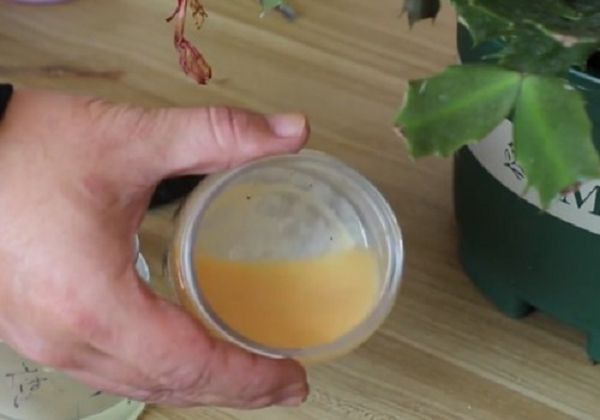
But for safety, it is generally still recommended to apply decomposed dilute organic fertilizer liquid, such as cake fertilizer water or soybean water, both of which are acceptable. The frequency of additional fertilization must also be strictly controlled; generally, applying a dilute liquid fertilizer once every 2-3 weeks is sufficient.