What are the care methods for zinnias? A detailed explanation in one article
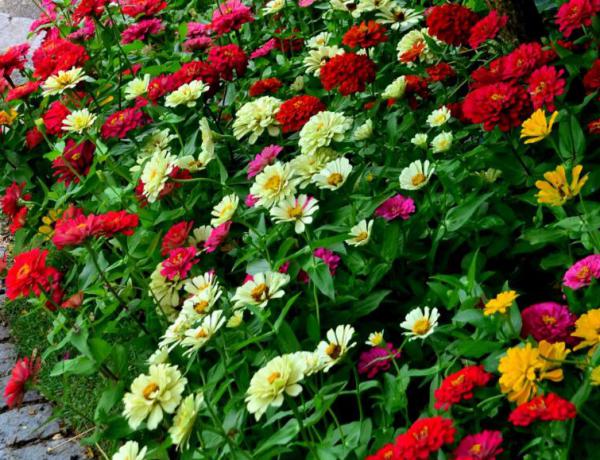
When it comes to zinnias, some friends may find them unfamiliar, but if you know them as the frequent guests often growing in flowerbeds, then they may seem familiar, since flowerbeds can be seen everywhere around us, and the flowers in them seem as if they never wither. In fact, they do wither, it is just that their flowering period is relatively long, one wave fades and the next follows. Zinnia is also called zinnia, and its flowering period is about one hundred days, which is how it got its name.
The flowers of the zinnia are very beautiful and are the best choice for decoration, so whether you grow them at home or in the yard, they can create a very good decorative effect. So how should such a beautiful flower be planted? And how should it be cared for? It is actually very simple, and as long as you pay attention to a few details, it can grow very well.
First, choose the seeds well. As mentioned above, the zinnia is a very common plant, and after its flowering period ends it will produce seeds. For flower lovers who have the conditions, if they want to grow it, there is no need to spend money buying seedlings or seeds at all. You just need to observe carefully after its flowering period ends, and once the seeds are ripe, pick them and plant them yourself in a flowerpot and wait for them to sprout.
Generally speaking, they can be found in all kinds of flowerbeds, but you must wait until their buds turn yellow and gradually dry up. At this point you can take the buds home, but during this process you must not damage them. The principle for selecting seeds is to choose those that are large and plump, as this ensures more seedlings will sprout.
Then, prepare the soil and flowerpot. Zinnias like loose, well-draining nutrient soil, and this is what we need to ensure when preparing the soil. If you really cannot find loose soil, adding some coal cinders or small gravel to it is also fine.
Just pay attention that the soil should be finer, since its roots are very small and must be able to absorb nutrients. After preparing the soil, a very important step is to disinfect the soil. The purpose of doing this is to kill some harmful bacteria in the soil so that the zinnia is less likely to get sick during growth.
Next, watering and light. After the seeds are placed in the soil, you cannot just ignore them, and ensuring watering and avoiding light are both necessary. Generally, we need to keep the soil moist at all times, and the seeds must not be exposed to sunlight, otherwise the germination rate will be reduced.
Finally, transplanting and care. Generally, its seeds will sprout in about 5 days, and what we need to do at this time is transplant them. One seedling per flowerpot is enough, since later it will become a large clump of flowers. After transplanting, careful care is still needed, providing them with a warm environment and keeping up with watering, and you also need to make sure they get a certain amount of light.
Of course, if you want them to grow even better, giving them a little fertilizer is also necessary.