How do you grow golden-edged Daphne odora to extend its flowering period?
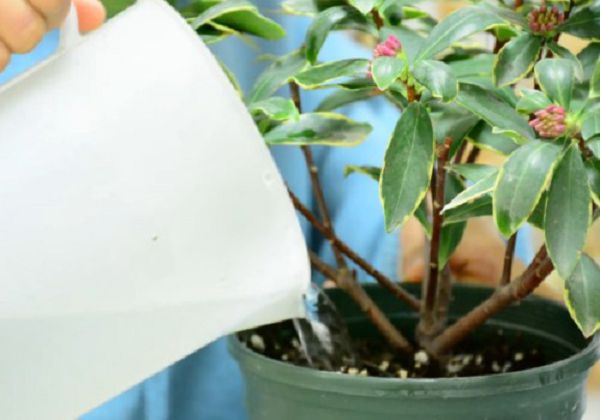
Golden-edged Daphne odora is not only good for its foliage, but even better for its flowers, and it also gives off a rich floral fragrance that feels refreshing to the senses. Its flowering period is also relatively long, usually lasting more than 2 months. But if it is not cared for properly during the flowering period, it will not only shorten the flowering period, but even reduce the quality of the blooms. And for those who enjoy the flowers, they often hope to extend the flowering period.
The flowering period of golden-edged Daphne odora starts in winter, but winter temperatures are often relatively low, so it is not suitable to keep it outdoors, since this flowering plant has fairly poor cold tolerance. If we keep it outdoors, it will not only delay flowering due to the effects of low temperatures, but may even cause bud drop. So it is recommended to move the potted golden-edged Daphne odora indoors to a bright, well-ventilated environment during the flowering period.
Not only that, when the buds of golden-edged Daphne odora are about to open, direct strong light must be avoided, but winter light intensity is generally not great, so even with full sun it can basically tolerate it. We usually place it near a windowsill so it can fully receive light, and providing 4-5 hours of direct sunlight each day is enough.
But in fact, golden-edged Daphne odora is fairly shade-tolerant, and it itself prefers a growing environment with partial shade and plenty of scattered light. And sufficient light can effectively prevent the plant from becoming leggy. However, after the flower buds form, we still need to supplement it with some nutrients, so that it can get enough energy to open the buds. It can be seen that timely topdressing is especially important.
However, to promote flowering in golden-edged Daphne odora, we have certain requirements for choosing fertilizer, usually focusing on topdressing with phosphorus and potassium fertilizer, and it is recommended to use potassium dihydrogen phosphate solution for foliar spraying or root watering. But the concentration needs to be controlled at 0.1%, which is suitable, that is, the amount of one small spoon of potassium dihydrogen phosphate mixed with 1 liter of water. After fully dissolving the fertilizer and shaking it evenly, spraying the leaves or watering the roots can both achieve good results.
But the topdressing process needs to continue until the buds begin to unfold before stopping, because if topdressing continues during the flowering period, it will make the plant grow relatively quickly, making the branches and leaves grow too vigorously, thereby taking away the nutrients that originally belonged to the buds, causing the buds to drop due to insufficient nutrients. So fertilizer must be stopped in time when the buds open.
In addition, to promote flowering and extend the flowering period, timely water control is also an important management measure. Because golden-edged Daphne odora itself has fleshy roots, besides not watering too much normally, water also needs to be controlled in time during the flowering period; watering too much can still easily cause root suffocation or even root rot, so it may still cause bud drop. And during the flowering period, do not frequently spray water on the flowers and leaves either; this is relatively beneficial for promoting flowering and extending the flowering period of golden-edged Daphne odora.