How to grow hydrangeas? Master balcony and courtyard care techniques
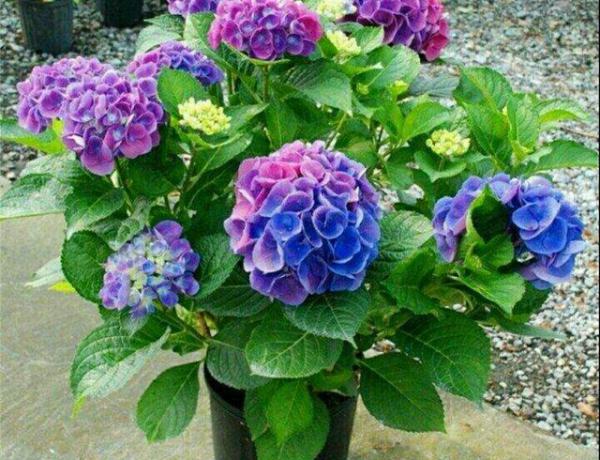
Friends who love growing flowers want to grow any beautiful flower they see, and over time they end up with all kinds of plants, basically turning their balcony or courtyard into a beautiful little garden.
The hydrangea introduced today is also especially suited to growing in a courtyard or on a balcony, and once it blooms it is as beautiful as a colorful hydrangea ball, very appealing.
1. Growing hydrangeas requires proper pruning and bud pinching
Hydrangeas grow branches and leaves quickly, and once the plant reaches a certain height it easily lodges and breaks, which affects the ornamental effect and is also bad for the plant's growth and flowering. Therefore, pinch buds and prune it in good time to maintain a good tree shape, promote new branch growth, and encourage flowering.
To keep a hydrangea's good tree shape, start pinching buds from the seedling stage. Generally, when the seedling grows to about 15 cm, you can pinch off its growing tip so it sprouts more branches; when the new branches grow to about 10 cm, you can pinch the tips again to make the new branches grow strong and promote flowering.
Hydrangeas are best pruned in March each year, mainly removing dead branches, weak branches, crossing branches, and so on, keeping only vigorous branches, and cutting them back short. When cutting short, leave 2~3 buds on each branch to encourage branching and make it bloom more.
2. Increase nutrients to promote growth
Hydrangeas like fertilizer. During the growing period, apply once every half month a water solution of decomposed bean cake fertilizer. Be careful that the fertilizer solution is not too concentrated, so as not to burn the roots and affect normal growth. After entering the bud stage, increase the amount of phosphorus and potassium fertilizer used; you can apply 2 additional times a dilute potassium dihydrogen phosphate solution, which can make the hydrangea flowers bigger and more brilliant.
3. Ensure sufficient water
Hydrangeas have luxuriant branches and leaves and also have high water requirements. Generally, in spring, summer, and autumn, provide sufficient water to keep the potting soil in a moist state, but do not let water accumulate, otherwise the roots easily rot; when the weather is hot in summer, also frequently spray water on the plant's leaves, and before winter gradually reduce watering so the plant can gradually enter dormancy.
Friends who like hydrangeas, after understanding the hydrangea's growth habits, can grow a few plants on their own balcony or in their courtyard. After blooming, the clusters of beautiful large flower balls are very charming.