The three most damaging pests for clivia
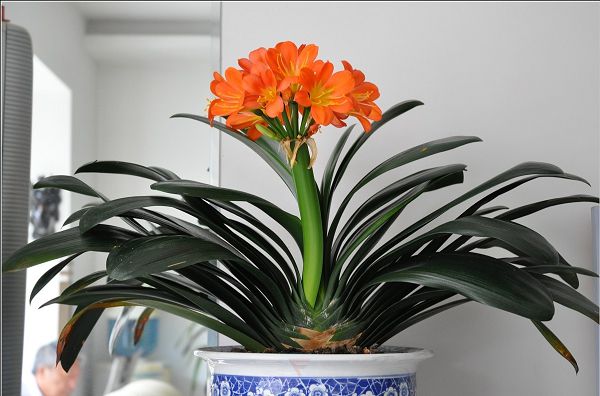
Clivia, also known as the grand clivia, is a perennial evergreen herbaceous flowering plant of the genus Clivia in the Amaryllidaceae family. It is native to South Africa. The grand clivia has dark green, glossy leaves and large, brilliant flowers, with a stately and elegant form. It is an excellent potted plant prized for both its flowers and foliage, and can also be used as a cut flower.
The grand clivia has fresh flowers, jade-green leaves and abundant fruit, with leaves, flowers and fruit all beautiful. Its leaf form is elegant, noble and dignified; when it blooms, the green leaves and red flowers set each other off, with a graceful bearing. In particular, its flowering period coincides with the Spring Festival, so it is deeply loved by people and has become a fine choice for decorating halls, conference venues or home interiors. Here is an introduction for you.
The first: the slug is an omnivorous mollusc, also called the shell-less worm, the slug worm or the slug. It specifically gnaws on seedlings and newly grown tender leaves, forming irregular notches and holes, and it also damages the emerging flower stalks and stems. It causes new leaves to start growing crooked from the notched areas it has gnawed, and causes newly emerging flower stalks to split at the stalk areas it has gnawed, until they break off. This causes extremely serious damage to clivia. At the same time, the feces it excretes and the mucus left by its crawling contaminate the plant, allowing pathogens to invade, causing leaves to rot and easily leading to soft rot.
The second: the snail is also an omnivorous mollusc. Snails have shells, and they also like to eat the tender tissues of plants, such as tender leaves, new buds, root tips and flower buds. They cause irregular wounds or cavities. The greatest harm from snails is that after they eat the newly emerging central tender leaves, the flower core has no growth point, so the whole plant, especially mature clivia, cannot bloom or send up flower stalks, and cannot grow new leaves, making the whole plant useless.
The third: scale insects are also one of the most common pests of clivia. In particular, the cottony cushion scale causes the greatest harm to clivia. It appears powdery white and often attaches to leaves, fruit and stems, sucking their sap and secreting a sticky substance. It turns black, hindering growth, destroying chlorophyll, and producing slightly sunken pale yellow spots. In severe cases, it leads to leaf drop and the whole plant withering.
The control methods for slugs and snails are:
First, taking advantage of their habit of liking damp conditions and hiding by day and coming out at night, use manual capture and killing. Place cabbage leaves near where they appear and move about, sprinkle a little wheat bran or cornmeal on top, and capture and kill them in a concentrated way before dawn, or mix arsenic trioxide or trichlorfon and other baits into the wheat bran or cornmeal to poison and kill them.
Second, use lime as a barrier. Sprinkle lime around the area where they are active; once they touch it, they die.
Third, apply 8% metaldehyde or molluscicide, or 10% metaldehyde formulation, at 1.5 grams per square meter. Using the above methods can achieve the goal of complete elimination.
The control methods for cottony cushion scale are:
First, when there are few scale insects, they can be removed by wiping with a cloth or brushing with a brush.
Second, when an infestation has just occurred, use a cotton ball dipped in alcohol to touch and kill the insects. Third, emulsified dimethoate can be diluted with water at a ratio of 1:800 and sprayed onto the affected parts to kill the insects.