Can a pomegranate tree with no roots or very few roots still be planted and survive?
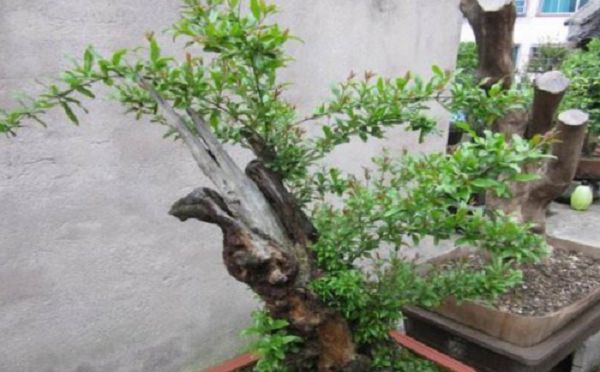
Many people like to grow pomegranate trees in pots, and the potting soil is the basic condition for the growth of a pomegranate tree; the quality of the soil will have an important effect on the plant's growth. The pomegranate's root system is the key part that absorbs nutrients and supplies them to the tree. If the root system is too poor, no matter how good the potting soil is, it cannot smoothly deliver nutrients to the tree, and the plant still cannot maintain normal growth and may even die. Clearly, the importance of the root system to a tree is self-evident.
The growth condition of a pomegranate tree is often affected by the distribution of its roots, and its root mass is usually concentrated in the outer area of the canopy projection. Moreover, the pomegranate tree's root system is very well developed, even extending several meters deep into the ground. Not only that, but its well-developed old roots also have a strong absorbing capacity and can obtain a large amount of nutrients from deep soil. The pomegranate tree also has the characteristics of liking light and warmth and being heat-tolerant and drought-tolerant, so compared with many tree species, the pomegranate tree is relatively easy to grow.
As everyone knows, the pomegranate tree has a very strong sprouting ability and also a relatively strong ability to adapt to the environment, and during transplanting it is usually necessary to prune off overly long old fibrous roots, which can stimulate it to put out a large number of new roots, thereby improving the root's absorbing capacity and further strengthening the tree's vigor. Practice has proved that even if a pomegranate tree has no root system or very few roots, it is often relatively easy to plant and keep alive. As long as the growing environment is suitable, usually cutting a few old branches from the mother pomegranate plant for cuttings can often lead to survival, which basically also shows that pomegranates can survive with no roots or few roots.
However, for pomegranate saplings or wild-collected stumps, if there are too few roots, although they can survive, it does have a certain effect on their growth speed. After all, the plant needs to sprout a large number of roots to absorb water and nutrients in order to maintain and promote growth. If pomegranate branches are used for cutting propagation, they generally take 40-60 days to root and sprout; but if transplanting small seedlings or wild-collected stumps with no roots or few roots, although they may ultimately be planted and kept alive, the time this process takes is often much longer.
In general, as long as the roots of a pomegranate tree with no roots or few roots are not infected by pests or diseases and are not rotten, and after planting it can receive our scientific and careful care, it will often ultimately be able to root and sprout until it survives. But this process is often rather long and time-consuming, so in addition to doing a good job of care and management, we also need enough patience.
But for wild-collected stumps or old stumps with no roots or few roots, if we want them to survive after planting, the difficulty seems to be somewhat greater. To give them a chance to be planted and kept alive, for pomegranate wild-collected stumps or old stumps with no roots or few roots, as few branches and leaves as possible should be retained, so they need to be heavily pruned, mainly to reduce water evaporation and nutrient consumption. After all, in this state the pomegranate tree has no way to use the absorbing capacity of its root system to provide the nutrients and water needed for the growth of branches and leaves.
Of course, even for a pomegranate tree with no roots or few roots, we still need to maintain scientific watering, and it is even necessary to spray water more to keep it moist. After all, for a pomegranate tree to smoothly sprout roots and put out tender buds, it needs a suitable humidity environment. Therefore, watering is a very necessary task, and this is one of the conditions that ensure a pomegranate tree with no roots or few roots can sprout.
In summary, a pomegranate tree with no roots or few roots can possibly be planted and kept alive, only it is more difficult to keep alive than one with roots and a relatively large root system. This is mainly reflected in the higher requirements for planting technique and the stricter requirements for the growing environment. However, hard work pays off; as long as we can plant and care for it according to scientific and standardized procedures, I believe it can ultimately be kept alive, and it is only a matter of sooner or later.