What causes water lily leaves to turn black and rot?
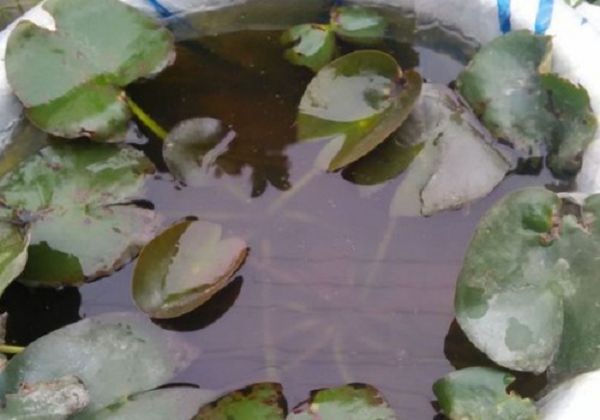
Water lilies are highly valued for their elegant form and brilliant, delicate flowers. When grown in pots, their summer blooming season not only gives us a visually delightful experience but also carries a touch of wild charm. However, when growing water lilies in summer, you must pay close attention to your methods, otherwise the plants are quite prone to developing blackened, rotting leaves. So what is going on when water lily leaves turn black and rot? Today, let us look together at the causes of blackened, rotting leaves in pot-grown water lilies.
Many growers assume the main cause of blackened, rotting water lily leaves is improper fertilizing or lighting. The real trigger for this condition is usually not that you fertilized too much or at too high a concentration, nor that the sunlight was too intense or the light exposure too long. The most likely reason, when you get down to it, is poor control of water depth.
But what water depth is appropriate? Is it too high a water level or too low a water level that causes this? In fact, the cause of blackened, rotting leaves in water lilies is generally a water level that is too low, meaning there is too little water. Often, because we are too busy or forget to top up the water in time, the water level stays low for a long period, and the water lily leaves gradually turn black and rot.
Although water lilies are suited to being planted into the soil in spring, when growing them in spring you should not add too much water; it is better to keep the water level relatively shallow, though this too is a relative practice. But it should not stay too shallow for long either, because the plant keeps growing, especially as its stems and leaves keep emerging. Once the leaves spread out and lie on the water surface, you should top up the water in the pot in time.
Not only should you add water in time, but as the water lily's stems and leaves keep rising, you should also add water gradually rather than doing it all at once, and in fact you cannot do it all at once. Water should be added layer by layer, so that the water level always keeps a certain proportion relative to the stems and leaves, neither too high nor too low. Only in this way can you ensure the water lily stays healthy and grows vigorously.
But once summer arrives, as temperatures gradually rise, the weather also gradually becomes hotter. Especially if water lilies are exposed to the harsh summer sun, when the water level is low and there is little water, the water temperature will surge, scorching the leaves and often causing curled and dried leaves until they rot away. Moreover, as the leaves rot, the stems rot along with them, and eventually the whole water lily may suffocate.
So, a low water level suits water lilies in spring mainly because spring temperatures are relatively low and light intensity is not strong; growing them in shallow water raises the water temperature faster, thereby speeding up the water lily's growth. But in the hot, scorching summer with fierce sunlight, if you again grow water lilies in shallow water, it easily causes the stems and leaves to turn black and rot, mainly because the sharp rise in temperature inside the pot causes root suffocation.
Therefore, when growing water lilies in summer, we cannot use the shallow method as in spring. Instead, we should raise the water level in time to make sure the plant does not suffocate from a sudden rise in temperature inside the pot, thus avoiding blackening and rotting of the stems and leaves. At the same time, pot-grown water lilies should not be placed in full-day blazing summer sun; they need appropriate shading, otherwise the leaves may wilt from the sun or even curl at the edges, which will inevitably reduce the ornamental value of the potted plant and may also affect its normal growth.