What are the methods for growing potted lilacs?
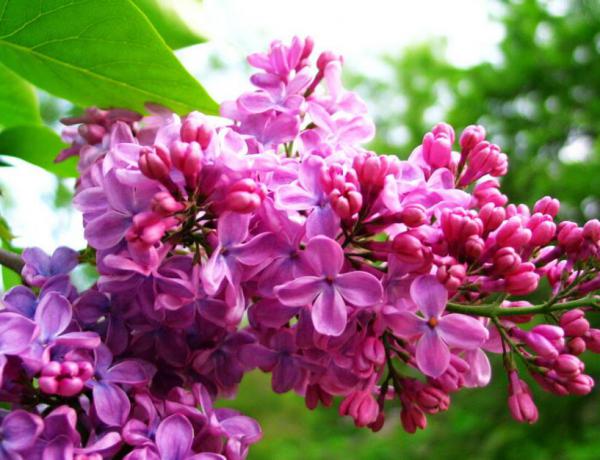
Lilacs have beautiful flowers and a fragrant, delicate scent, making them a standout among home-grown flowers and very well loved. The lilac is a fairly common flower, and as the city flower of Harbin, Heilongjiang Province, it has its own unique charm. So what are the methods for growing lilacs? Today, the editor will walk you through how to care for potted lilacs.
How to grow potted lilacs
1. Soil requirements
Lilacs are not demanding about soil and can tolerate poor, thin soil. Except for strongly acidic soil, they can grow normally in all types of soil; among lilac growing methods, loose, neutral soil is best. Generally, avoid planting in low-lying areas, as standing water can cause disease or even kill the whole plant.
2. Growing environment
Plants in the genus Syringa are sun-loving trees that prefer to grow in places with plenty of sunlight. In shady or semi-shady spots they grow weak and thin and bloom sparsely, though a few species such as Yunnan lilac (Syringa yunnanensis) require moist air. When cultivating these plants in the north, it is best to choose a small environment with relatively high air humidity, such as a sheltered, sunny spot or the edge of a sparse forest. It originated in equatorial rainforest climates and has a certain degree of cold tolerance. The optimal growing temperature is 15-20°C; when the temperature falls below 3°C, the plant will suffer frost damage and die.
3. Watering method
Many friends raising lilacs for the first time want to know how to care for potted lilacs. In fact, lilacs are highly adaptable, so lilac growing methods are relatively simple. Normally you just need to weed in time, without using a hoe, simply pulling them out by hand, and water whenever the potting soil dries out, without letting water accumulate, and they will grow normally. As for watering frequency, there is no strict requirement; just water when it is dry.
4. Repotting and pruning
Lilacs need to be repotted every 2-3 years. Take the plant out of the pot, prune the roots, cut off the old roots, and replace with fresh potting soil to encourage new root growth. Every year in mid-March, before the lilac sprouts, it should be pruned: cut off overly dense, weak, diseased and pest-damaged branches, and shorten vigorously growing branches. After the leaves drop, another shaping prune can be done to keep the canopy round and attractive, which helps growth and flowering the following year.
After 3-4 years of planting, the lilac branches age, so the above-ground part should be heavily pruned, that is, cut the trunk at 30 cm above the ground. After cutting, sturdy new branches will soon grow, making the canopy full, and abundant flowers will appear the next year.
5. Fertilizing method
In lilac growing methods, it is best not to apply heavy fertilizer. Lilacs dislike excessive fertilizing, which causes branches to grow excessively and affects flowering. Generally, applying well-rotted compost once a year or every other year before winter is enough.
6. Pest and disease control
Compared with other plants, lilacs have relatively few pests and diseases. The main pests are aphids, bagworms and slug moths. If pests are found, spray with 800-1000 times diluted 40% dimethoate emulsion or 1000 times diluted 25% phosmet emulsion for control.
Notes on growing lilacs
In the end, lilacs are still very easy to grow. Their growing requirements are not high; overall, leaving them to grow freely is completely fine. Give them some soil and some water and they will grow and bloom. Lilacs like sunlight and tolerate shade, cold and drought, and they do not need frequent watering; watering once every two or three days is completely fine. Lazy flower lovers are in luck.
However, keep them warm. If the temperature drops below 3°C, you can take a little action and just move the flowerpot indoors. In addition, during the young stage, if a typhoon is coming, be sure to do good windproofing work. You can use ropes and bamboo poles to secure the lilac trunk to prevent strong winds from blowing it over.