What soil is better for growing jade plant (Crassula ovata)
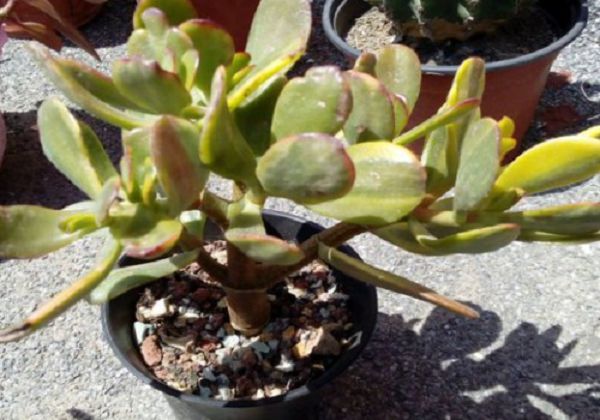
The jade plant (Crassula ovata) is an evergreen succulent in the Crassulaceae family. Because of its high ornamental value, it is often grown by people as a potted plant; it can be enjoyed for its beauty, decorate the home environment, and even improve the air, making people feel delighted. Many gardening friends confuse it with the jade tree (Crassula arborescens); in fact, the two are not the same plant.
Although the jade plant and the jade tree are both evergreen succulents in the Crassulaceae family, look quite similar, and have similar growth habits, they can be told apart by their stems and leaves. Since the two share the same growth habits, their cultivation methods should generally also be the same.
For growing the jade plant in a pot, you can usually use the soil meant for the jade tree. In previous articles, the editor has mentioned many times that for growing the jade tree, it is suitable to use leaf mold, river sand, vermiculite and other substrates mixed into a potting soil. So for potting the jade plant, such substrates should also be quite suitable.
Of course, we can also use peat soil with perlite, or use garden soil with river sand to grow it. As long as the substrate we provide has strong air and water permeability, is fertile and loose, and is slightly acidic, it can usually be used to grow the jade plant. This is because the jade plant is not very demanding about its potting soil; as long as these conditions are met, it is fine.
So, if you use garden soil and river sand to grow it, it is recommended to mix in a little leaf mold or humus soil to increase the fertility of the soil and also raise the acidity of the substrate. Generally, keeping the pH value at around 6.5 is more suitable; such soil is slightly acidic and can better promote the growth of the jade plant.
And precisely because the jade plant and the jade tree look very similar, have the same growth habits, and also both belong to the Crassulaceae succulents, many gardening friends will intentionally or unintentionally treat the two as one plant when growing them. Although strictly speaking the two are not the same plant, in fact we can also treat them as two different varieties of the same plant when growing them.