What factors affect flower bud differentiation in strawberries?
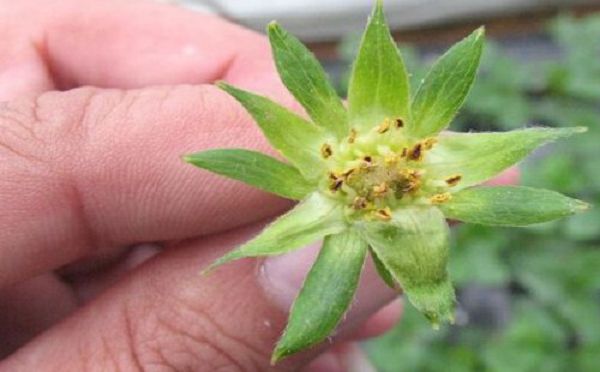
When we grow strawberries in pots, besides being able to enjoy them as ornamentals, what matters more is that we hope to harvest delicious, ripe fruit. To get strawberries to fruit successfully, the development, formation and differentiation of flower buds is key. Only when potted strawberries successfully form flower buds can they go on to bloom and bear fruit. The number and quality of the flower buds formed often have a direct effect on the fruiting of strawberries. So, what are they?
The formation and differentiation of strawberry flower buds is often restricted by many aspects, such as the variety chosen and its growth condition, light, temperature, nutrients and growth regulators. So the editor will analyze these aspects for everyone.
I. Quality of the young seedlings
The quality of strawberry seedlings directly affects the formation and differentiation of flower buds, especially the number and quality of the flower buds. If the seedlings develop well, the number of differentiated flower buds will be greater and their quality will also be higher. Moreover, the number of leaves on strawberry seedlings often also affects the timing and speed of flower bud differentiation and the number of flowers. Under normal circumstances, it is necessary to ensure there are more than 4 leaves, because seedlings with fewer than 4 leaves have a shorter growth period and accumulate relatively fewer nutrients, which often has a certain negative effect on flower bud differentiation.
The seedling age of strawberries also has a certain effect on flower induction, because it is often an important factor in perceiving temperature and sunlight, and has a relatively large impact on the process of flower bud differentiation and formation. Usually, the older the plant age, the weaker the growth, the later the time to form flower buds, and it may even fail to successfully promote the formation of flower buds.
Young strawberry plants are generally potted and planted in early September in autumn, usually on cloudy days or in the evening on sunny days, because the time of potting and planting often also affects the formation and differentiation of flower buds to a certain extent.
II. Cultivation management
For potted strawberries, adopting scientific and reasonable cultivation management methods will greatly promote the formation and differentiation of flower buds in the later stage of the plant. Usually, the process of flower bud differentiation can be reasonably regulated through management in many aspects, such as the seedling-raising process, potting and planting, potting soil preparation, and water and fertilizer management.
During the seedling-raising stage, it is generally necessary to avoid direct strong light, and short-day conditions with weaker light can be received, while appropriately lowering the temperature, which can promote differentiation; and appropriately trimming and cutting the roots and controlling nitrogen intake can not only promote flower bud differentiation, but also make the formation of flower buds appear more uniform.
III. Nutrient elements
The amount of nutrient elements often restricts flower bud formation. Especially during the flower bud differentiation period, if carbohydrates are sufficient, nitrogen is moderate, and the carbon-to-nitrogen ratio is high, it will be more conducive to promoting flower bud formation to a large extent; if the carbon-to-nitrogen ratio is relatively low, it often delays flower bud differentiation to a certain extent.
Relatively speaking, robust seedlings differentiate flower buds earlier than weaker seedlings, but the number of small flowers they open also increases accordingly, mainly because excessive nitrogen intake causes the plant to grow too vigorously, thus leading to the phenomenon of not inhibiting flower bud differentiation. Instead, seedlings with moderate growth are more conducive to promoting flower bud differentiation. The differentiation of flower buds can be accelerated by trimming the roots of the plant and appropriately controlling growth.
IV. Environmental factors
The main environmental factors affecting flower bud differentiation and development in potted strawberries are temperature and light. If these two conditions are suitable, they can accelerate the formation and differentiation of strawberry flower buds. Usually, the optimal temperature for flower bud differentiation is between 10-20°C, and it is best to maintain an average ambient temperature of 15°C; when the temperature drops below 5°C, flower bud differentiation is often inhibited or stops. At the same time, during the flower bud differentiation process, it is advisable to ensure that the daily light duration is 10-12 hours.
However, the conditions for flower bud differentiation and development are often not the same, and there may even be a large contrast. Flower bud differentiation needs to go through a process of low temperature and short-day conditions, while flower bud development needs to go through a process of high temperature and long-day conditions; the latter requires receiving no less than 12 hours of light in a temperature environment above 20°C. After the flower buds have differentiated normally, we need to promptly adjust the temperature and light to make the environment more conducive to promoting the development and growth of the flower buds.
V. Growth regulators
For strawberries, when applying growth regulators, abscisic acid is generally chosen and gibberellin must not be used. This is because applying abscisic acid can promote strawberry flower bud differentiation, while applying gibberellin does the opposite and often inhibits the formation and differentiation of flower buds. And if some paclobutrazol can be sprayed during the strawberry seedling stage, it often also helps promote the formation of flower buds to a certain extent.