How to grow potted succulents so they look beautiful
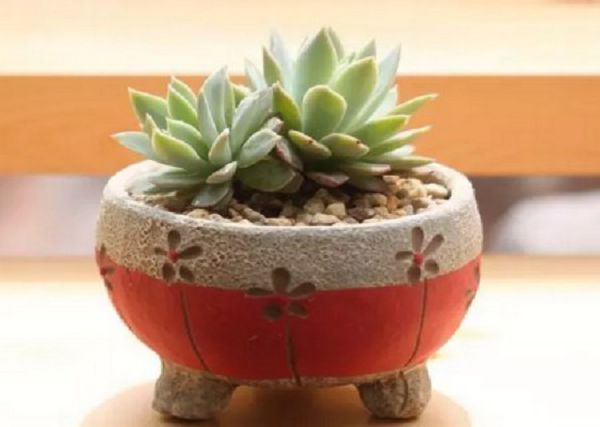
Succulents are hugely popular right now, and prices for these fleshy plants have risen along with the tide. Some succulent fans obsess only over collecting every rare variety under the sun, while others just focus on growing them without ever thinking about how to make them more beautiful, or how to let them decorate their lives more beautifully. If you do not have much space at home, or if the area you live in is not suited to outdoor growing, then just grow one or two pots well, and let them make your life shine. If you are a succulent fan, start now: put aside all those dozens of pots and trays, start by growing just one plant, and do not chase expensive varieties for their own sake, because even ordinary varieties have their most beautiful spring.
Succulents are fleshy and very cute, the kind of thing you are afraid to drop when holding in your hands, or that would melt if you put it in your mouth. The first time I saw a succulent, I was drawn in by its beauty. Now I have become a true succulent addict, completely hooked. In my spare time I wander through the big flower markets, admiring these beautiful little charmers, and when I find a suitable one I naturally take it home to enjoy slowly. Succulents are small and cute, rich in color, with chubby cheeks, and are hailed as the glamour models of the plant world, the favorite of office ladies. Many people wonder how these glamour models are grown. Let us take a look.
1. Soil
Soil is the only reliable source of nutrition for plants, and the medium that plants must have to take root and grow. Soil has the ability to protect and regulate itself. When pests or diseases appear, plants will die, and eventually the pests and diseases lose their breeding ground. Once the pests and diseases starve to death, the soil is still healthy soil. When the soil has no fertility, plants will not grow until the nutrients brought by rain and air restore the soil's vitality. For succulents, soil that is breathable, drains well, and does not easily clump is recommended.
2. Ventilation
Ventilation is very important, and on stuffy hot summer nights ventilation should be increased. When growing indoors, open windows more to increase airflow; the most common molds and other pests appear because of long-term closed conditions and poor air circulation. Poor ventilation also easily breeds powdery mildew, especially on succulents such as Firesticks (Euphorbia tirucalli).
3. Light
In summer, be careful of long exposure to high temperatures; succulent tissue cells are thick and release heat slowly, so leaves are very easily sunburned. In other seasons, full sunlight helps the plant grow. (Many plants that need shade, like Haworthia, which are tender green and translucent, must be protected from sunburn.) Plenty of sunlight plus a large temperature difference will make succulents even redder and more vivid.
4. Temperature
A temperature of 15 to 28 is most suitable, and 5 to 35 is the limit the plant can endure. To grow succulents well, temperature difference is very important. The so-called temperature difference is the difference between morning and evening temperatures, and outdoor growing makes it easier for them to show their best colors. Succulents are mostly distributed in tropical and subtropical regions, but they are not simply afraid of cold and not of heat; rather, depending on the species and the climate conditions of their distribution areas, they have varied temperature requirements.
5. Humidity
Maintaining a certain level of air humidity during the growing period of succulents is quite important. When the plant enters its growing period, the role of air humidity is obvious. Some horticultural varieties rich in color changes will be even more brilliant in color if a considerable level of air humidity can be maintained. It can be said that basically most varieties need a certain amount of humidity at this time. During the dormant period, however, air humidity must be handled with great caution, and the first to watch are some summer-dormant varieties with a high degree of succulence.
5. Water
Water when dry and let it dry between waterings, and water thoroughly each time. After watering, do not expose the plant to strong sun; place it in a low-light, cool spot. "When dry" means that after one watering, wait until the soil surface turns pale and the moisture in the surface and inner soil has disappeared before watering a second time; do not wait until the soil in the pot has been completely dry for a long time before watering. "Let it dry between waterings" means that each watering should be thorough, that is, water until water seeps out of the drainage holes at the bottom of the pot. Watering by this dry-wet method both satisfies the water these plants need for growth and ensures the oxygen needed for root respiration, which is good for healthy plant growth.
6. Arranging
I believe friends who enjoy multicolored paintings can quickly put together a beautiful succulent arrangement. When combining succulents, be careful to leave enough space so they have more room to grow; a tightly packed arrangement can only keep its effect for a very short time. Also pay attention to the growth forms of the succulents, such as trailing types, tree-like types, and coral-like types, and to their habits as well. Combining succulents with different habits together creates many inconveniences in watering and sunlight, so these three points must be taken into account when arranging them.
Closing remarks:
To be honest, how to grow succulents so they look beautiful can be described both very simply and very complicated. Simply put, when succulents are beautiful is when they show their best colors, and to grow succulents well, bring out their colors, keep them from getting leggy, and keep them from wilting requires a lot of effort from the grower. To grow beautiful succulents, we must first grow them well and understand their habits, so that on the basis of growing them well we can gradually master them.