How is piglet yellow dysentery prevented and treated during the feeding and management period of piglets?
Piglet yellow dysentery is an acute, lethal infectious disease commonly seen in newborn piglets, and we should attach great importance to it during the feeding and management of piglets. This disease mostly occurs from a few hours to within 3 days after birth, and both the morbidity and mortality of piglets are very high; it is one of the virulent infectious diseases harming suckling piglets.
After piglets develop the disease, if comprehensiveprevention and treatmentmeasures are not taken in time fortreatment, the whole litter of piglets will all die, causing great losses. This disease causes enormous harm to the pig industry.
I. Epidemic characteristics of yellow dysentery during the feeding and management of piglets:
It mainly occurs in suckling piglets aged 1-3 days, and suckling piglets over 7 days old rarely develop the disease. When it occurs, it often affects one litter after another, with a very high mortality rate.
Carrier sows are the main source of infection for this disease; the bacteria are excreted in feces and contaminate the sow's teats, skin and environment. After birth, when piglets suckle the teats and lick the sow's skin, or come into contact with contaminated objects, the pathogen enters the gastrointestinal tract through the digestive tract and causes infection.
In newly built pig farms, introducingbreeding pigsfrom different farms, if there is a history of piglet yellow dysentery, will also lead to the spread of this disease. The epidemic of this disease has no seasonality.
Once piglet yellow dysentery becomes epidemic on a pig farm, it will persist for a long time and is very difficult to eradicate. Therefore, it is necessary to start early and start small, and adopt comprehensive and scientificprevention and treatmentmeasures to wipe it out.
II. Clinical symptoms of yellow dysentery during the feeding and management of piglets:
Piglets are still very healthy at birth. Some suckling piglets develop this disease about 12 hours after birth; some develop it at 1-3 days of age.
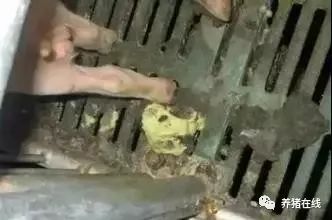
In the most acute type, they die suddenly without showing clinical symptoms. Sick piglets suddenly develop diarrhea, with feces in a yellow paste form or yellow watery form, containing small curd flakes.
The anus of sick piglets is relaxed; when they are caught, struggling or squealing increases abdominal pressure, and thin feces are often expelled from the anus, spraying out in a watery form.
If the course of the disease is slightly longer, they quickly become emaciated and dehydrated, and finally die from exhaustion and coma. However, suckling piglets with this disease do not vomit.
III. Pathological anatomy of yellow dysentery during the feeding and management of piglets:
Findings at necropsy: acute catarrhal inflammation of the small intestine and changes of septicemia are commonly seen. The small intestinal mucosa is red, swollen, congested or hemorrhagic; the small intestine is filled with gas, and the intestinal wall becomes thin and relaxed. The gastric mucosa is red, and the mesenteric lymph nodes are enlarged. In severe cases, there are hemorrhagic spots in organs such as the heart, liver and kidneys, and some also have small necrotic foci.
IV. Key points for diagnosis of yellow dysentery during the feeding and management of piglets:
First, epidemic characteristics: it mainly affects suckling piglets after birth, with onset from several hours to before 3 days of age. The morbidity rate in each litter of piglets can reach up to 100%.
Second, symptom characteristics: suckling piglets suddenly develop the disease several hours after birth, excreting yellow watery thin feces containing small curd-like flakes, with acute onset, short course and high mortality.
Third, necropsy characteristics: the small intestine of sick piglets shows pathological lesions of acute catarrhal inflammation and septicemia. The lesions are most severe in the duodenum, where hemorrhagic catarrhal lesions are commonly seen. There are small hemorrhagic spots or small necrotic foci in the heart, liver and kidneys.
V. Preventive measures for yellow dysentery during the feeding and management of piglets. To control the occurrence of piglet yellow dysentery and address the root cause, the "three do wells" must be achieved:
First, do well the environmental sanitation and disinfection work of the pig house. The farrowing room should be kept clean and dry, without accumulating sewage and manure, and attention should be paid to ventilation and warmth.
Before the sow is due to farrow, the farrowing room should be thoroughly cleaned, washed and disinfected. Clean bedding straw should be spread. After the sow gives birth, place the piglets in a already disinfected warming box or basket, and do not let them contact the sow for the time being.
After wiping and cleaning (disinfecting) the sow's teats, udder, chest and abdominal skin with a 0.1% potassium permanganate aqueous solution, and squeezing out a few drops of milk from each teat, then let the piglets suckle. In this way, the route of infection is cut off.
Second, do well the medication work before the first suckling of newborn piglets. That is, after piglets are born and before they are allowed to take colostrum, orally administer antibiotic drugs (gentamicin, streptomycin, etc.) to every piglet in the whole litter. Afterwards, administer once a day for 3 consecutive days. Prevent the disease from entering through the mouth.
Third, do well the vaccination and immunization work for sows to improve the protection rate. China has developed Escherichia coli K88ac-LTB bivalent genetically engineered vaccine, Escherichia coli K88 and K99 bivalent genetically engineered vaccine, and Escherichia coli K88, K99, 987P trivalent inactivated vaccine. The first two use oral immunization, and the latter uses injection immunization.
All are immunized 15-30 days before farrowing (for specific usage, see the instructions).
After sow immunization, their serum and colostrum contain relatively high levels of antibodies against Escherichia coli, which can enable piglets to obtain a very high passive immune protection rate.
VI. During the feeding and management of piglets, thetreatmentmethods for yellow dysentery:
First, thetreatmentprinciple: if one suckling piglet is found to have piglet yellow dysentery, the whole litter of suckling piglets should receive preventive drugtreatment. Otherwise, iftreatmentis given only after the disease occurs, the efficacy is often poor.
Second, thetreatmentmethods: the preferred drugs for antibiotic and sulfonamide therapy are gentamicin, kanamycin and streptomycin sulfate.
Gentamicin 4-11 mg per kg body weight each time, twice a day, orally; 4-7 mg per kg body weight, once a day, intramuscular injection;
Kanamycin 5-15 mg per kg body weight, twice daily, intramuscular injection;
Enrofloxacin, 2.5-10.0 mg per kg body weight, twice a day, intramuscular injection;
Chloramphenicol 50 mg per kg body weight daily, intramuscular injection;
Penicillin 80,000 units plus streptomycin sulfate 80 mg, administered orally once, twice a day;
Sulfaguanidine 0.5 g plus trimethoprim 0.1 g, ground into powder, 5-10 mg per kg body weight each time, twice a day;
Qingzengan injection 0.2 mL per kg body weight each time, twice a day, orally.
Through the above: you have mastered effective methods for preventing andtreatingpiglet yellow dysentery during the feeding and management of piglets. In addition, you should also improve knowledge of pig-raisingtechniquesand diseaseprevention and treatmentand other aspects, promote the healthy growth and development of piglets, and thereby achieve the desired breeding results.