Home › Livestock Farming › Article

How can pig farms prevent swine vesicular disease and distinguish it from foot-and-mouth disease?

Livestock Farming 0 views
How do pig farms prevent swine vesicular disease? What is the difference from foot-and-mouth disease?
 

For pig farms, a drop in temperature is not necessarily a good thing.Pig farmersall know that pigs are more prone to illness when the weather turns cold. A drop in temperature makes pigs more susceptible to respiratory diseases, diarrheal diseases, foot-and-mouth disease, blue ear disease and so on, so we must pay attention to the temperature in the pig house and take preventive measures.

There is one disease that also occurs frequently at low temperatures and is very hard to distinguish from foot-and-mouth disease, and is often mistaken for it: swine vesicular disease. Today we will learn what swine vesicular disease is,prevention and controlmethods, and how to distinguish it from foot-and-mouth disease.


Causes
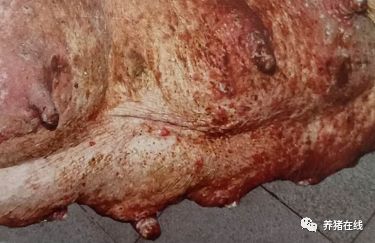
 
  Swine vesicular disease, also called infectious vesicular disease of swine, is an acute, febrile, contact-transmitted infectious disease caused by a virus of the genus Enterovirus, characterized by vesicles on the feet, mouth, snout and around the teats of sows.  

Image source: Illustrated Guide to Dialectical Signal Monitoring, Diagnosis and Treatment of Diseases in Large-Scale Pig Farms
Live pigs in the incubation period of swine vesicular disease, sick pigs and their products are the main sources of infection. After cattle and sheep are mixed with pigs infected with swine vesicular disease virus, the swine vesicular virus can be isolated from their mouth, milk and feces, but they show no clinical symptoms. Small wounds or scratches on pigs may be the main route of infection, followed by infection through the digestive tract. Infected sows may transmit the virus to piglets through the placenta.
In actual cases, most swine vesicular disease is related to feeding contaminated food (such as swill, meat-washing water, etc.), contact with contaminated sites and transport vehicles, or the introduction of sick pigs. There is no obvious seasonality in outbreaks of swine vesicular disease; it generally occurs more often in cold seasons. Pigs of different breeds and ages are all susceptible, but the incidence of vesicular disease is relatively low.

Symptoms

The incubation period of swine vesicular disease is 2-6 days; the incubation period for contact transmission is 4-6 days; and when infected pork products are fed, the incubation period is 2 days.

The first thing observed is lameness in individual pigs within the herd. It is more obvious when walking on hard ground, and pigs often walk with an arched back, show pain responses, or are unable to stand up; the larger the pig, the more obvious this is. Body temperature generally rises by 2-4°C.

Lesions generally occur at the coronary band and between the hooves, and may affect a single hoof or multiple hooves. Vesicles and ulcerations appear on the skin and can extend to the sole of the hoof; some cases are accompanied by loosening of the hoof shell, or even shedding of the hoof. Vesicles and secondary ulcers may also occur on the snout, oral epithelium, tongue and teats. Generally, contact infection produces primary vesicles after an incubation period of 2-4 days, and disease can occur within 2 days of contact infection. Sick pigs generally return to normal within 3 weeks.

The incidence rate varies greatly among different outbreak sites; some do not exceed 10%, while others can reach 100%. The mortality rate is generally very low. In experimental infection of lactating sows, the morbidity and mortality of their suckling piglets are both very high. Infected pigs with clinical symptoms and those in contact with them can both produce high-titer neutralizing antibodies, which can be maintained for at least 4 months.

Prevention

1. Do not use unboiled swill to feed pigs; choose nutrient-rich complete feed, and pay attention to balanced nutrition when mixing feed yourself. Good feed is the basic requirement for pigs to maintain normal resistance, and nutritionally balanced feed will also prevent pigs from fighting and pica caused by insufficient trace elements;
2. Vaccination. Use the attenuated swine vesicular disease kidney cell vaccine for vaccination. For pigs of all sizes, 2 milliliters can be injected deep into the thigh muscle. After injection, strong immunity can be produced in 3-5 days, and the immune period is 6 months;
3. Reduce pig stress. When moving pigs between pens or transporting them, ensure the environment is clean and hygienic and that temperature and humidity are suitable. Stress can cause a rapid decline in pig resistance and greatly increase the risk of infection with various diseases;
4. Reduce injuries to the pig herd. The floor should have moderate smoothness; cement floors that are too rough will increase the possibility of hoof injuries. Frequently inspect the pens, remove safety hazards, and promptly deal with wire spikes and other objects that can easily scratch or injure pigs.

Treatment

Sick pigs should be isolated immediately, and appropriate drugs should be selectedfor treatment。

systemictreatmentwith combined medication. Antiviral Chinese medicines such as astragalus polysaccharide and isatis root can be used together with antibiotics such as amoxicillin and ceftiofur sodium, once a day for 3-5 consecutive days, which can achieve a very good recovery effect.

Localtreatmentcan use 20% iodine glycerin, 1% gentian violet solution, or 5% iodine tincture, choosing any one of them, to flush the affected areas, then apply a homemade ointment made from chlortetracycline, lithospermum, amoxicillin, vaseline, etc. Apply twice a day for 3-7 consecutive days, which can shorten the course of the disease and reduce mortality. For malignant cases, in addition to the abovetreatmentmeasures, it is also necessary to strengthen the heart and supplement nutrition, which can promote the recovery of sick pigs.

Distinguishing It from Foot-and-Mouth Disease 

  Swine vesicular disease is characterized by strong epidemicity, high incidence, and vesicles occurring on the skin and mucous membranes of the feet, mouth, snout, abdomen and around the teats. The clinical incubation period of this disease is 2-4 days. Changes in body temperature, hoof lesions and oral lesions are similar to those of foot-and-mouth disease. In addition, a small number of pigs show symptoms of central nervous system disorder, manifesting as rushing forward, circling, rubbing the gate rail with the nose, biting utensils, rolling eyeballs, and sometimes tonic spasms.

However, foot-and-mouth disease can cause acute gastroenteritis and myocarditis in piglets, with death from acute failure, and the mortality rate is relatively high. Adult pigs develop vesicles or ulcerations on the feet, oral mucosa, nose, skin and around the udder, with a low mortality rate.  

Image source: Illustrated Guide to Dialectical Signal Monitoring, Diagnosis and Treatment of Diseases in Large-Scale Pig Farms
From an economic point of view, swine vesicular disease generally has only a slight impact on pig fattening plans. Its morbidity and mortality are not as high as those of foot-and-mouth disease, and recovery is faster than with foot-and-mouth disease. It can be identified through observation.

It is worth noting that the foot-and-mouth disease vaccine is more important than the vesicular disease vaccine, so pig farmers generally immunize the whole herd against foot-and-mouth disease vaccine every October.

Summary: Swine foot-and-mouth disease and swine vesicular disease both belong to viral diseases, and their clinical symptoms are very similar, so theirtreatmentmethods are also very similar.During treatment,choose antiviral Chinese medicines and antibiotics to eliminate systemic symptoms such as fever, clean and disinfect ulcerated areas in time, and strengthen care for piglets even more.

Related Articles