Has your pig farm had a PRRS outbreak? Check quickly against these 5 warning signs
Porcine reproductive and respiratory syndrome (PRRS) can be called the number one killer of pig farms; many farms turn pale at the very mention of "blue," and many people are actively exploring ways to prevent and control the disease. But relative to control, early warning is more important.
Experts believe that there are some warning signs before a PRRS outbreak:
Within 14 days, more than 8% of sows abort or farrow prematurely; stillbirths account for 20% of the litter;
The mortality rate of piglets within 1 week after birth exceeds 25%;
Or a large-scale outbreak of Haemophilus parasuis;
The virus-carrying rate of the herd is above 30%;
The sow replacement rate exceeds 40%, etc.
Farmers can use these indicators to assess the outbreak situation of PRRS on their farms and take prevention and control measures in advance.
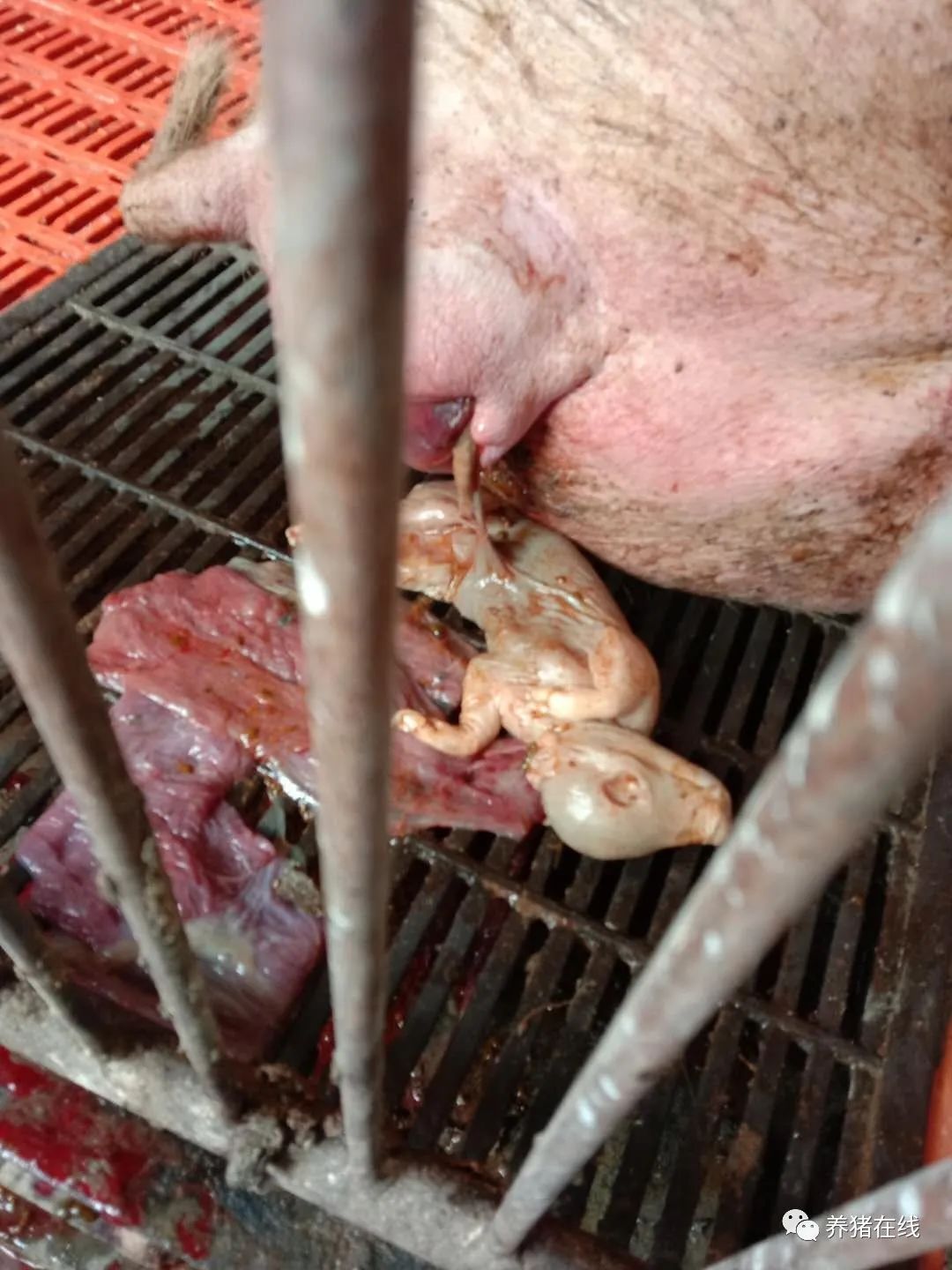
Warning sign one: More than 8% of sows abort
Professor Yang Hanchun of China Agricultural University believes that before a PRRS outbreak, the production performance of the pig farm will definitely change, especially the sow abortion rate and piglet survival rate. If within 14 days a pig farm shows 2 of the following clinical indicators, it can be judged as a suspected PRRS case: 1. More than 8% of sows abort or farrow prematurely; 2. Stillbirths account for 20% of the litter; 3. The mortality rate of piglets within 1 week after birth exceeds 25%.
It is reported that the main clinical diagnostic indicators for highly pathogenic PRRS issued by the Ministry of Agriculture are:
The incidence rate in piglets can reach 100%, and the mortality rate is above 50%;
The abortion rate of pregnant sows is above 30%; adult pigs also become ill and die.
Confirmation requires serological testing and virus isolation and identification. PRRSV-specific IgG appears 10-14 days after viral infection. Collect paired serum samples (at the time of illness and 2 weeks later) to detect changes in antibody levels. If antibody levels rise significantly in the absence of vaccination, it indicates viral infection.
It is recommended to collect samples of lung, lymph nodes, serum and other diseased materials for virus isolation or virus detection (RT-PCR/real-time quantitative RT-PCR). Because the virus content in serum is high and the virus-carrying period is long (usually up to 300 days), and serum samples are easy to handle, serum is the preferred sample for testing.
Warning sign two: Increased return to estrus and high body temperature in sows
According to Professor Deng Xianbai of South China Agricultural University,
Before a PRRS outbreak on a pig farm, the first sign is premature farrowing in pregnant sows, followed by increased abortion, stillbirth, mummified fetuses, weak piglets, a higher proportion returning to estrus, and elevated body temperature.
Piglets show impaired peripheral circulation, with cyanosis and purple discoloration of the ears, tail, abdomen and vulva, and swollen eyelids. The younger the age, the higher the mortality rate.
Sick pigs show obvious respiratory symptoms, sneezing and abdominal breathing.
If these symptoms are found in the herd, further necropsy should be performed on the sick pigs. Pathological changes on necropsy: enlarged lymph nodes that are rust-colored, especially the mediastinal lymph nodes, with large amounts of iron ions in the lymphatic sinuses. Interstitial pneumonia, with pinpoint hemorrhages on the surface, slightly widened interstitium, and lymphocyte proliferation in the walls of bronchioles and alveoli. Muscles are yellowed and edematous.
Warning sign three: The virus-carrying rate of the herd is above 30%
"If the virus-carrying rate of the herd exceeds 30%, then the possibility of a PRRS outbreak on the farm is very high."Ministry of Agriculturebreeding pigFan Fuhao, director of the (Guangzhou) Testing Center, told reporters that when more than 30% of the herd carries the virus, the environment cannot reach balance through self-purification, the balance between antigen and antibody is broken, and the disease spreads easily within the group.
It is reported that the biggest workload in using this indicator to monitor PRRS is blood collection to test for the virus, and the most troublesome part is blood collection. First, it places high demands on workers'technicalskills, and second, it causes relatively great stress on the herd. Some experts in the United States have pointed out through experiments that using saliva samples to test PRRS and classical swine fever antigens and antibodies can achieve results similar to blood testing.
According to Fan Fuhao, the method of saliva collection is very simple. Taking advantage of pigs' curiosity and their fondness for chewing, gauze balls are used to collect saliva. The gauze is made into a gauze ball and fixed to the front end of a metal wire. The pig will actively chew the gauze ball, and saliva will enter the gauze ball through capillary action. Then the saliva in the gauze ball is squeezed out and released into a sample bag. The saliva in the sample bag is then transferred into a centrifuge tube. "It is much simpler than blood collection, but this method has too many unstable factors and needs further study. Many pig farms abroad are trying it."
Warning sign four: Haemophilus parasuis runs rampant
"Clinically, to a certain extent, Haemophilus parasuis disease can be defined as an indicator of PRRS." According to Zhang Guihong, a professor at South China Agricultural University, if Haemophilus parasuis breaks out on a large scale within a short time on a pig farm, it is necessary to determine whether it is primary or secondary, because before a PRRS outbreak, the herd will be secondarily infected with Haemophilus parasuis.
According to Zhang Guihong's analysis, the main causes of PRRS are threefold:
1. Unscientific PRRS vaccination: one is not vaccinating at all; the other is unscientific vaccination, such as vaccinating onlybreeding pigsor piglets, or vaccinating the same group with vaccines of different strains, using multiple vaccines of different strains at the same time, insufficient immunization dose, or excessively long immunization intervals, etc.
2. Improper handling after outbreaks of porcine epidemic diarrhea or foot-and-mouth disease: including failure to promptly supplement vaccination against PRRS, circovirus and classical swine fever (after these two diseases occur, they affect the normal immune status of the herd, and relevant vaccines must be supplemented promptly after the epidemic stabilizes); failure to vaccinate against PRRS in time according to the immunization program, resulting in missed vaccinations; use of external serum to control the epidemic, which also brings in external PRRS virus.
3. Improper introduction of breeding stock: mismatch in health status between the farm and thebreeding pigfarm from which stock is introduced; simultaneous or successive introduction from multiplebreeding pigfarms; one-time large-volume introduction (the number introduced exceeding 20% of the original sow inventory), etc.
Warning sign five: The sow replacement rate exceeds 40%
"Farms with an excessively high proportion of first-parity sows are prone to PRRS outbreaks."According to Cai Xuehui, a researcher at the Harbin Veterinary Research Institute, first-parity sows are usually a group with unstable antigens and antibodies, and are most vulnerable to PRRS virus attack. If first-parity sows plus replacement gilts on a farm together exceed 40% of the herd, then high vigilance against PRRS is needed, and the number of PRRS vaccinations should be increased.
In clinical prevention and control, Yang Hanchun recommends that for pig farms with PRRS outbreaks and positive unstable farms, attenuated live vaccines should be used, a reasonable immunization program should be formulated, secondary bacterial infections in affected herds should be controlled, and sanitation and disinfection should be strengthened. At the same time, dead pigs, feces and contaminated materials must be properly disposed of harmlessly.
Introduced negative replacement gilts should be mixed with and acclimated to sows as early as possible before mating. After herd production stabilizes, immunization with PRRS live vaccine should be stopped. For PRRS-positive stable farms, attenuated live vaccine should not be used, sow feeding and management should be strengthened, and the introduction of positivebreeding pigsshould be prohibited, and negative replacement gilts should be mixed with and acclimated to sows as early as possible before mating. PRRS-negative pig farms should preferably not use vaccines, and should implement good biosecurity measures. Introduction of breeding stock requires strict monitoring and quarantine, the introduction of PRRS-positivebreeding pigsshould be prohibited, and the pig farm should be monitored regularly to maintain negative status.