What to Do When a Clivia Gets Stuck Flower Stalks? Detailed Prevention and Treatment Methods
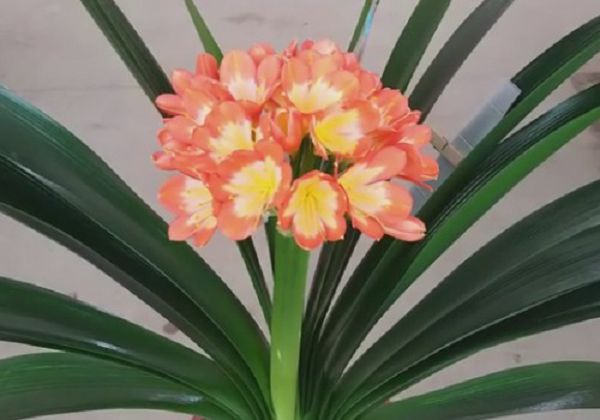
Hello everyone, below I will show you a pot of clivia, which is the Youqiao variety of clivia. As you can see, this pot of Youqiao clivia is blooming very vigorously. In fact, if you want to grow potted clivia to achieve the blooming effect shown in the picture below, it is often closely related to our care and management work.
Although clivia flowers are very beautiful and have even higher ornamental value when grown as potted plants, many flower lovers report that after finally waiting for their clivia to bloom, the phenomenon of stuck flower stalks appears. So, how do you prevent stuck flower stalks in clivia? What should you do when clivia has stuck flower stalks? Today, let us explore together how to effectively avoid the occurrence of stuck flower stalks in potted clivia.
The most suitable growing temperature for clivia is around 20°C. If you want its flower stalk to emerge smoothly, the temperature in its growing environment needs to stay at least above 15°C. During the flowering period, the ambient temperature for clivia is best maintained at around 25°C.
Because many homes are often limited by their care environment, a small day-night temperature difference often occurs, and this very easily causes potted clivia to develop stuck flower stalks during the flowering period. For household potted plants, the day-night temperature difference for clivia during the flowering period is best kept between 8°C-10°C.
Of course, in addition to ensuring temperature and temperature difference, fertilizing is also very important, because clivia flowering consumes a large amount of nutrients, so we need to prepare enough nutrients for it in advance. During stalk emergence and flowering, that is, when clivia transitions from vegetative growth to reproductive growth, its fertilizer demand is relatively large.
Based on this situation, we need to appropriately increase the frequency of topdressing for potted clivia, mainly applying fertilizers with a relatively high proportion of phosphorus, as this can effectively promote the differentiation of clivia flower buds. Of course, in addition to focusing on phosphorus topdressing, it is also necessary to supplement some nutrients such as potassium, so as to ensure that the plant blooms more brilliantly after the stalk emerges smoothly.
In addition, during stalk emergence and flowering, clivia also needs more water as support, so the amount of watering should gradually increase. Generally, fertilizer should be applied about once every 10 days, combined with watering. This can also effectively avoid the occurrence of stuck flower stalks in clivia.
But if potted clivia has already developed stuck flower stalks, you can place the potted clivia in a dark position with poor light, and the temperature is best controlled at around 20°C. Because in the absence of light, the plant cannot carry out normal photosynthesis, which often can promote leggy growth. This process is best continued for about 1 week, which can alleviate the stuck flower stalk condition in clivia.
Not only that, you can also buy some stalk-promoting agents at the flower market that can promote clivia stalk emergence. Then follow the instructions and apply them to the potted clivia. This can also effectively prevent the occurrence of stuck flower stalks in potted clivia.