How do you pot a Black Aeonium?
The Black Aeonium (Aeonium arboreum 'Zwartkop') is a beautiful succulent with glossy black leaves, and it has quite a few derived varieties, most of which are very attractive. Varieties like Aeonium 'Mediopictum' have especially high ornamental value; even if we do not let them bask in the sun often, as long as there is plenty of scattered light, the color of their leaves is very pleasing, and once they are grown well, a single head easily bursts into multiple heads.
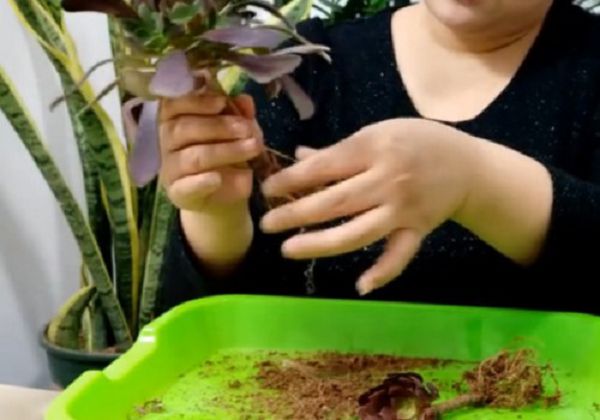
Because the Black Aeonium is tough and very easy to grow and keep alive, the ones we buy online are usually shipped bare-root by the seller. So how do you pot a bare-root Black Aeonium? Once the plant arrives, generally we only need to trim the roots lightly before potting it up. Since the Black Aeonium takes root so easily, you can basically plant it however you like and it will still survive.
Bare-root Black Aeoniums bought online often have their fine fibrous roots dried out during transport, and some of the plant's leaves may also turn greenish. This is actually normal and does not mean the plant has a problem or will be hard to establish in a pot. However, it is generally recommended to trim off the dried fibrous roots and let the roots dry before potting. Otherwise, these dried fibrous roots are prone to rotting when watered after potting, which breeds harmful bacteria and infects the plant.
But if the bare-root Black Aeonium we receive has relatively fresh roots, there is usually no need to deliberately trim them; a simple treatment is enough. And it does not matter if the leaves turn green or soft, because once the plant re-roots after potting, these signs will gradually disappear, returning the plant to a normal growing state, and the leaves will quickly turn black and stand upright again.
While the roots are drying, we can first prepare the potting soil. It is recommended to use a mixed substrate with high looseness and strong air and water permeability for potting. A general recommendation is to use half river sand and half nutrient soil, mixed evenly before use. Then we water the mixed substrate to moisten it and mix it thoroughly again, keeping the potting soil in a half-dry, half-moist state. Of course, it is advisable to add a little carbendazim to the water, stir it evenly and pour it into the soil, which disinfects and sterilizes it, avoiding root infection that causes root rot.
Next we can prepare a relatively deep flower pot for potting the Black Aeonium, because its root system is very developed, with not only a main root but also numerous fibrous roots. Using a deep pot for suitably deep planting is better for root distribution. But before potting, it is advisable to line the bottom of the pot with some coal cinders or large granular clay pebbles to improve drainage at the bottom. Then we add an appropriate amount of potting soil to the pot, plant the Black Aeonium whose roots have been trimmed and dried into the pot, and fill in potting soil around the plant.
Since we use the method of potting in moist soil, do not rush to water after the Black Aeonium is settled in the pot. First place it in a sunny spot with plenty of scattered light and good ventilation to recover for a while, and once the potting soil dries, give a small amount of water to maintain the soil's moisture. Generally, the first watering can be done after one week, but it is advisable to drip a few drops of rooting agent into the water, shake it well and then pour it into the potting soil, which is better for the plant to take root. Only after the Black Aeonium has successfully rooted and settled in the pot do we gradually increase light and resume normal watering, and then we can manage it according to normal care methods.