What are the methods for preventing and controlling diseases and pests in Aglaia odorata (mock lime)?
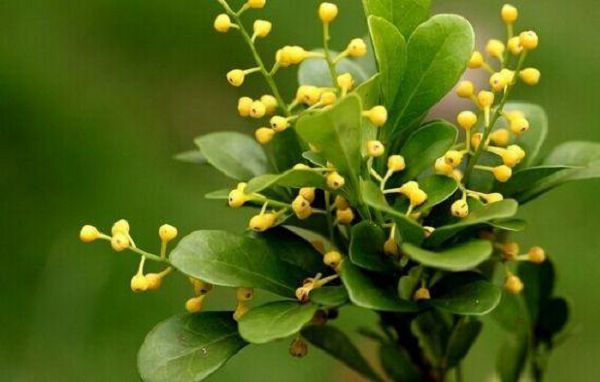
Aglaia odorata can bloom multiple times within a year, most profusely in summer and autumn, making it an excellent ornamental plant. Today, the editor will share with you an article briefly introducing the common diseases of Aglaia odorata and their prevention and control methods. Let's take a look.
The main diseases of Aglaia odorata include anthracnose, chlorosis, etc.; the main pests include white aphids, red spider mites, scale insects, etc.
Anthracnose
Anthracnose is the main disease that Aglaia odorata is prone to, often breaking out from June to October. Infected leaves start from the leaf tip and leaf margin, gradually turning brown. If the petioles and stems are infected with this pathogen, they will also gradually turn brown.
Prevention and control methods: After discovering diseased branches and leaves, the diseased parts should be removed promptly to cut off the source of infection. At the same time, improve ventilation conditions and spray a 1000-1200 times diluted potassium permanganate aqueous solution.
Chlorosis
Infected plants will show chlorosis in new leaves and withered branch tips. It mostly occurs during the hot and rainy season at the turn of spring and summer, and in severe cases can even lead to the death of the entire plant.
Prevention and control methods: It is mostly caused by alkaline soil. The soil should be loosened and improved to make it slightly acidic.
Aphid infestation
Prevention and control methods: If the quantity is small, they can be manually brushed off with a small brush. In severe cases, cigarette butts or chili pepper water can be sprayed on the plants, or an 800 times diluted aphid-killing solution can be sprayed.
Scale insects
The scale insects that harm Aglaia odorata are mainly Icerya purchasi (cottony cushion scale) and Coccus hesperidum (brown soft scale). Their nymphs and adults cluster on the undersides of leaves and branch tips to suck sap, often causing the branches and leaves of Aglaia odorata to turn yellow and branch tips to wither, leading to leaf drop and even the death of the entire plant. Scale insects can also induce sooty mold in Aglaia odorata, affecting the plant's photosynthesis and reducing its ornamental value.
① Icerya purchasi (cottony cushion scale)
It has a wide range of hosts. Among greenhouse flowers, besides Aglaia odorata, it can also harm plants such as Acalypha wilkesiana, Michelia figo, Hibiscus rosa-sinensis, Camellia japonica, and Citrus medica. The female adult is oval, orange-red, 5-7 mm long, with a flat ventral surface and a convex dorsal surface, shaped like a tortoise shell, covered with silvery-white wax and fibrous wax filaments, with a white egg sac attached to the abdomen, bearing 14-16 ridged lines. The male adult is 3 mm long, slender, orange-red, with well-developed grayish-brown forewings and degenerated hindwings. Newly hatched nymphs have no waxy covering; pale yellow wax powder gradually appears after feeding. Eggs are orange-yellow when first laid, gradually turning orange-red.
In northern regions, Icerya purchasi occurs 2-3 generations per year, mainly overwintering as nymphs and female adults. The suitable temperature is 23°C-24°C. High temperatures are unfavorable for its growth and development, and 39°C can kill it.
② Coccus hesperidum (brown soft scale)
It occurs commonly in greenhouses in the north and harms many species of flowers and trees. The female adult is 3-4 mm long, oval, flat, mostly brown, with longitudinal ridges on the dorsal surface. Nymphs are elongated oval, flat, yellow-green, with a longitudinal ridge in the center of the dorsal surface.
Coccus hesperidum occurs 2-5 generations per year, overwintering as female adults or nymphs. In April-May of the second year, they become adults. In May-June, they give live birth to nymphs. After the nymphs settle and feed, they no longer move. After becoming adults in August, they again give live birth to nymphs.
Prevention and control methods:
1. Strengthen quarantine of introduced seedlings to prevent long-distance spread of pests.
2. Thoroughly remove the insects before Aglaia odorata is brought indoors in autumn. When scale insects infest home-grown Aglaia odorata, the insects can be brushed off with a soft brush, or the infested branches can be removed during pruning and burned together.
3. Chemical control. It is necessary to seize the peak period of egg hatching and spray 50% malathion emulsifiable concentrate at 1000 times dilution or 25% phosmet emulsifiable concentrate at 1000 times dilution, etc., spraying once every 10 days, and 2-3 consecutive sprays will be effective. If the scale shell has already formed, carbofuran and aldicarb granules can be buried in the soil. For a flower pot with an inner diameter of 24 cm, use 10-15 g of 3% carbofuran granules or 3-5 g of 5% aldicarb granules. A 1500 times diluted 40% profenofos emulsifiable concentrate can also be sprayed.
Red spider mites
Prevention and control methods: Spray the plants with 1000 times diluted dichlorvos or 2000 times diluted dimethoate.