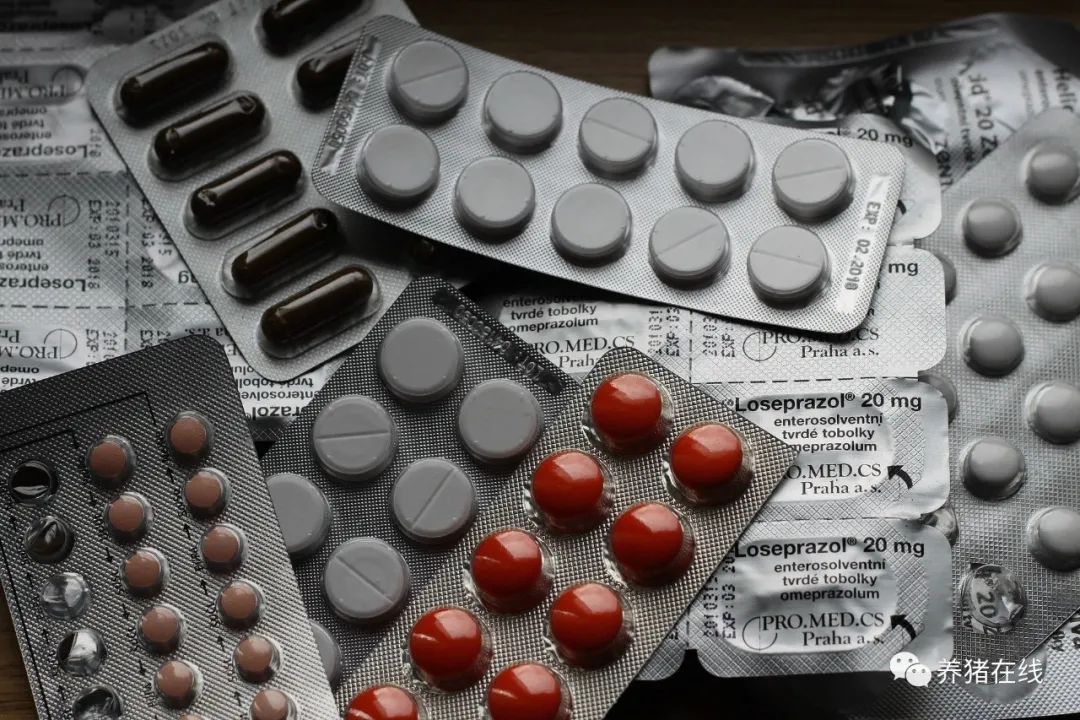
3 Major Taboos in Pig Medication That Many Pig Farmers Are Violating
Livestock Farming0 views
3 Major Medication Taboos When Treating Pigs, and Many Pig Farmers Are Guilty of Them
Because of my profession as a veterinarian, I have come into contact with countlesspig farmers. No matter how large the scale of thepig farm, I often see them making some very basic mistakes. And somepig farmershave already paid a heavy price for these basic mistakes - their farms may no longer exist. Today I will summarize these taboos in pig farming, hoping that fellow pig farmers will not fall into these pitfalls again.
1. Using only the best drugs
Manypig farmersbelieve that giving pigs the best drugs will produce the best results, which is completely wrong. I once learned about a pig farm where the pigs were originally very healthy, but when winter came, the owner wanted to prevent respiratory disease, so he used tilmicosin, azithromycin and other well-known "high-end" respiratory drugs for health care. And the frequency was very high, using them for 7 days almost every month.This led to a very tricky situation later: when his pigs developed respiratory disease, he used tilmicosin and azithromycin again fortreatment, and after using them continuously for 10 days, the respiratory disease still kept getting worse. As a result, time was delayed, and more than a dozen large fattening pigs that were about to be marketed died from the respiratory disease.
Why did this happen?This is because the problem of drug resistance was not taken into account! All drugs have resistance issues. After using them continuously two or three times, most drugs develop a certain degree of resistance, some higher and some lower. This is especially true for quinolone drugs. For example, when enrofloxacin is used for postpartum anti-inflammatory treatment in sows, after 3 uses, the resistance is already very high, and the probability of postpartum inflammation in sows greatly increases. This is also a mistake that many sow farmers are making.Therefore, medication should follow the principle of going from low to high, and do not start with very "high-end" drugs.Everyone knows that "high-end" drugs are very good, but if used too much, "low-end" drugs will no longer be very effective, and it will be difficult to control the disease when the pig farm has an outbreak. For example, to prevent respiratory disease on a pig farm, using very ordinary florfenicol, doxycycline and traditional Chinese medicines such as Maxing Shigan San is generally completely sufficient.
2. Changing the prescription every day
After a pig gets sick, the owner uses one medication once, feels it is ineffective, and immediately switches to a second one; after changing the drug and giving one injection with no effect, switches to a third drug. The result is often that the drugs are wasted, and thepig diseasedoes not improve but instead worsens. Experiencedpig farmersknow thatpig diseaserequires a process. For example, if a pig has a fever, not reducing the fever after an injection does not mean thepig diseasehas not improved; on the contrary, a drop in body temperature is not necessarily a good thing either, because body temperature also drops before death when the condition worsens.
In response to this situation, I advise everyone to first learn basicpig diseaseknowledge, find the cause, and use a medication plan that "treats both the symptoms and the root cause" fortreatment。If you are not sure, you can also consult experienced pig farmers or veterinarians around you. Phones and the internet are so convenient now that many things can be handled via WeChat, unlike before when a veterinarian had to come to your home to diagnose the disease. After confirming the plan, you must persist with thetreatmentaccording to the plan. Many diseases cannot be solved with just one injection.In addition, manypig farmersgive an injection as soon as they see a pig is sick, and once the fever goes down, thepig diseaseseems to have healed, so they stop caring about it. This is also wrong. We can carefully read the drug instructions, and many drugs clearly state "use continuously for 3 days." Just like when people get sick, doctors prescribe medication for 3 to 7 days, sometimes even half a month, because treatment follows a course, with a treatment period and a consolidation period, to prevent recurrence.
3. Fondness for folk remedies
I once came into contact with such apig farm: a couple had been raising pigs since 1990, growing from 8 sows to more than 100 sows. In 2013, an outbreak of "high fever mixed infection" wiped out the entire pig farm from fattening pigs to sows. The elderly couple lost several million yuan and were too devastated to cry. The house and car they had promised to buy for their son's marriage became fantasies, and their son's marriage also fell through.
One characteristic of this elderly couple was that they thought that after raising pigs for more than ten years, whatpig diseasehad they not seen? Their pig farm only used simple old drugs such as penicillin, streptomycin and oxytetracycline, and they also liked to use some minor folk remedies and folk prescriptions. Moreover, the pig farm was never disinfected or given health care, and they did not even do much vaccination.I am not saying that folk remedies and folk prescriptions are bad; sometimes they can indeed achieve unexpected results. For example, for exudative dermatitis in piglets, commonly known as "greasy skin disease," the piglets' bodies look as if covered with a layer of black grease. Somepig farmersknow that applying waste engine oil to piglets' bodies is effective. However, this only treats the "symptoms" and not the "root cause," and cannot prevent other pigs from getting sick.Let us understand the ins and outs of thispig disease. This disease is caused by Staphylococcus, so the scientific methods that should be adopted are:Inject the entire litter of piglets with ceftiofur sodium, because this disease often affects the whole litter, and not being sick does not mean not being infected - they may be in the incubation period; then wash their bodies with 0.1% potassium permanganate solution to remove bacteria on the body, and then sprinkle penicillin powder on them; finally, disinfect the entire pig house with povidone-iodine while the pigs are present 1-2 times. With this procedure, the piglets can recover within 2 days, and it will not spread to other piglets.Therefore, whether it is pig farming or other industries, nothing remains unchanged.Pig farmersmust keep learning newtechniquesand new knowledge. The types ofpig diseases10 years ago are hugely different from now, because new diseases keep appearing, and African swine fever is a very typical example;treatmentmedications are also constantly changing, because new drugs are also constantly being developed.Conclusion: Pig farming is no longer something that can be done as long as you have physical strength. It requires science and an understanding of pathology and pharmacology. Unscientific disease prevention and medication use will result in this: if the pigs are healthy, you can make money, but there is a high probability it will not last long; once something happens to the pigs, you will regret it beyond measure.