Cultivation Regulation Techniques for Making Clivia Bloom Early
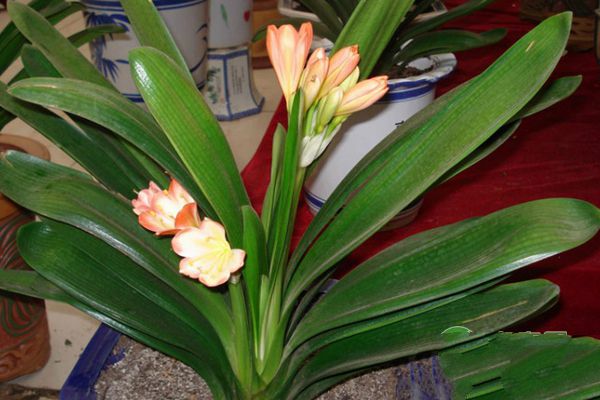
Clivia comes in a variety of flower colors and has high ornamental value. Recently, the editor saw many questions in Tieba from friends who grow Clivia asking: can Clivia bloom early? In fact, Clivia has evergreen leaves all year round, and its flowers further enhance its ornamental value. So today the editor will tell everyone about cultivation regulation techniques for making Clivia bloom early.
Clivia is an ornamental flower of the genus Clivia in the Amaryllidaceae family. It originated in southern South Africa and is a perennial herbaceous plant. It blooms mainly in winter and spring and is a semi-shade plant. It likes cool conditions and dislikes high temperatures. It prefers thick, well-drained soil and moist soil, and dislikes dry environments. Clivia has very high ornamental value, and in China it is often grown in pots in greenhouses for viewing. It is propagated by division or seeds. It is grown for its foliage and flowers and is also an ideal potted flower for arranging meeting venues and decorating hotel environments. It also has the effect of purifying air and medicinal value, making it a preferred variety for people.
Clivia has a long growth cycle. Generally, it must be cultivated for four to five years and grow to 20 to 25 leaves before it can bloom, and most only bloom once and then stop blooming. Its flowering period is also relatively short, which seriously affects the ornamental value of Clivia.
1. When Clivia has grown to 4-5 leaves, every 30-35 days, remove Clivia from the pot once until Clivia blooms. Before each removal, pour a 3000-4000 times dilution of dodecyldimethylamine oxide thoroughly into the pot, and place the pot on a vibration device with an amplitude of 0.3 cm and a vibration frequency of 18-22 Hz for vibration treatment for 15-20 minutes, then lift the Clivia root system out of the pot and wash off the debris attached to the root surface;
2. Soak the Clivia root system in Rhodospirillum secretion extract, and wrap the surface of the Clivia leaves with a layer of red polyethylene film. After wrapping is completed, place the Clivia in an environment with humidity of 60-65% and temperature of 20-22°C, and sequentially and cyclically treat it with dark light, weak light, medium-strong light, and strong light for 4-5 cycles. Each cycle consists of 6 hours of dark light treatment, 3 hours of weak light treatment, 5 hours of medium-strong light treatment, and 1 hour of strong light treatment, wherein the dark light intensity is 50-60 Lx, the weak light intensity is 400-500 Lx, the medium-strong light intensity is 2000-2300 Lx, and the strong light intensity is 3500-3600 Lx;
When making the Rhodospirillum secretion extract, inoculate Rhodospirillum into a culture liquid obtained by mixing rice wine and vinegar at a volume ratio of 10:0.2-0.3, culture for 3-4 days under a light intensity of 1800-2000 Lx, filter out the mycelium, centrifuge at 8000-9000 rpm for 15 minutes, and treat in steam at 150-160°C for 30-40 minutes to obtain the Rhodospirillum secretion extract;
3. After Clivia blooms, every 5 days, pour a 500 times dilution of potassium clavulanate at the Clivia root system once, pouring 15-20 ml per plant.
Clivia combines ornamental, environmental protection, and medicinal value in one, and is a very good household potted plant. The above Clivia planting techniques, once mastered, can make the Clivia you grow bloom early, so growers should take a look quickly.