How the sow's farrowing power is lost step by step
Maintaining normal farrowing requires sufficient farrowing power. Under natural conditions, a sow's farrowing power is adequate. So in factory-style intensive pig farms, how does it become insufficient? Through frontline investigation and research, it was found that the sow's farrowing power is unknowingly wiped out step by step by pig farm managers!
Let us first look at the anatomical structure of the sow's birth canal
From the anatomical structure, it is very difficult for a sow to experience dystocia. According topig diseasestatistics, the sow dystocia rate is about 3%. But according to a survey of 1,356 large-scale pig farms by the PSY Applied Research Institute, the incidence of sow dystocia (true dystocia and prolonged farrowing, collectively referred to below as dystocia) reached 70%!
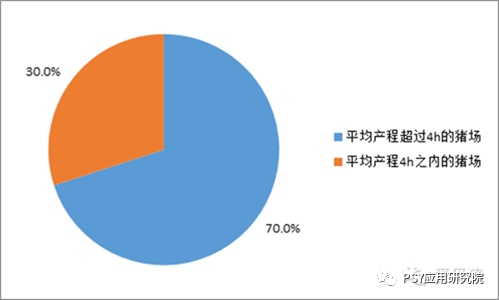
So we need to think about a question: under natural conditions, it is very difficult for sows to experience dystocia and prolonged farrowing. Why is the incidence of dystocia and prolonged farrowing so high in artificially raised sows?
First, we need to understand what exactly the commonly cited causes of dystocia are. Let us again look atpig diseasestatistics.
Let us continue analyzing how the farrowing power that drives farrowing is composed and where it comes from.
The author believes that farrowing power consists of five parts, as shown in the diagram below.
Next, let us look at how pig farms with a high proportion of dystocia wipe out the sow's farrowing power step by step.
The first is uterine contraction power
This is the most important force constituting farrowing power. This force is not under voluntary control; it is dominated by a hormone - endogenous oxytocin.
All factors that affect the secretion of endogenous oxytocin will weaken the exertion of uterine contraction power. Endogenous oxytocin is a neurohormone secreted by the posterior pituitary gland of the brain. Do not think it is secreted by the uterus. Factors that stimulate the secretion of endogenous oxytocin include stimulation from the cervix and vagina, stimulation of the mammary glands by suckling, and stimulation of sexually sensitive areas during mating, which reflexively cause the posterior pituitary gland in the brain to secrete it.
Why does the author repeatedly emphasize endogenous oxytocin here? Because endogenous oxytocin and exogenous oxytocin differ in their mode of action. Endogenous oxytocin during farrowing triggers "labor contractions (rhythmic peristaltic contractions)" - triggering the piglet's "struggling force - fetal power", while exogenous (high-dose) oxytocin during farrowing triggers spasmodic contractions - causing piglets to "suffocate to death".
For example -
★ Temperature too high:
The suitable temperature range for sows is 16~22°C, and the heat stress temperature for adult sows is 26.5°C. Heat stress inhibits oxytocin secretion. In summer, most regions of China are above 26.5°C. Considering both economics and the fact that piglets are sensitive to cold, the farrowing house temperature should be controlled at 22~25°C.
★ Excessive management:
Pig farms overemphasize humanized management, "treating sows like wives". You should know that sows do not need human companionship during farrowing; they need a quiet environment. Therefore, people walking back and forth in front of sows will create a sense of urgency in the sow, producing large amounts of adrenaline, and the release of oxytocin is inhibited by adrenaline.
★ Light too strong:
60%~75% of sows farrow at night (Bichard et al. 1976). But the current farrowing house environment is brightly lit, completely people-oriented rather than pig-oriented, for the convenience of manual assistance during farrowing. Of course, during the lactation period after farrowing, the light should not be too dim, which requires managers to make adaptive adjustments.
★ Maternal behavior too weak:
The natural instinct of sows to build nests has been artificially eliminated. Cronin et al. (1993) spread some sawdust in the farrowing pens of gilts (parity 1~3), which reduced piglet mortality during farrowing (10.5 live-born piglets: 10.0 piglets) and the incidence of sows crushing piglets within 6 h after farrowing (2%: 21%). Providing sawdust can stimulate the vitality of first-parity sows before farrowing, promoting the farrowing process and the development of maternal behavior.
The second is straining power
During farrowing, the abdominal muscles and rump muscles contract forcefully, causing abdominal pressure to increase, squeezing the fetus in the uterus to promote fetal expulsion. This force is called straining power.
The third is fetal power
Endogenous oxytocin triggers segment-by-segment paroxysmal contractions of the uterus from the cervix. During contractions, the piglet is squeezed by the uterus, causing brief breath-holding and hypoxia, which reflexively triggers an instinctive "struggle". This struggling force is what the author calls the third type of farrowing power - fetal power.
The fourth is amniotic fluid power
Amniotic fluid forms in the early stages of sow pregnancy, originating from the sow's blood and the fetal plasma. Under normal conditions, a sow begins giving birth several minutes after the water breaks. The amount of amniotic fluid also determines the length of the sow's farrowing process.
The fifth is sucking power
Sow teats have a large number of sensitive receptors, and stimulation can reflexively cause the sow to secrete oxytocin. Therefore, both farrowing and lactation are physiological activities that require the sow and piglets to complete together. During farrowing, allowing the piglets born first to suckle the sow's teats in time can stimulate the sow to produce endogenous oxytocin to help the piglets born later be delivered as quickly as possible.
In particular, replacement gilts may show unwillingness to nurse and biting of piglets after farrowing, mainly due to insufficient nesting and other maternal behavior development.
Measures to increase the sow's willingness to actively nurse:
★ Intravenous fluids - supplementing energy, supplementing calcium, supplementing potassium through drinking water, etc., to relieve the sow's fatigue and correct metabolic acidosis,
★ Uterine cleansing - using Gongyanjing locally in the uterus to thoroughly cleanse the uterus, provide strong analgesia, reduce swelling and stop bleeding, reduce inflammation and promote tissue regeneration, etc.,
★ Anti-inflammation - through intramuscular anti-inflammatory injection, intravenous anti-inflammatory fluids, and local uterine anti-inflammation, to prevent postpartum infection and mastitis in sows, etc.
After the sow's postpartum comfort is enhanced and her physical strength and appetite recover, her willingness to actively nurse will be greatly increased, which can effectively promote lactation in the sow.
In summary, this suggests that there are three levels of pig farming. The first is raising pigs as pigs, very casually and extensively, and of course the pigs will not be raised well; the second is raising pigs as people, very meticulously, with nanny-style management, but people and pigs are different, and sows will feel a sense of urgency; the third is still raising pigs as pigs, adapting to pigs' habits and pigs' appetites, pig-oriented pig farming, which is the highest level of pig farming. Only pig-oriented pig farming can allow the sow's farrowing power to be freely exerted and enable smooth farrowing.