What disease causes swollen joints in pigs? Learn effective prevention and treatment
Livestock Farming0 views
What disease causes swollen joints in pigs, and how to effectively prevent and treat it?
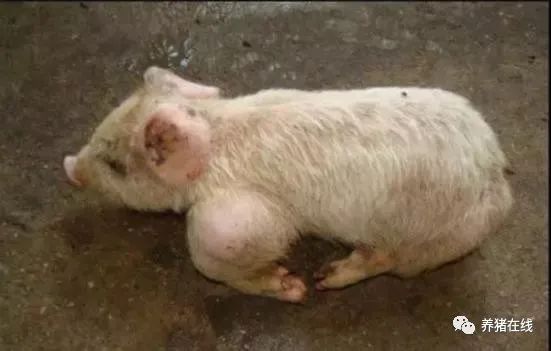
Recently, somepig farmershave asked: the pigs have not been fighting or suffered trauma, yet their joints are swollen. What is causing this? Below we analyze what disease may be causing the swollen joints in pigs, and how totreat?
Image source: Dr. Kang
What disease causes swollen joints in pigs? Apart from surgical injury, joint swelling is related to infectious diseases, and the following 3 diseases are common:
1. Haemophilus parasuis disease
Haemophilus parasuis disease mainly infects young pigs aged 2-4 months, and is also fairly common in piglets aged 5-8 weeks. Sows and breeding boars mostly show inapparent infection or chronic lameness.Clinical symptoms:In severely affected pigs, the joints of the limbs swell, with lameness, pain and squealing, trembling, and ataxia; before death they lie on their side or make paddling movements with the limbs. Chronically affected pigs mainly show reduced appetite, coughing, difficulty breathing, and weakness of the limbs or lameness.
2. Streptococcosis
Caused by a variety of pathogenic streptococci, the acute form often presents as septicemia and meningoencephalitis, while the chronic form mostly presents as arthritis, etc.Clinical symptoms:The septicemic form presents as hemorrhagic red patches on the ear tips, under the abdomen, and on the lower parts of the limbs;The meningoencephalitis form presents as incoordination, circling, teeth grinding, and swimming-like movements of the limbs.The septicemic and meningoencephalitis forms also often show joint inflammation, with affected pigs lame or paralyzed in the hind limbs.The clinical presentation of the arthritis form is the most typical; body temperature rises, joints swell and are painful, with marked lameness; in severe cases the pig cannot stand, and some have paralyzed hind limbs and lie on the ground unable to rise. On palpation there is a fluctuating sensation in the affected joint area, and in a few cases it becomes hard and the skin thickens.
3. Swine erysipelas is caused by Erysipelothrix rhusiopathiae
It mainly affects feeder pigs aged 4-6 months. The acute form causes lameness, while the chronic form causes obvious joint swelling.Clinical symptoms:In the acute form, the pig often lies on the ground and is unwilling to move; when it walks, its gait is stiff or lame.The chronic form mostly develops from the acute form, and shows swelling, deformation and pain of the limb joints, lameness, generalized stiffness, unwillingness to move, or lying on the ground unable to rise.To relieve pain, the pig often shifts its weight from one leg to another; sometimes the limbs are drawn under the abdomen, showing an arched-back posture, unwilling to stand or completely unable to stand.There are many causes of joint inflammation, among which streptococci and Haemophilus parasuis have the greatest impact on pig herds. The arthritis caused by Haemophilus parasuis disease presents similarly to that caused by streptococcosis, and it is difficult to distinguish them based on clinical symptoms alone. Therefore it is necessary to compare these two causes to aid clinical diagnosis andprevention and treatment。
Symptom comparison:
In Haemophilus parasuis disease, respiratory symptoms are obvious; in the early stage there is mainly a productive cough, and in the later stage weak abdominal breathing appears. Without careful observation it is very hard to see the respiratory amplitude of the affected pig;Streptococcuspig diseasehas complex clinical symptoms, with four clinical types: septicemic, encephalitic, lymphocystic, and arthritic. The typical clinical symptoms of each type differ, but the arthritic type is the most common.
Prevention and treatmentmeasures:
Pig farms should adopt multi-site rearing and adhere to the "all-in, all-out" system to prevent cross-infection among various groups of pigs, with particular attention to transmission from sows to piglets.Strengthen feeding management, improve the environmental hygiene inside and outside the pig house; the pig house should be kept clean and dry with good ventilation;The stocking density of the pig herd should be moderate.Strict disinfection must be used for piglet umbilical cord cutting, teeth clipping, tail docking, and ear tagging. When trauma occurs, it should be treated promptly by surgical methods to prevent wound infection by pathogens and the onset of this disease.Cats, dogs and other animals must strictly not be kept on pig farms; thoroughly eliminate rodents and blood-sucking insects (mosquitoes, flies, etc.) to control the transmission of pathogens by vectors, which can effectively prevent the occurrence and spread of this disease. Do a good job of immunization.
Besttreatmentregimen:
On one side, use Enrofloxacin Injection diluted with Ceftiofur Sodium for Injection or Amoxicillin Sodium for Injection; on the other side, inject Naproxen Injection. It takes effect quickly and the therapeutic effect is more thorough.Treatmentof lameness, paralysis, inflammatory pain, sprains and trauma caused by other reasons: on one side, inject Gentamicin Sulfate Injection diluted with Ampicillin Sodium for Injection; on the other side, inject Naproxen Injection. The effect is very good.