What is the flower language and meaning of the poinsettia, and what legend stories are there?
I. Flower Language Introduction
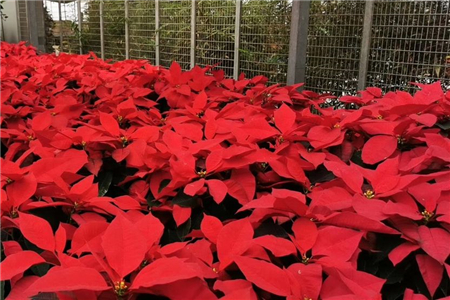
The flower language of the poinsettia is "my heart is burning." This flower is native to Central America. At first glance it appears to have huge petals, but in fact those are its bracts. The bracts grow at the top and are bright red, as if burning. Because its ornamental season is in winter, it can also serve as a Christmas flower; the pairing of red and white in particular has a distinctive charm.
II. Legend Stories
The poinsettia is also called the "Porcherima flower." Legend has it that in ancient times, there was a village south of Mexico City. Its land was originally fertile and its water supply abundant, but a mudslide disaster suddenly occurred, cutting off the water source, and the land gradually dried and cracked. In the village there was a young man named Porcherima. To restore the land to life, he risked his life to chisel through rock and channel water. He finally broke through, but, utterly exhausted, he was swept away by the current. People never saw him again, but by the water's edge a red flower bloomed. Because Porcherima had liked to wear red when he was alive, they named this flower the "Porcherima flower" in his memory.
III. Can It Be Kept at Home?
The poinsettia looks very beautiful, but it is somewhat toxic. The white milky sap inside the plant irritates the skin, and if ingested it can cause vomiting and diarrhea; if it gets into the eyes it may cause temporary blindness. Therefore it is not very advisable to keep it at home. If you do keep it, you must be careful to prevent children from touching it.