What kind of plant is lily of the valley, and is it toxic?
I. Basic information
Lily of the valley is a perennial herbaceous plant in the genus Convallaria, family Asparagaceae. It has quite a few alternative names, and is also called Junying grass, Solomon's seal flower, perfume flower, deer bell, and so on. This plant originated in the temperate regions of the Northern Hemisphere, and is now distributed in many areas; it is cultivated in many parts of China.
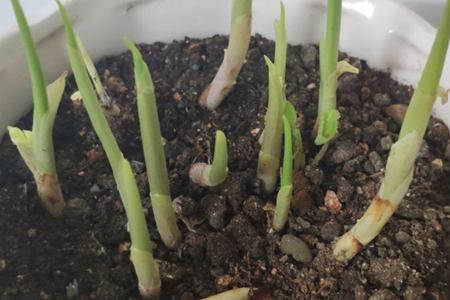
II. Growth habits
Lily of the valley likes to grow in a semi-shaded environment and is suited to growing in diffused light; it cannot tolerate strong light exposure. It is not demanding about soil, but it grows well in sandy loam rich in humus and is not suited to growing in alkaline soil. It likes a cool environment and cannot tolerate high temperatures, so attention should be paid to cooling it down in summer.
III. Morphological characteristics
Lily of the valley is about 10-30 cm tall, and the whole plant is hairless. The leaves are elliptical or ovate-lanceolate in shape, about 7-20 cm long and about 3-8.5 cm wide. The flowering period of lily of the valley is in May-June, and the flowers are white, with the bracts closing downward. It can also bear fruit, with the fruiting period in July-September, and the berries are about 6-12 mm in diameter.
IV. Flower language and meaning
The flowers of lily of the valley are very beautiful, so the meaning of its flower language is also very beautiful; the flower language is "the return of happiness."
V. It is toxic
Although this flower is very beautiful, it is toxic; the whole plant contains toxicity, and accidental ingestion should be avoided.