After growing flowers hydroponically, no one calls me a flower killer anymore
I believe many flower lovers, like this editor, have even managed to kill a cactus. In fact, most of the time the reason flowers die is not a long period without watering, but rather frequent watering that drowns them. In that case, hydroponic plants are the only option, since at least you don't have to worry about watering.
Hydroponic plants have the following advantages: first, because water can evaporate freely, in the same environment they play a more obvious role than soil-grown plants in regulating air humidity; second, hydroponic plants eliminate the work of managing potting soil, are clean and hygienic, and are simple to care for; third, if you choose plants whose roots can be exposed to light and pair them with a suitable container, the whole plant can be viewed, giving higher ornamental value.
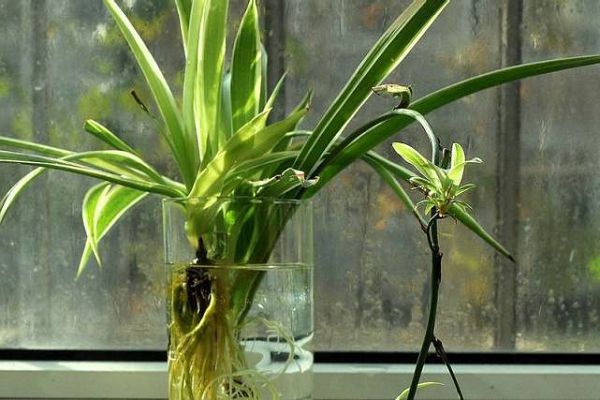
Spider plant
Cut a section of offshoot from a large spider plant, and just submerge the roots of the small spider plant in water. Change the water every two or three days, and place it in a cool, ventilated spot away from direct sun. It usually roots in about a week; afterward gradually lower the water level so that a bit of root is exposed to the air.
Ivy
Cut a few young shoots from the ivy and insert them into a vase. In summer they usually develop water roots in about a week. In the early stage of water rooting, be sure to change the water frequently, generally once every one or two days, to keep the water clean and prevent the lower ends of the shoots from rotting. After about 10 days, tender white aerial roots emerge, and once the new roots have grown you still need to change the water frequently. When growing ivy hydroponically, you can add nutrient solution to the water, and after two or three weeks it can be placed in a bright spot for care.
Pothos
There is really no need to say much about pothos; break off a stem and put it in water and it will live. To grow it well, it is best to keep it in indirect light. You don't need to change the water every day; just top it up when the water gets low.
Narcissus
Narcissus is also a common hydroponic flower on our tables, simple and beautiful. One thing to keep in mind is that it is best to use clean spring water, well water, rainwater or river water for narcissus. Be sure to change the water once every 1 to 2 days, and never damage the roots when changing the water. Since the narcissus bulb already stores a large amount of nutrients, there is no need to fertilize during hydroponic cultivation.
Pennywort
Pennywort is a hydroponic green plant I really like; a simple vase with a little clean water is enough to grow it. Note that hydroponic pennywort is best not left in direct sunlight for long periods. Pennywort multiplies very quickly, and hydroponic space is limited, so excess leaves need to be removed promptly.