The correct way to water and fertilize Clivia
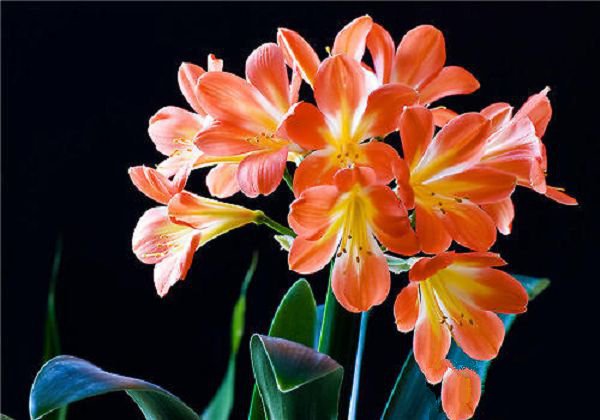
In cultivating Clivia, watering and fertilizing are relatively important. To grow Clivia well, watering needs to be adjusted according to weather, environment and other conditions. Fertilizing Clivia also needs to be adjusted according to its growth conditions, so what exactly should be done?
Clivia
The water temperature is best close to the soil temperature. In winter, if the water temperature is too low, some hot water can be mixed in. If tap water is used, it is best to first let it stand in a container for two or three days. Fertilizing is one of the important measures. When nitrogen is deficient, leaf growth is often poor, and the tips of the lower leaves turn yellow; when phosphorus is deficient, the flower color is not bright; when potassium is deficient, the fleshy roots do not develop well. Therefore, the type of fertilizer must be adjusted in time to meet the needs of growth and development.
The fertilizers with relatively high fertilizer efficiency mainly include the following: 1. Animal manure: horse manure contains a lot of cellulose, has good permeability, and decomposes easily, making it a good fertilizer for the seedling stage. Other animal manure can also be used, but it must be fully decomposed before use. 2. Cake fertilizer: such as soybean cake, hemp seed cake, peanut cake, etc., mostly soaked and fermented, then applied as liquid fertilizer; never use raw cake. 3. Animal hooves and horns and scraps: for example, hooves and horns can be soaked in water and used for watering, and fragments can also be placed in the lower part of the pot soil. Blood meal, bone meal and other waste materials can all be used. 4. Kitchen waste: such as fish heads, scales, intestines, poultry feathers, rice-washing water, etc., can all be soaked in water to ferment or buried in the soil to compost into fertilizer.
Some people say that Clivia should not be given chemical fertilizers, which is unreasonable. Commonly used chemical fertilizers include potassium dihydrogen phosphate and nitrogen, phosphorus, and potassium compound fertilizers. These chemical fertilizers can be applied to the soil and can also be used as topdressing outside the roots. The specific method of topdressing outside the roots is: spray a dilute inorganic fertilizer solution (such as a 0.1% to 0.5% potassium dihydrogen phosphate solution) on the leaf surface, and the effect is very good.