How do you grow orchids so they thrive?
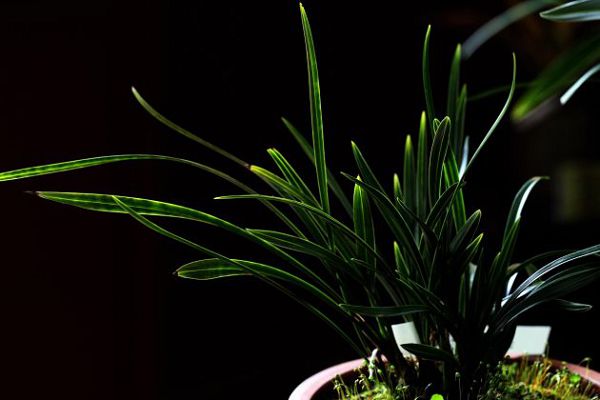
To help orchids grow better and more vigorously, we generally need to meet their reasonable growth needs in five major areas: soil, fertilizer, light, water and temperature. There are also many small details, such as a well-ventilated environment, that will also promote orchid growth.
As one of the ten famous flowers, how do you grow orchids so they grow better and more vigorously? Our soil is the primary factor, and water, fertilizer, light and temperature are the necessary conditions. So what should each of these be like to meet the growth needs of orchids to the greatest extent? Today Hua'er Gu will introduce to everyone how to grow orchids so they thrive.
1. Soil conditions
Orchids are plants that greatly love fertilizer, and they grow best in a slightly acidic soil environment rich in a large amount of humus, with good ventilation and good drainage.
Therefore, we can mix some suitable soil ourselves to care for orchids. Hua'er Gu suggests using fertile garden soil (vegetable garden soil, orchard soil, field soil, etc.), leaf mold, crushed red brick pieces, river sand, and dried animal manure mixed in a 2:1:1:1:1 ratio to prepare orchid growing soil.
The characteristics of this soil are sufficient nutrients and good lasting fertilizer effect, excellent looseness and air permeability, and it is not prone to compaction. Therefore, it is very good for growing orchids.
2. Nutrient conditions
Although we have already prepared good orchid growing soil, it will obviously still lead to a shortage of nutrients in meeting the long-term growth of orchids. At this point we need supplements of various artificial nutrients. We can directly buy special fertilizer for orchids, or refer to the fertilization methods introduced below.
Orchids grow all year round. When orchids have just grown leaf buds, we need to apply a fertilizer rich in nitrogen once. After that, a large number of leaves will grow, and we can apply a dilute nitrogen fertilizer solution again about once a month. This period of using nitrogen fertilizer is from May to the Beginning of Autumn. The best time to fertilize is around 4 p.m.
After the Beginning of Autumn, orchids enter the reproductive growth stage. We can apply some dilute phosphorus and potassium fertilizer solution to orchids about once every half a month to a month. This period can generally last until May of the following year. More specifically, we can decide whether to fertilize by observing the growth condition of the orchids.
3. Light conditions
Orchids prefer shade and fear direct sunlight. Therefore, in summer and autumn, when the sunlight is too strong, we use shading to care for orchids. In winter and spring, the light is not very strong, so we can let them get some appropriate sun, and generally five or six hours is enough. If we place them on a windowsill or similar place to grow them, we need to turn the pot regularly to prevent the growth direction of the orchid from shifting, which would affect the ornamental effect.
4. Water conditions
I wonder if everyone has heard the saying: “Dry orchids, wet chrysanthemums.” This means that it is acceptable for orchids to grow a bit on the dry side, but they must never be too moist. Hua'er Gu suggests keeping it at eight parts dry and two parts moist, which is also the best degree of dryness and moisture summarized by orchid gardeners through long-term experience. This degree of dryness and moisture can both let water meet the needs of orchids and avoid causing poor orchid growth due to excessive moisture.
5. Temperature conditions
Because there are many types of orchids, each variety has different temperature requirements. We have summarized that the most suitable growing temperature for orchids is about 18-30°C. This is also a relatively broad temperature range. If we can control the temperature within this range, then the orchids will grow in a relatively good state.