What issues should be noted when fertilizing clivia (Clivia miniata) with fermented fruit peels
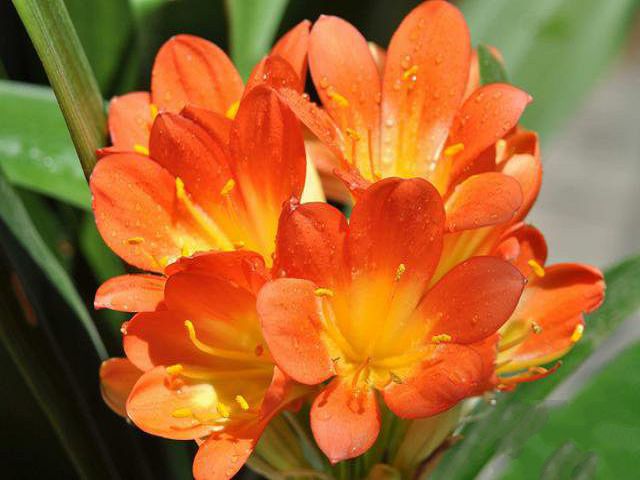
Using fermented fruit peels to fertilize clivia is fine. The fermented fertilizer water is mainly nitrogen-based, and can be used in the early stage to promote growth, or as a top dressing.
I believe many flower growers have made their own fertilizer water to water their plants, and as for the effect, it is certainly there, but when it comes to the experience of using it, many people probably find it hard to put into words. The sour, foul smell during fermentation, attracting fungus gnats after use when not fully fermented, and root burn from using it at the wrong concentration, a whole series of problems only add to the troubles of growing flowers. If you are not an experienced flower grower, it is better to just buy fertilizer. A bottle of fertilizer does not cost much, and it is economical, practical and convenient.
If you want to try fermenting fertilizer water with fruit peels, during the fermentation and use process, it is suggested that you pay attention to these issues:
Chop the fruit peels as finely as possible, put them into a large mineral water bottle or other discarded bottles (try to find transparent bottles so it is easy to observe the degree of fermentation), add water and ferment, and it is even better if you have rice-washing water.
If you want it to ferment faster, you can add a little urea, shake the bottle every day, do not screw the lid on too tightly, and put it in the sun to sunbathe. If you are worried about the fermentation smell and screw the lid tight, be careful to open the lid every day to release gas, otherwise under strong sun exposure it may very likely have the effect of a champagne bottle opening.
The fermentation time is affected by temperature. When the temperature is high, the fermentation time is shorter, and when the temperature is low, the fermentation time will be longer. Do not fret over the time issue. If you see that the peels in the bottle have all rotted, the liquid in the bottle has turned yellowish-brown, and the sour, foul smell has also faded, that means it has fermented well.
The fermented fertilizer water cannot be used directly, to avoid root burn from high concentration. I usually pour 1/5 of the fertilizer water into a mineral water bottle and then fill it with water before watering the flowers. After watering, pay attention to ventilation, as being too humid easily attracts fungus gnats.
It is best to use the fermented fruit peel fertilizer water alternately with phosphorus and potassium fertilizers, to avoid excessive vegetative growth without flowering. When using the fertilizer water to water, follow the principle of thin fertilizer applied frequently, and do not be greedy for too much.
For homemade fertilizer, it is suggested to do it in an open area. If you live in an apartment building and have a separate balcony, you can isolate it to avoid the sour, foul smell during fermentation. If the space is limited and you cannot stand the smell of fermentation, then just buy some fertilizer, the effect is the same.