Plastic foam blocks at the bottom of orchid pots, with unexpected results
If you want to grow orchids well, you need to pay attention to every aspect. In fact, even the material used for the bottom layer of the orchid pot is very particular. Choose it well, and the orchid can be grown well; choose poorly, and the orchid will hardly thrive. So what exactly is best for lining the bottom of an orchid pot? Of course, you should choose the plastic foam blocks found in almost every household. Why is that? Let us understand together.
Plastic foam blocks work very well as a bottom layer and have been widely used in recent years as a good material for lining orchid pots. Plastic foam blocks have excellent properties: they are lightweight, drain water well, allow air flow, retain warmth, do not press on orchid roots (orchid roots can penetrate the plastic foam blocks), can give off an odor that repels insects and prevents disease, and are easy to separate from the old pot when repotting.
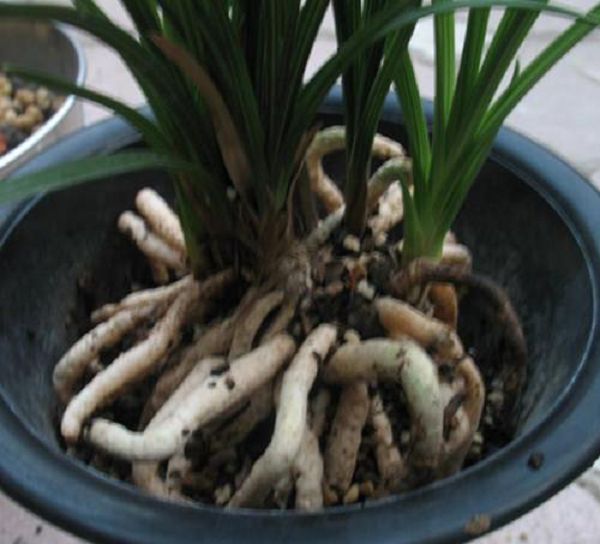
Using plastic foam blocks as a bottom layer makes orchid plants less prone to root rot, gives a high germination rate, and produces white, long roots that easily develop leaf variegation. The shortcoming of plastic foam blocks is that they lack organic fertilizer, which can be improved through fertilization.
The plastic foam blocks used for the bottom layer should be processed into small pieces about one to two cm square. Too small is no good, and too large is also no good. Practice has proved that among materials for lining orchid pots, plastic foam blocks should be the first choice.