What should you do when the leaves of a clivia develop spots?
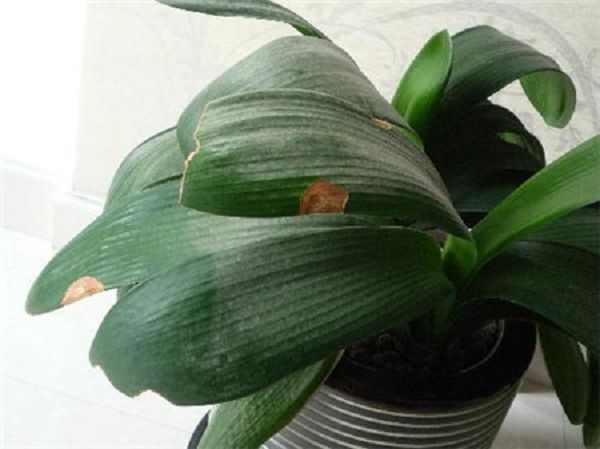
Spots on clivia leaves may be caused by applying unfermented fertilizer, or by an imbalance of nitrogen, phosphorus and potassium; leaving the plant in the same pot for a long time without repotting can also produce this phenomenon. Do a good job of prevention, keep the amount of fertilizer under control, pay attention to ventilation in summer, and use the method of changing the soil to prevent and control leaf spot disease.
Causes of the spots
Improper fertilization
Applying fertilizer that has not been well fermented causes pathogens to multiply in large numbers in the potting soil.
Improper soil changing
If the potting soil is not changed for a long time, the nutrients in the soil decrease and disease-causing bacteria are present. If the plant has wounds, it is very easy for bacteria to infect it and cause disease.
Imbalance of nitrogen, phosphorus and potassium in the fertilizer
This is especially the case when there is too little potassium fertilizer or when the fertilizer directly touches the roots during application. Rust spots on individual leaves are often caused by fertilizer directly touching a certain fleshy root or touching a wound.
Solutions for the spots
Do a good job of prevention
First of all, prevent the plant from suffering root rot so that the leaves can get sufficient nutrition; next, eliminate external injuries and prevent wounds from spreading; the amount of fertilizer applied must be kept under control, and by all means avoid over-fertilizing. In summer, do not water mature large plants at the pseudobulb. In summer, pay attention to ventilation, lower the temperature and strengthen management, and regularly spray sterilizing agents such as carbendazim, chlorothalonil, thiophanate-methyl and agricultural streptomycin for prevention and control; this can reduce and eliminate the occurrence of leaf spot disease and leaf yellowing disease.
Replace with new soil
To prevent and control leaf spot disease, changing the soil can solve the problem. When changing the soil, wash the fleshy roots clean with clear water and let them dry before potting them up again. If some leaves have already rotted beyond recognition, simply cut them off.
Spray with chemicals
Tuzet is an organic sulfur-arsenic compound fungicide that can prevent and control many fungal diseases, such as white rot, brown spot and stem spot. Use a 500-1000 times dilution, spraying once every half month; 3-4 consecutive sprays will achieve the effect. Tuzet is toxic, so pay attention to safety when using it.