Detailed explanation of pruning methods and techniques for orange jasmine (Aglaia odorata)
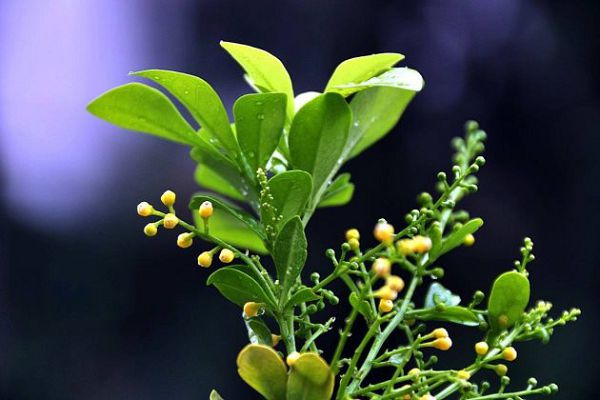
Orange jasmine (Aglaia odorata) is an excellent evergreen woody plant, and now the full blooming season of orange jasmine has arrived again. Every year, summer and autumn are the seasons when orange jasmine blooms profusely. Accompanied by a subtle, elegant fragrance, orange jasmine brings pleasant coolness amid the blazing summer days.
Orange jasmine (Aglaia odorata) is also called four-season orange jasmine and fragmented orange jasmine. It has evergreen leaves all year round, and against the backdrop of the green leaves, its blooms appear even more full of summer's liveliness. Though the summer is scorching, waves of delicate fragrance drift through the air - this is where the charm of orange jasmine lies! In recent years, orange jasmine has transformed from a landscape plant into a potted decoration, bringing endless joy to many households. If orange jasmine is not pruned, it will grow very quickly. A pot of messy orange jasmine will instantly lose its beauty. So do you all know how to prune orange jasmine? Today Hua'er Gu will introduce the pruning techniques for orange jasmine to everyone.
Pruning at the seedling stage
Growing orange jasmine requires pruning and shaping starting from the seedling stage, so that the mature orange jasmine can maintain a more graceful appearance. At the seedling stage, we need to cut it back short, which is also the largest pruning in its life. For the short cut, it is enough to keep the stem length at about 20cm. After the short cut, the orange jasmine will grow many new branches around the cut position. From then on, if we regularly prune the new branches, we can cultivate a full, spherical orange jasmine.
One characteristic of orange jasmine is that after many years, the branches at the lower part of the plant are very easy to die off. If the main trunk is kept too long, it will then keep growing upward, and after the lower part dies off, only a single bare stem will rise straight up, looking very uncoordinated and unattractive. Therefore, at the seedling stage we need to cut it back short first to prevent this from happening.
After the short cut at the seedling stage, we must prune it every year in spring and early summer, which can continuously encourage new side branches to grow around its stem. The plant can then maintain a beautiful and full appearance year after year, and a lovely orange jasmine will accompany our home at all times.
Pruning during the growing season
Pruning orange jasmine during the growing season can promote the sprouting of more side branches and maintain the plant's growth form. Pruning can also remove some dead branches and fallen leaves, and can enhance the ventilation and light penetration inside the plant. After such pruning, the plant will grow more vigorously.
If some branches grow too fast, they will disrupt the plant's beauty. We need to prune away those fast-growing branches, which can maintain the overall plant form and also reduce excessive consumption of nutrients. However, each time we prune, we can enlarge its shape by one ring, and should not prune to the same length as the first time every time, otherwise later there will be only branches and no leaves. If we prune by enlarging one ring each time, the overall shape can become larger, the leaves will be more luxuriant, and there will be more flowers.
We need to prune before the flowering season, and we also need to prune after the flowering season. Pruning before the flowering season needs to be done half a month in advance, which can promote flower bud differentiation and produce more flowers. Post-flowering pruning needs to remove some spent flowers. Sometimes branches that have bloomed will dry up in a high-temperature environment, and we can prune them off to prevent bacterial infection. If the summer temperature is higher than 35°C, we should not prune. If pruning is needed, it is best to place it in a cool place for a week before restoring the original care method.
Daily pruning
Every spring, orange jasmine must be pruned, mainly to remove some dead branches, diseased branches, weak branches, and overly dense branches, enhancing the plant's ventilation and light penetration, and also leaving more nutrients for the growth of other branches. Daily pruning is the same: once diseased branches and fallen leaves are found, they need to be dealt with promptly. For some branches that emerge by themselves from the soil, if we need to maintain the plant's form, we should cut them off. If they are beneficial to the plant's shape, we can pinch off the tips when they grow to a certain height.