How to best care for orchids in summer? A detailed guide to care methods
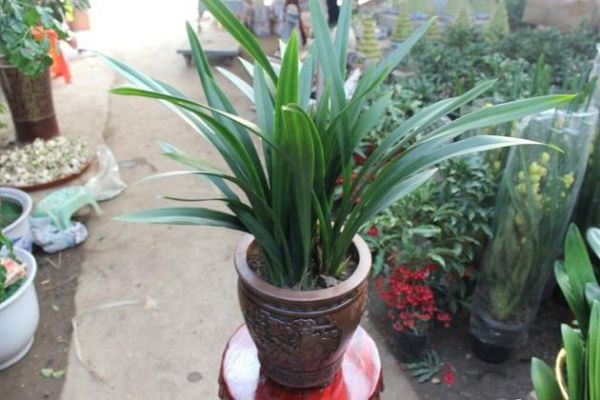
As summer arrives, the cultivation methods for many flowers and plants need to start changing. In the scorching summer, orchids also face the test of the muggy heat as they grow. There are quite a few types of orchids; common ones include Cymbidium sinense, Cymbidium faberi, Cymbidium ensifolium, Cymbidium goeringii, Oncidium, and so on. So how should orchids be cared for in summer so they grow well? Today Huar Gu will analyze the summer cultivation techniques for orchids for everyone.
Summer care for orchids requires attention to five aspects: light management, temperature control, watering techniques, fertilizing methods, and pest and disease control. Let's study them in detail below.
1. Light management
Summer temperatures rise day by day, and as the temperature climbs daily, the summer sunlight also seems to become more intense. Orchids are plants that like shade and grow best in a cool, ventilated environment. So in summer we must be sure to provide shade when caring for them.
In regions south of the Tropic of Cancer, they can be grown on a well-ventilated south-facing balcony; in regions north of the Tropic of Cancer, they can be grown on a well-ventilated north-facing balcony. Orchids should be placed in a spot with plenty of scattered light as much as possible, avoiding direct exposure to the harsh summer sun. A little weak light in the early morning and evening is fine.
2. Temperature control
The optimal growing temperature for orchids is generally in the range of 20-30°C. Summer temperatures are relatively high, so we need to pay attention to controlling the temperature of the growing environment and take care to prevent heatstroke and cool things down. Specifically, we can increase the humidity of the environment by misting or watering the floor to raise air humidity and lower the ambient temperature.
If orchids are placed in an air-conditioned room, be careful not to place them directly in front of the air outlet, to prevent cold air from blowing directly on them and causing water to evaporate too quickly. They can be placed directly below the indoor unit of the air conditioner. In summer, they should also not be placed facing a fan, nor around appliances such as televisions, to prevent heat dissipation from causing the leaves to turn yellow and dry out at high temperatures. It is best to keep them away from appliance vents.
3. Watering techniques
In summer, it is normal for the potting soil to dry out quickly. The frequency of watering also needs to be increased appropriately, generally following the principle of watering when dry and stopping when wet, but the best time of day to water is early morning or evening, ideally when the potting soil temperature matches the room temperature.
Orchids should not be watered directly with tap water. We can collect some rainwater on rainy days to water them. Tap water used for watering flowers needs to be exposed to the sun for more than a day before use, to prevent the chemicals in tap water from having adverse effects on orchid growth. Of course, the tap water here refers to water from the water utility; in rural areas, the kind of tap water drawn from the mountains can be used directly to water flowers.
4. Fertilizing methods
For summer fertilizing, we can use homemade organic fertilizer liquid; fully decomposed cake fertilizer water should be diluted before use. The fertilizing technique is still best following the principle of light fertilizer applied frequently. Evaporation is very fast in summer, and when there is less water the fertilizer liquid becomes more concentrated, so fertilizing is still something to be especially cautious about.
In summer, we can fertilize once every ten days as a cycle. Fertilizing is best done in the evening; just add diluted fertilizer water at a time when watering is needed and water it on. Fertilizing does not need to be too rigid; you do not necessarily have to fertilize once ten days are up. Just do it together with the next watering.
5. Pest and disease control
Summer is hot and muggy, and some pests are prone to breeding. We need to take regular pest prevention measures. Generally, spraying pest control agents at least once a month achieves the purpose of preventing pests and diseases. Commonly used agents include carbendazim and lime, among others.