When does the cold-growing orchid bloom? A detailed guide to its flowering period
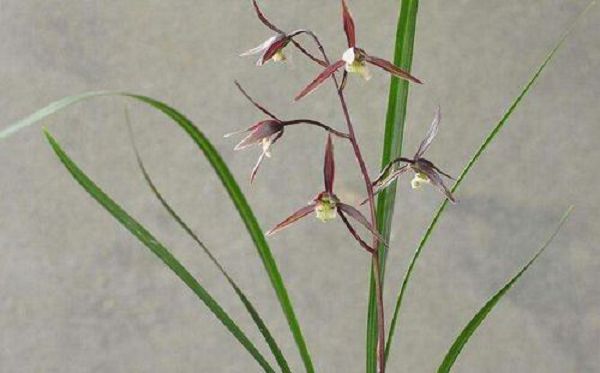
The cold-growing orchid (Cymbidium kanran) is a terrestrial plant of the genus Cymbidium in the orchid family (Orchidaceae). Its pseudobulbs are narrowly ovoid and enclosed within the leaf bases. The leaves are strap-shaped, thinly leathery, dark green, with fine teeth often present along the front margins. The flowers are usually pale yellow-green with a pale yellow lip, though other colors also occur, and they often have a strong fragrance; the petals are usually narrowly ovate or ovate-lanceolate; the lip is nearly ovate; the column curves slightly forward and has narrow wings on both sides. So, when does the cold-growing orchid bloom? What month is the flowering period of the cold-growing orchid?
According to experienced cold-growing orchid growers, the flowering period of the cold-growing orchid is August to December.
Growing environment
It grows under forest, beside streams and valleys, or on slightly shaded, moist, rocky soil, at an altitude of 400-2400 m.
Distribution range
In China it is distributed in Anhui, Zhejiang, Jiangxi, Fujian, Taiwan, China, Hunan, Guangdong, Hainan, Guangxi, Sichuan, Guizhou and Yunnan. It is also distributed in southern Japan and the southern end of the Korean Peninsula. The type specimen is a cultivated plant, collected from Japan.
Propagation methods
Division
This can be done in both spring and autumn, generally dividing once every three years. Any plant that grows vigorously with densely clustered pseudobulbs can be divided, and after division each clump must retain at least 5 interconnected pseudobulbs. Before division, watering should be reduced so that the potting soil is fairly dry. When potting up after division, first cover the drainage hole at the bottom of the pot with broken tile pieces, then spread coarse gravel to occupy 1/5 to 1/4 of the pot's depth, then add coarse-grained soil and a small amount of fine soil, and finally plant in humus-rich sandy loam. The planting depth should be such that the pseudobulbs are just barely buried in the soil, leaving a 2 cm rim at the edge of the pot, topped with Selaginella uncinata or fine gravel, and finally water thoroughly, place in a shaded spot for 10-15 days, keep the soil moist, then gradually reduce watering and carry out normal care.
Sowing
Cold-growing orchid seeds are extremely fine, containing only one incompletely developed embryo, with very low germination capacity; moreover, the seed coat does not readily absorb water, so sowing by conventional methods will not germinate. Therefore, orchid mycorrhizal fungi or an artificial culture medium is needed to supply nutrients for germination to occur. For sowing, it is best to select fruit that has not yet split open; after sterilizing the surface with 75% alcohol, take out the seeds, soak them in 10% sodium hypochlorite for 5-10 minutes, remove them and rinse 3 times with sterile water, then sow them in a culture bottle containing medium, and place in a dark culture room, keeping the temperature at about 25C; after they begin to sprout, move them into the light and they can form protocorms. From sowing to transplanting takes half a year to a year. Tissue culture has already been successfully achieved, and this method can be used for propagation where conditions permit.