How to care for orchids in spring? A detailed guide to spring cultivation methods
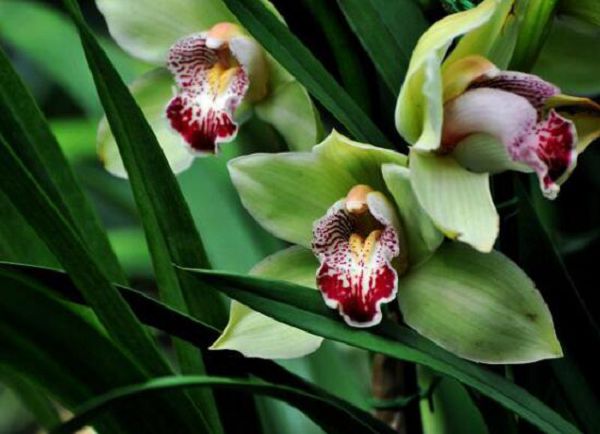
The orchid is one of China's ten most famous flowers. It not only has extremely high ornamental value but is also a relatively easy flowering plant to grow, because orchids like to grow in moist, shady environments, and you can keep one alive just by growing it in the living room. However, many people do not know how to care for orchids in spring. In fact, all you need to do is water and fertilize appropriately. Let's take a look below at the spring cultivation methods for orchids.
I. How to care for orchids in spring
The spring climate is very suitable for orchid growth, so growing orchids in spring is a relatively simple matter. You do not need to worry that the plant will suddenly die; you only need to carefully water and fertilize the plant during cultivation and prune it appropriately, and the plant will grow lush and vigorous.
However, during care you must not be impatient and overwater, as this will only cause root rot, and if it is not dealt with promptly it will cause the plant to die. The same applies to fertilizing: too much fertilizer will also cause root burn, so only appropriate fertilizing and watering are beneficial to plant growth.
II. Spring cultivation methods for orchids
1. Fertilize reasonably
In early spring, do not rush to fertilize orchids; wait until the orchids have adapted to the environment. When the temperature stabilizes at 18~20°C, you can fertilize, choosing nitrogen-phosphorus-potassium fertilizer, applying 3~4 times a month. At the same time, spring is also a season with a high incidence of pests and diseases, so insecticides should also be used, 2~3 times a month. Only in this way can the plant grow more robustly.
2. Water appropriately
Although the air humidity in spring is relatively high, you must still be sure to water thoroughly, enhance the orchid roots' exchange of the old for the new, and keep enough fresh air in the orchid pot. Each watering must be thorough, making sure water flows out from the bottom of the orchid pot, and washing clean the growing medium and the air pollutants stuck to the orchid leaves.
3. Light requirements
In terms of growth habits, the orchid is a semi-shade plant, so when growing it you need to pay great attention to its light and temperature. In terms of light, the orchid's needs are not very great. However, although temperatures rise considerably in spring, the overall light is still relatively weak, so in order to make the orchid bloom better, it still needs to be placed in a sunny spot indoors for cultivation.
4. Pest and disease control
In spring, orchids are more likely to develop diseases, the common ones being anthracnose, black spot, and stem rot. Prevent them as early as possible; especially during continuous rainy days, spray chemicals promptly to avoid damp conditions breeding bacteria. In particular, when the plant is attacked by pests, spray insecticide promptly, so that the pests can be effectively killed.