These 5 points of pre-farrowing preparation for sows must be done well!
These 5 points of pre-farrowing preparation for sows must be done well!
I. Moving onto the farrowing crate
After the farrowing house is disinfected, it must be left idle for a period before use. Moving sows onto the farrowing crate begins 7-10 days before the sow's expected farrowing date. As the name suggests, this means driving sows that are about to farrow onto the farrowing crate to give birth.
During this process, movements must be gentle and slow. Hitting sows is strictly prohibited. Generally 3-5 people work together. When moving sows onto the crate, pay attention to: adjusting the sow's position. Sub-healthy pigs (that is: those with bleeding spots on the body, tear stains, emaciation, anemia, dead skin, etc.) should be placed on crates in the downwind direction, while healthy pigs should be placed on crates in the upwind direction.
After all sows are on the farrowing crates, observe the overall condition of the herd (stress and other acute conditions) and take necessary measures.
⟧ II. Pre-farrowing injection of sodium selenite vitamin E preparation
Selenium is a component of glutathione peroxidase. It removes intermediate products of lipid peroxidation free radicals in the body, prevents lipid peroxidation of biological membranes, and maintains the normal structure and function of cell membranes. Selenium also participates in the synthesis of coenzyme A and coenzyme Q, playing an important role in the body.
Vitamin E is also closely related to animal reproductive function. It promotes gonadal development, promotes conception and prevents miscarriage, and also has antioxidant effects.
Injecting sodium selenite vitamin E before farrowing can ensure the sow comes into estrus normally next time, effectively alleviate second-parity syndrome, and also improve the immunity of sows and piglets. It can also prevent selenium-deficiency anemia in sows. It can significantly increase immunoglobulin in blood plasma and immunoglobulin in sow colostrum.
Therefore, it reduces the stillbirth rate and weak piglet rate at farrowing, and also has a clear preventive effect on piglet diarrhea. It can improve the reproductive performance of sows and the growth and development of piglets.
Note: sodium selenite vitamin E preparation is highly toxic, so care should be taken when using it.
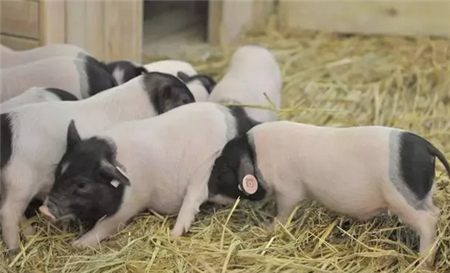
III. Pre-farrowing feeding of sows
1. For sows in good body condition with good udder development, generally gradually reduce the late-gestation feeding amount by half or one third within 3-5 days before farrowing. This can prevent postpartum mastitis caused by excessive milk secretion, or piglet diarrhea caused by milk that is too thick.
In late pregnancy, the fetuses continue to grow larger and press on the intestinal tract, causing gastrointestinal motility to slow down. The fetuses occupy a large part of the abdominal cavity volume. After the sow gives birth, the intestinal tract in the abdomen is fully released, causing intestinal disorder. At this time, if feed is not reduced before farrowing, postpartum constipation is very likely.
2. For sows whose udders are not sufficiently swollen a few days before farrowing, add some protein-rich feed, such as fish meal, which is beneficial to the sow's postpartum recovery.
3. For first-parity and second-parity sows: first- and second-parity sows are small in body size and have low feed intake. It looks like they are not fed much, but they easily get full.
Therefore, first- and second-parity sows should have their feed controlled as much as possible before farrowing, otherwise they will not eat for several days after farrowing.
Particular attention should be paid to the fact that failure to control feed before farrowing may lead to excessively high milk concentration, causing nutritional diarrhea in piglets.
4. For sows after their third parity: because sows are large in body size and need to consume a lot of feed themselves, let alone for the piglets, they are almost never full and are always in a state of feed restriction.
Therefore, in this case there is no need to reduce the feed amount too much before farrowing. At the same time, they should not be allowed to leave a lot of feed in the trough. The leftover feed should be scraped out to prevent mold.
IV. Measuring backfat of sows before farrowing
Backfat measurement is an accurate method for judging a sow's body condition. Backfat is measured with a backfat meter, with a normal range of 18-20 mm. The measurement location is at the last 1-2 ribs, about 6.5 cm from the dorsal midline.
First drive the sow up so she is standing, use electric clippers to shave the hair at the measurement site, then spray edible oil as a coupling agent, and then measure the sow's backfat.
The significance of measuring sow backfat: evaluating sow body condition in a digital way can reduce unnecessary error; checking and assessing the nutritional reserves of the sow herd; guiding feed adjustment for the sow herd and optimizing sow body condition; exploring the correlation between sow backfat loss and return to estrus after weaning, and determining a suitable feeding plan.
V. Signs of impending farrowing in sows
The gestation period of sows is about 110-120 days, with an average of 114 days. Farrowing more than 8 days early is considered miscarriage; farrowing less than 8 days early but above the normal value is considered premature farrowing.
4-5 days before farrowing, the udder enlarges significantly, becomes flushed red and shiny, and clear milk can be squeezed from the rear pair of teats by hand; 3 days before farrowing, the sow is restless when lying down and getting up, moves cautiously, and the teats feel warm to the touch; 1 day before farrowing, the squeezed milk is thicker and yellow, the sow's vulva is swollen and loose, purple-red, with mucus at the vulval opening.
If milk can be squeezed from the rear two pairs of teats, farrowing is expected in about 24 hours; if milk can be squeezed from the middle pairs, farrowing is expected in about 12 hours; if milk can be squeezed from the front pairs, farrowing is expected in about 5 hours.
When the sow is extremely restless before farrowing, breathes rapidly, walks back and forth, urinates frequently, and light yellow mucus flows from the vulva, the piglets are about to be born.
Therefore, if farmers do a good job of pre-farrowing feeding and management of sows, they can effectively improve piglet survival rates and the sow's years of use. So turning sows into golden sows is not a problem!