Ternary sows' production efficiency is more than 30% lower than that of binary sows. How can the gap be narrowed?
According to data published by Yongyi Consulting in March 2020, ternary sows accounted for nearly half of the current breeding sow inventory (as shown in the figure below)
Misconception 2: Same nutritional supply regardless of different stress levels
At present, the environmental conditions of pig herds in China are too poor, and stress in pig herds is widespread (as shown in the figure below)
Misconception 3: Same nutritional supply regardless of different pathogen pressure
As shown in the figure: Why do some pathogens "coexist" with pigs (the host) without frequently causing disease in the pigs (the host)? Whether a pig herd in a state of coexistence with pathogens develops disease is related to two factors,
one is overload-dose infection;
the other is that the pig body's effective immunity level drops to the protective threshold.
So-called overload-dose infection means that animals have a certain "carrying" capacity for pathogens. Within the load that the animal can carry, the animal will not develop disease. Only when pathogens exceed the animal's carrying capacity will disease occur. Therefore, whether disease occurs involves two factors: one is the number of pathogens, and the other is the carrying capacity of the pig herd, that is, the immunity level.
Misconception 4: Same nutritional supply regardless of different total feed intake
Misconception 5: Same nutritional supply regardless of different genetic states
Ternary sows are a typical case of "fat sow converted to breeding sow," and their genetic state differs from that of binary sows in two aspects, namely fast growth speed and high lean meat rate. This gives rise to three major reproductive problems: low estrus rate, poor milk production, and few effective piglets born.
Tian Xianjin (2007) showed through experiments (as shown in Table 2) that the average daily gain of Duroc x Landrace x Yorkshire ternary pigs reached 702.12 g, 5.79% higher than that of Landrace x local binary pigs, with a significant difference (p<0.01).
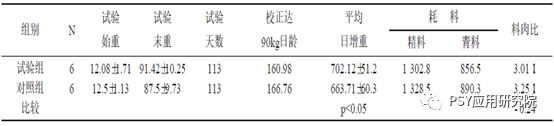
Given their fast growth speed, ternary sows are very likely to become obese, resulting in poorer estrus status and greater likelihood of dystocia during farrowing.
At the same time, combined with the incomplete development of the reproductive system of ternary sows, this further aggravates the current situation in which sexual maturity and body maturity are not synchronized, leading to a later age at first estrus and a low mating rate in ternary sows.
In addition, surveys have found that when comparing backfat between LY binary sows and DLY ternary sows, ternary sows have thinner backfat.
In response to this situation, our research over the past few years has found that nutritional methods can compensate for the breeding defects in the genetics of ternary sows.
First, start restricted feeding earlier. At 50-60 kg, switch to special feed for replacement gilts for free feeding. Through the slightly lower nutrient concentration of replacement gilt feed, appropriately restrict feeding: in the 90-130 kg stage, feed 2.5-2.8 kg of replacement gilt feed, and from 130 kg to 2 weeks before mating, feed 3.0-3.5 kg.
Second, increase backfat. Appropriately adjust the main formula of gestation feed for ternary sows, reduce the protein proportion and increase the energy and fiber proportion (about 10%).
Third, supplement reproductive nutrition during special stages or even throughout the whole period. As shown in the figure below