Why can't my orchid's ghost grass stay alive?
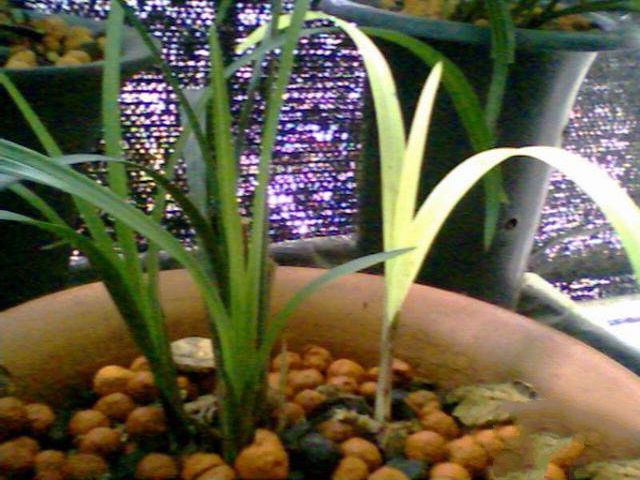
Actually, orchid ghost grass refers to shoot bodies that contain no chlorophyll, with leaves that appear yellow-white; because the color is not obvious and they suddenly sprout, they are called ghost grass.
Because they contain no chlorophyll, they generally cannot grow large. Some whole orchid plants have green leaves, some leaves are edged with white, and some leaves are embedded with white patches. The green-leaved orchid plants carry out photosynthesis to produce nutrients, supplying nutrients to the white-leaved orchid plants so they can survive.
Orchids are shade-loving plants, but they do not completely need no sunlight; a certain amount of scattered light is the necessary energy source for them to synthesize organic matter. If shading is too heavy, it will affect the synthesis of organic matter. Although too much chlorophyll will cause the variegation pattern of variegated orchids to degenerate, too little chlorophyll will endanger the life of the orchid.
Appropriately reducing shade can prevent leaf whitening, and appropriately increasing supplementary fertilizer containing manganese and magnesium can improve the leaf whitening phenomenon in orchids.