What are the methods for making orchids grow roots quickly?
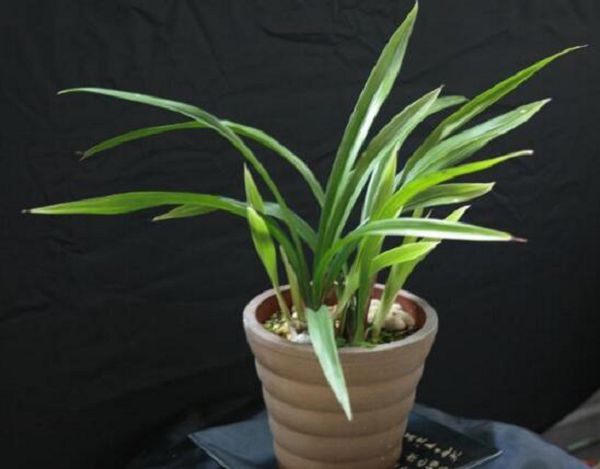
Growing orchids is relatively more complex, and they are not easy to propagate. If root rot or empty roots occur when growing orchids, after treating the condition the orchid may lose its roots, and without roots it cannot absorb water and nutrients. Therefore, we need to make it grow new roots again. How to make orchids grow roots, some experienced flower growers have given some cultivation experience. Today, let us go through the methods for making orchids grow roots quickly together.
I. Methods for making orchids grow roots 1. Soil
To grow orchids, use humus soil, preferably soil from the mountains, remove other grass roots and impurities, place it under the sun to sterilize, and after drying it in the shade for a few days it can be used, or use special orchid mud, or mix it yourself. It requires air permeability, acidity and drainage. Only soil like this can possibly make orchids grow roots when used to grow orchids.
2. Pest and disease protection
Rootless orchids are very likely to be infected by pathogens and pests. How to make orchids grow roots, first of all ensure their health, and pay attention to pest and disease protection. Before orchids grow roots, the roots can be wrapped with sphagnum moss, which can keep the roots clean and moist, promote orchids to grow roots quickly, and protect them from pests and diseases.
II. Methods for making orchids grow roots quickly 1. Planting in mixed wood chaff
To make orchids grow roots quickly, fresh mixed wood chaff can be used for planting. Cultivating orchids with fresh mixed wood chaff can retain moisture, provide ventilation and air permeability, and drain quickly, which is beneficial to the development of orchid roots. Because mixed wood chaff is loose, has large gaps and strong moisture retention, it can provide a very good rooting environment for orchids. Note that mixed wood chaff must not be used for too long; once the orchid has grown roots, it must be replaced immediately.
2. Adjusting the pH
To make orchids grow roots quickly, the pH of the soil can be adjusted to provide a suitable acidic medium to promote rooting. Specific operation: water with a diluted salicylic acid solution, or use aspirin powder dissolved in alcohol and diluted with a large amount of water, and slowly water the orchid with it.
3. Fertilizing to stimulate growth
Rootless orchids cannot absorb nutrients and water through the roots, and can only use the leaves and stems. Protect the stems from disturbance by pests and diseases, and also spray water and fertilizer on the leaves to promote the growth of the orchid so that it quickly grows new roots. Orchids are fertilizer-loving plants, so base fertilizer should be given when planting, and during the growing period liquid fertilizer should be added and foliar fertilizer sprayed.
4. Temperature control and pruning
The environment in which orchids live requires neither cold nor hot, so to make orchids grow roots quickly they must be given a suitable temperature. When cold, keep them warm; when hot, cool them down. In addition, during the rooting process of orchids, proper pruning should be done to remove diseased leaves and withered leaves and reduce the loss of nutrients.
III. Orchid propagation methods
The previous text took stock of the methods for making orchids grow roots quickly. Next, let us introduce how to propagate the orchid, one of the four gentlemen among flowers. There are two ways to propagate orchids: division and seeds.
1. Division
Orchid division propagation is generally carried out in spring and autumn. Gently pull the mother plant out of the pot, slowly remove the soil, cut off withered leaves and rotten roots, wash the roots clean with clear water, and after drying, cut from the middle of the pseudobulb with a sharp knife, apply plant ash to the wound, and plant after drying in the shade until the wound heals. Place the newly planted division in a shaded place to rest first, and once it has recovered a little, it can be cared for normally.
2. Seeds
Orchid seed propagation must be carried out with human assistance, because orchid seeds have no embryo, and after sowing they are very difficult to germinate on their own, so artificial promotion of germination is needed. The specific operation is to artificially inoculate fungi at an early stage, and use the fungi to make orchid seeds slowly germinate. There are also orchids that germinate from directly sown seeds.